
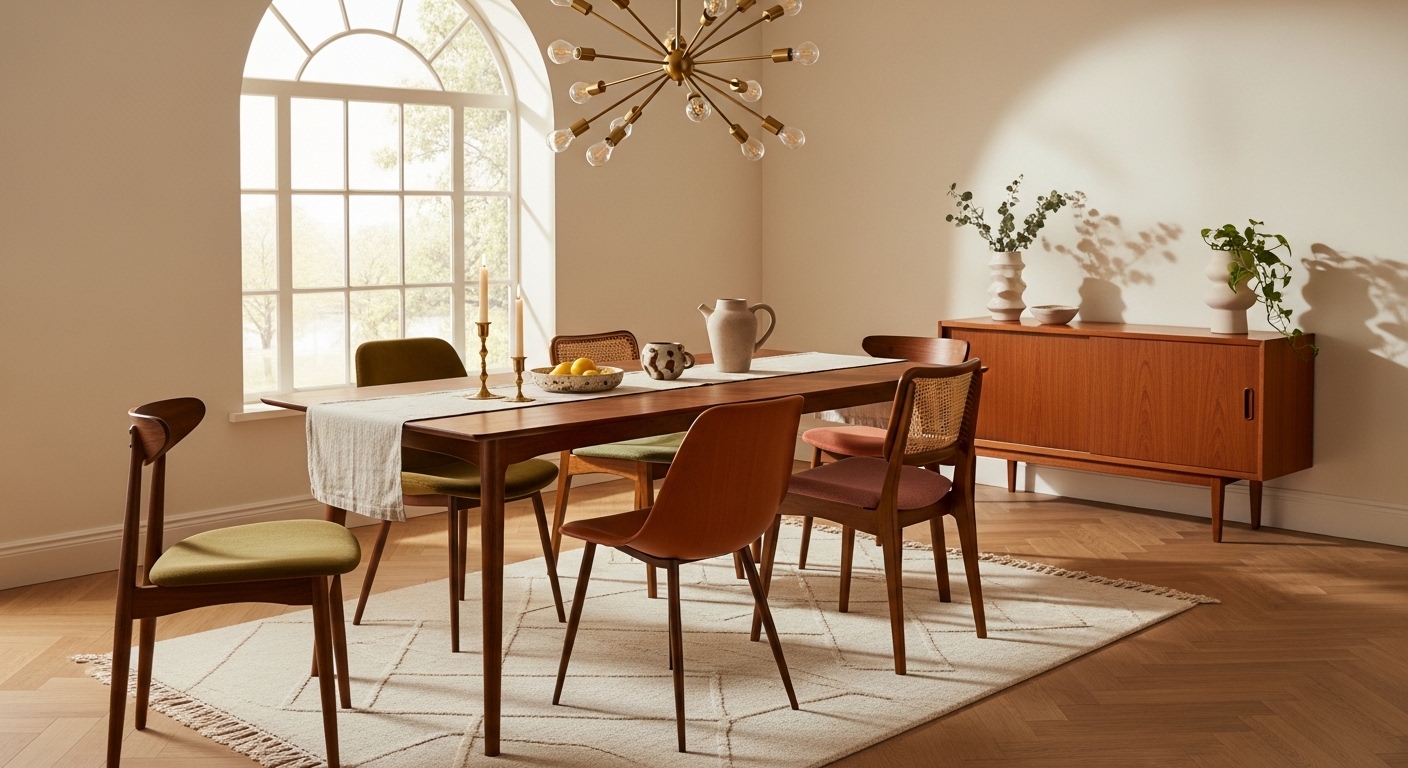

There’s something about a mid-century modern dining room that just feels right. The clean lines, the warm wood tones, the mix of function and beauty — it hits different when you sit down for a meal surrounded by that kind of design intention.
You’ve probably been scrolling through pins and saving ideas, but nothing quite clicks yet. Maybe your dining room feels too cold, too cluttered, or just plain boring. You want that effortless retro-modern look, but you’re not sure how to pull it together without it feeling like a showroom. If you’ve been hunting for mid-century modern dining room ideas that actually work in real life, you’re in the right spot.
Below, you’ll find 21 distinct ideas — each one specific, practical, and ready to steal for your own space. Whether you’re starting from scratch or just refreshing what you’ve got, there’s something here for every budget and every room size. Let’s get into it.
1. Walnut Pedestal Table as a Warm Centerpiece
A single walnut pedestal table anchors the entire room without visual clutter. The rich grain of walnut adds warmth that pairs with almost any chair style, and the pedestal base keeps legroom generous. Pick one with a beveled edge for that authentic 1960s feel.
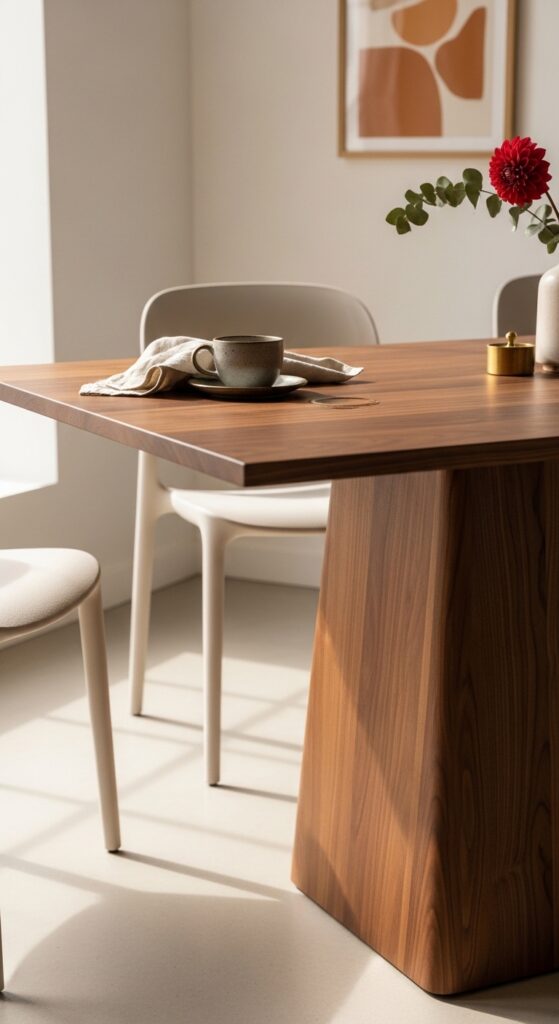
Be realistic though — walnut scratches easier than you’d think, especially with kids or daily use. You’ll want coasters and placemats as a habit, not an afterthought. And solid walnut pieces can get pricey fast, so consider walnut veneer over engineered wood if budget matters.
The right table doesn’t fill a room — it defines it.
Here’s what pulls this look together:
- Warm-Toned Oval Pedestal Dining Table — Ground your dining space with a sculptural base and organic silhouette for everyday elegance.
- Natural Linen Hemstitched Table Runner — Soften the wood surface with a textured layer that adds depth for casual or formal settings.
- Amber Glass Taper Candle Holders — Bring a warm glow to your table setting with vintage-inspired glass for intimate dinners.
2. Molded Plastic Chairs in Bold Colors
Nothing says mid-century quite like a set of molded shell chairs in unexpected colors. Think mustard yellow, burnt orange, or deep teal pulled up to a simple wood table. The contrast between organic chair curves and a straight-edged table is where the magic sits.
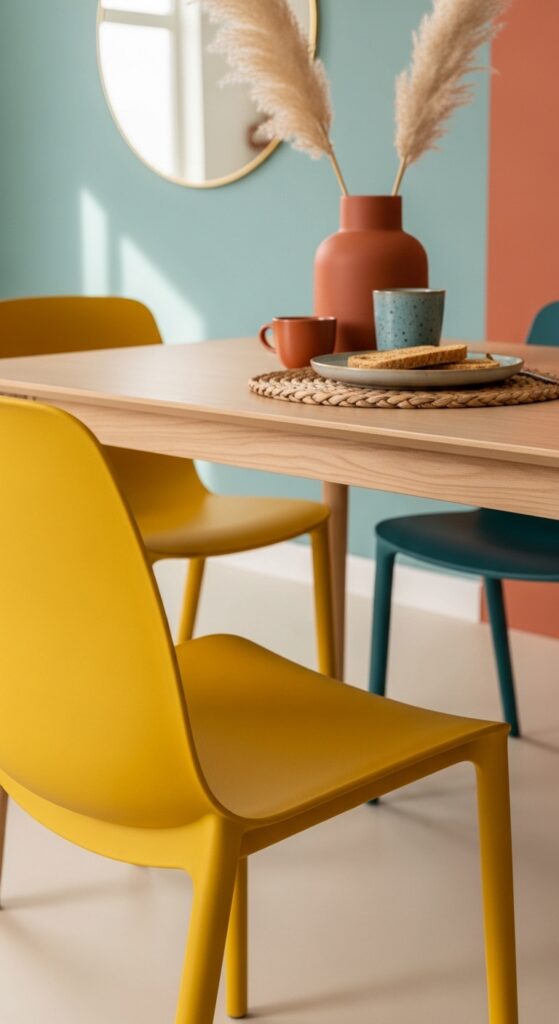
Worth knowing — plastic chairs can feel slippery without seat pads, and cheaper versions wobble after a year or two. Invest in fiberglass-reinforced shells if you want them lasting through hundreds of dinners. Color fading happens near sunny windows too, so placement matters.
Bold chairs turn a quiet table into a conversation.
These picks make the look work:
- Molded Shell Dining Chair Set — Add sculptural color to your dining area with ergonomic curves for comfortable long meals.
- Round Cushion Tie-On Seat Pads — Keep your seating comfortable with non-slip fabric pads for hard chair surfaces.
- Tapered Leg Rectangular Wood Table — Pair angular simplicity with colorful chairs using a clean-lined base for visual balance.
3. Sputnik Chandelier Over the Dining Table
A sputnik chandelier is the single fastest way to make a dining room feel mid-century. Those radiating arms with exposed bulbs create a focal point that demands attention without overwhelming the room. Brass finishes lean vintage, while matte black versions feel more current.
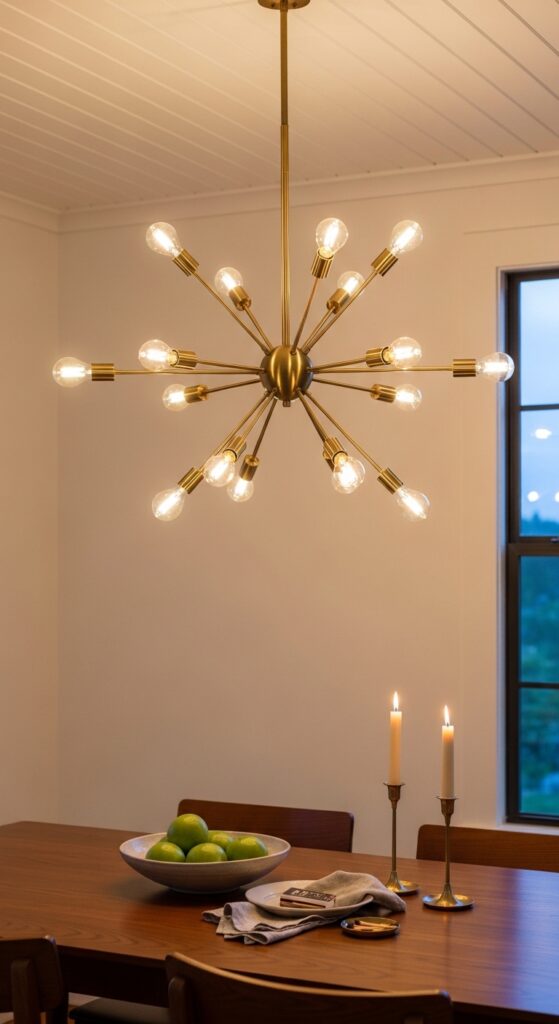
One thing to watch — sputnik fixtures collect dust on every single arm, and cleaning them is a chore you’ll dread. They also throw light in all directions, which means they’re not great as your only light source if you want focused task lighting. Pair with a dimmer switch for mood control.
One fixture overhead can do what a full renovation can’t.
Light it up right:
- Brass Sputnik Multi-Arm Chandelier — Create an instant focal point above your table with a statement piece for retro drama.
- Vintage Edison Filament Globe Bulbs — Complete the mid-century glow with warm amber tones for exposed-bulb fixtures.
- Universal Rotary Dimmer Switch Kit — Control the mood of your dining space with adjustable brightness for every occasion.
4. Floor-to-Ceiling Teak Wall Paneling
Covering one dining room wall in teak paneling creates a backdrop that feels like stepping into a 1958 architect’s home. The vertical grain draws the eye upward and makes ceilings feel taller. It works best on the wall directly behind the dining table as an anchor feature.
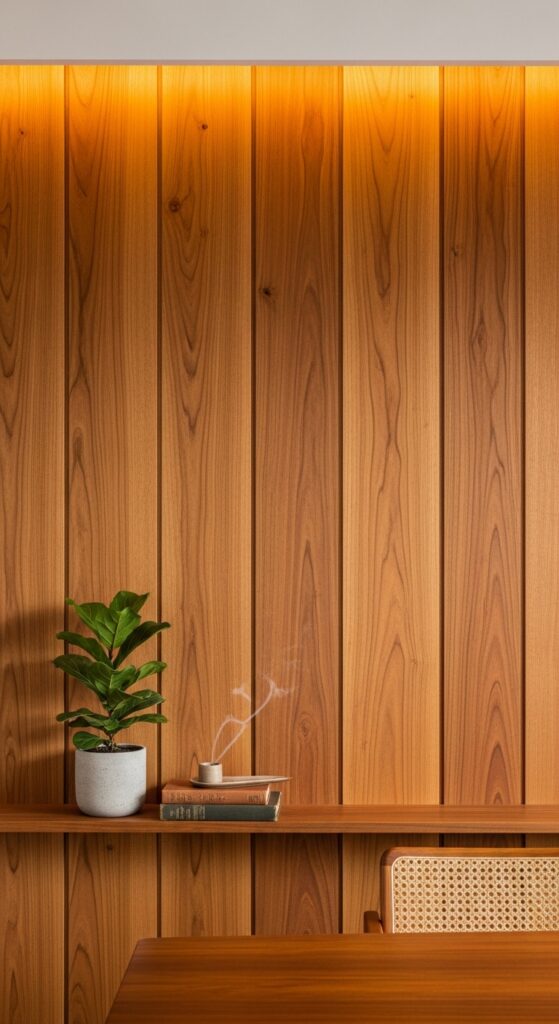
Fair warning — real teak paneling needs periodic oiling to keep its color, and installation isn’t a quick weekend project. Humidity swings can cause gaps between planks over time. Peel-and-stick wood veneer alternatives look decent from a distance but won’t fool anyone up close.
Wood on the wall does what paint never could.
Build the look with these:
- Prefinished Teak Tongue-and-Groove Planks — Cover your feature wall with rich tropical hardwood for a warm architectural statement.
- Natural Teak Oil Finish Protector — Preserve the golden-brown tone of your wood surfaces with a penetrating formula for lasting beauty.
- Recessed LED Uplighting Strip Kit — Highlight your paneled wall with hidden warm light for evening ambiance.
5. Eames-Inspired Wire Base Dining Set
Wire base furniture carries that industrial-meets-organic vibe that defined mid-century design studios. A wire base table with matching chairs keeps the room feeling open and airy because you can literally see through the structure. It’s ideal for smaller dining rooms where bulk is the enemy.
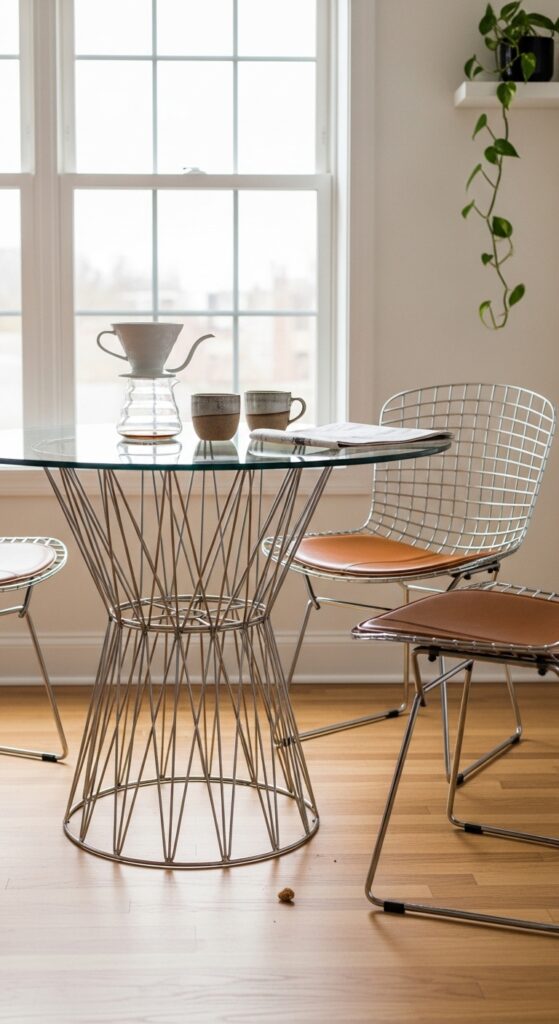
Heads up though — wire bases show every dust bunny underneath, so you’ll be sweeping more often. The seat comfort on wire chairs without cushions is honestly rough after 20 minutes. And anything you drop through the wire grid of the table is a pain to retrieve.
See-through furniture makes small rooms breathe.
Get the look here:
- Industrial Wire Base Round Dining Table — Open up your small dining area with a see-through structure for an airy modern feel.
- Wire Frame Side Chair with Leather Pad — Sit comfortably on an iconic silhouette with a cushioned insert for daily meals.
- Geometric Woven Area Rug in Cream — Warm up the floor beneath your wire set with a soft layer for textural contrast.
6. Terrazzo Flooring with Brass Inlays
Terrazzo isn’t just a bathroom material — it’s a mid-century staple that makes dining rooms feel polished and permanent. When you add thin brass divider strips between terrazzo sections, the floor becomes a design element as powerful as any furniture. The speckled surface hides crumbs and scuffs like a champ.
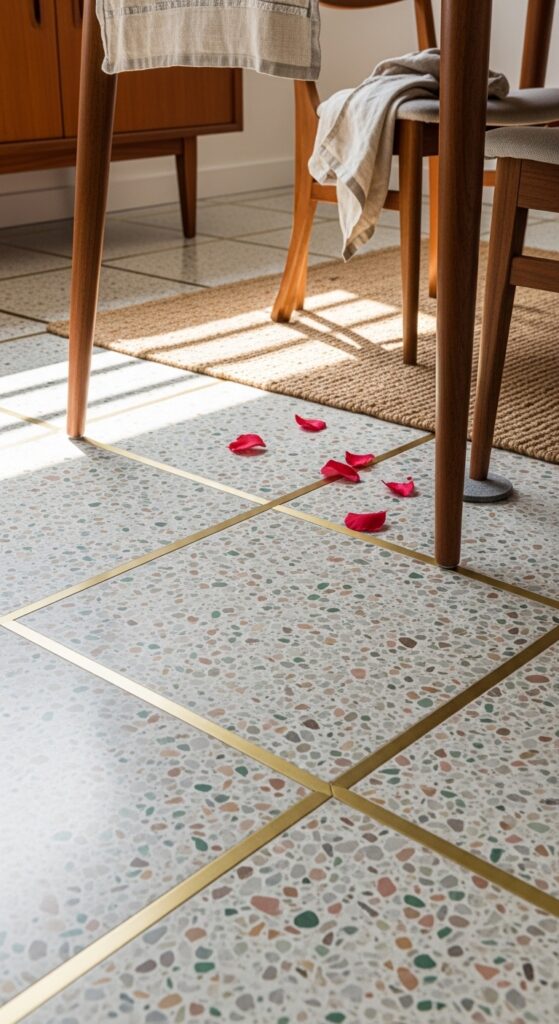
Let’s be honest — real poured terrazzo costs a fortune and takes professionals to install. Terrazzo-look porcelain tiles are the realistic alternative for most budgets. Brass inlay strips can be tricky to level, and grout maintenance around them requires extra attention.
A great floor is the outfit your room wears every day.
Ground the space:
- Terrazzo-Look Porcelain Floor Tiles — Get the speckled mid-century look underfoot with durable ceramic for high-traffic dining rooms.
- Thin Brass Divider Strip Edging — Define your floor sections with gleaming metallic lines for an authentic vintage detail.
- Felt Furniture Pad Assortment Pack — Protect your finished floors from chair scratches with adhesive pads for every leg size.
7. Sunken Conversation Pit Adjacent to Dining
If you’ve got the floor plan for it, a sunken seating area right next to the dining table is peak mid-century drama. The level change creates a natural separation between eating and lounging without walls or dividers. It’s the kind of architectural move that stops people mid-sentence when they walk in.
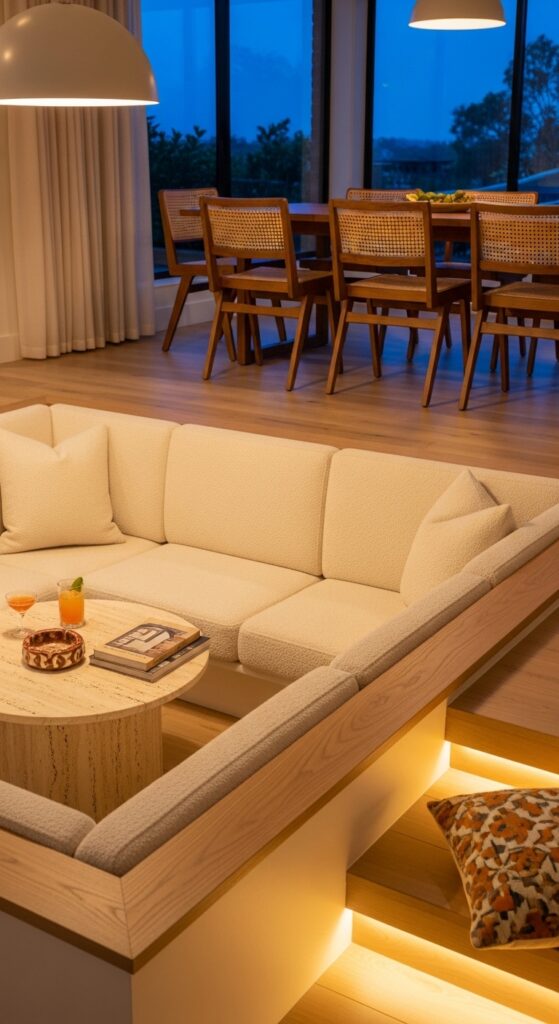
Reality check — sunken pits require structural work, permits, and a budget most people underestimate by half. They’re also trip hazards, especially for older guests or small kids. And if your home has a slab foundation, this might be physically impossible without massive expense.
Dropping the floor six inches raises the whole room’s personality.
Set the scene:
- Low-Profile Modular Sectional in Bouclé — Fill your sunken area with plush cushioned seating in a textured fabric for lounge comfort.
- Round Travertine Nesting Coffee Tables — Layer natural stone surfaces beside your dining area with stackable pieces for flexible entertaining.
- Recessed Floor Cove Lighting Kit — Illuminate the step-down of your pit with hidden LEDs for safety and atmosphere.
8. Credenza as a Dining Room Sideboard
A long, low credenza along one wall gives you storage, display space, and a serving surface all in one piece. Mid-century credenzas with sliding doors and tapered legs are functional art — they hold dishes, linens, and barware while looking incredible. Position a large mirror or artwork above it to double the visual impact.
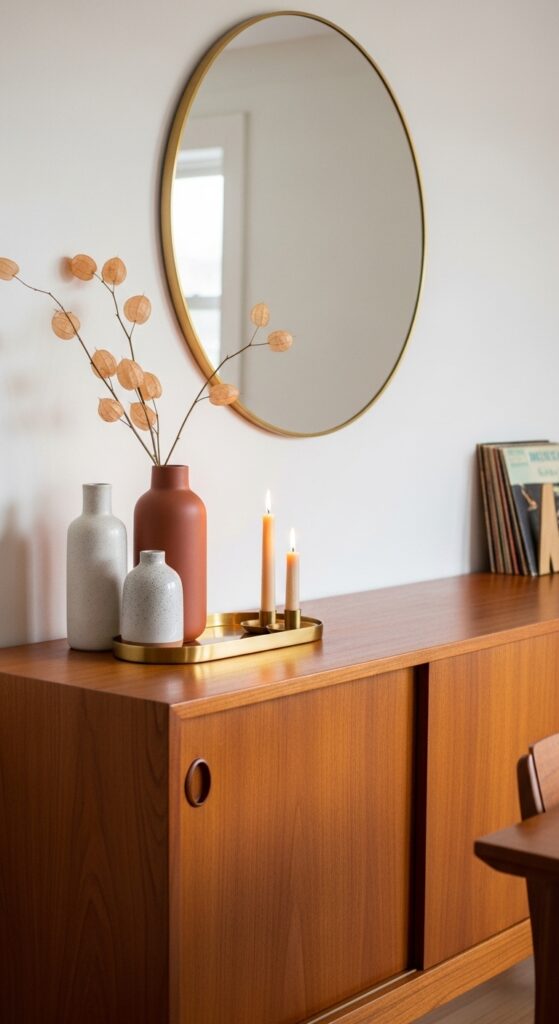
Practically speaking — vintage credenzas vary wildly in quality, and many have warped shelves or sticky sliding doors from decades of use. Reproductions often skimp on hardware. Measure your wall carefully because these pieces run long, and a credenza that’s even two inches too wide for the space looks cramped.
Storage shouldn’t hide in a closet — it should show off on the wall.
Furnish the wall:
- Sliding Door Teak Credenza Sideboard — Store your dining essentials behind sleek doors with tapered legs for a signature retro silhouette.
- Oversized Round Brass-Frame Wall Mirror — Reflect light and depth above your sideboard with a statement piece for visual expansion.
- Ceramic Stoneware Serving Platter Set — Display artful pieces on your credenza surface with organic-shaped dishes for effortless styling.
9. Sunburst Clock as a Wall Accent
The sunburst clock is one of those mid-century icons that instantly sets the era without saying a word. Hung on the wall opposite or adjacent to the dining table, it adds a sculptural element that functions as both art and timepiece. Gold or brass rays against a white wall create the strongest visual pop.
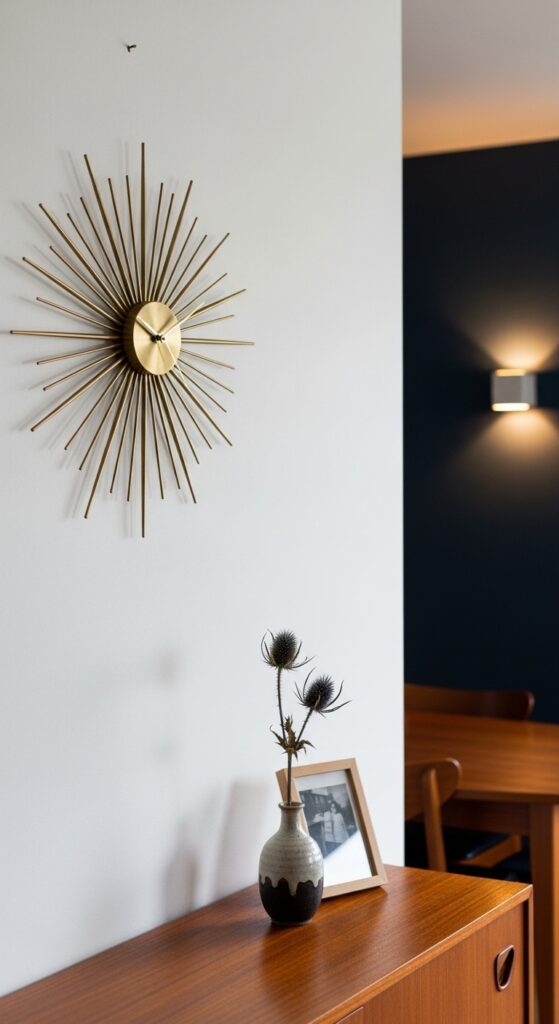
Keep in mind — most sunburst clocks sold today are decorative first and functional second. The clock mechanisms are cheap and often lose time within months. Hanging them level is trickier than expected because the rays create an optical illusion. Check batteries every few months or just accept it as wall sculpture.
Sometimes the smallest thing on the wall makes the biggest statement.
Add this accent:
- Brass Sunburst Starburst Wall Clock — Mark the time in mid-century style with radiating metallic rays for a sculptural wall focal point.
- Picture Hanging Wire Mounting Kit — Secure your statement piece flush to the wall with adjustable hardware for easy leveling.
- Warm White Plug-In Wall Sconce — Cast a soft glow beside your accent piece with a focused light for evening wall highlights.
10. Floating Shelves with Curated Ceramics
Three to five floating shelves staggered on a dining room wall give you a rotating gallery for ceramics, small plants, and collected objects. The key mid-century move is keeping them minimal — two to three objects per shelf maximum. Walnut or white oak shelves with hidden brackets keep the look clean and intentional.
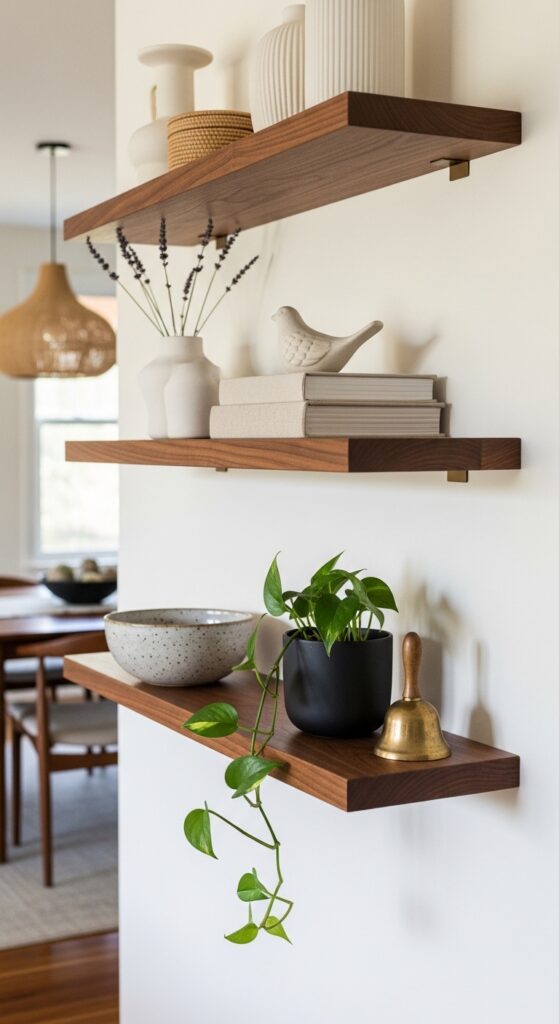
The honest truth — floating shelves require wall studs or serious anchors, and drywall-only installs will eventually sag and pull out. Curating “effortlessly” takes effort, and most people overload them within a month. Dust collects on every surface and every object, multiplying your cleaning time.
Edit what you display, and the shelf does the talking.
Style your shelves:
- Hidden Bracket Walnut Floating Shelf — Display your curated collection on warm wood with invisible mounting for a seamless wall line.
- Handmade Speckled Ceramic Bud Vases — Add organic texture to your shelves with small-scale pottery for a collected-over-time feel.
- Miniature Trailing Pothos in Ceramic Pot — Bring life to your display wall with low-maintenance greenery for natural movement.
11. Hairpin Leg Dining Bench for Casual Seating
Swapping out chairs on one side of the table for a hairpin leg bench immediately shifts the dining room vibe from formal to relaxed. The exposed metal legs look industrial-modern, and benches seat more people in less space. Pair it with chairs on the opposite side for that collected, lived-in feel.
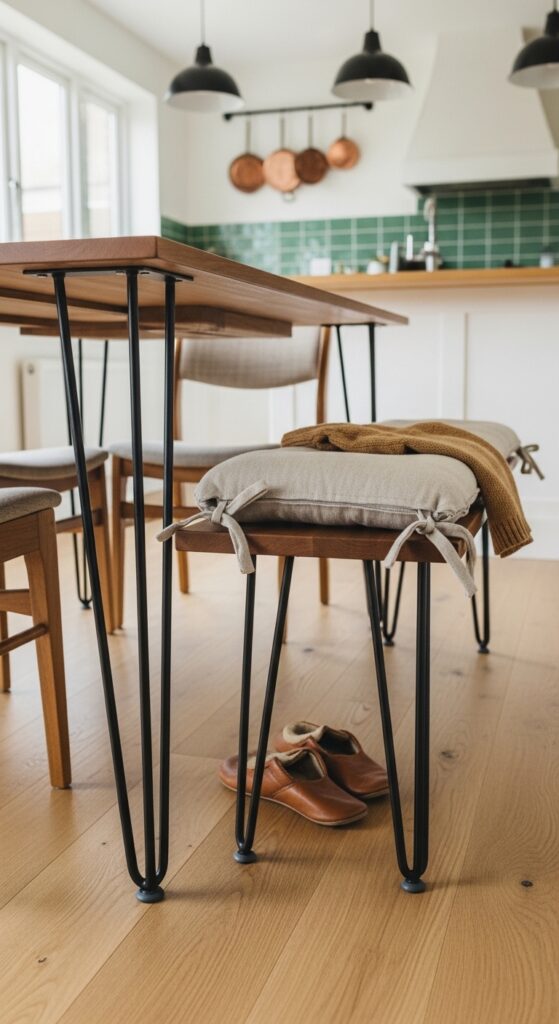
Just know — benches without backs get uncomfortable after about 30 minutes for most adults. Kids love them, but they also love sliding off the ends. Hairpin legs on soft floors like hardwood will scratch and dent without protective caps, so add those before the first use.
A bench says “pull up, there’s always room for one more.”
Casual it up:
- Steel Hairpin Leg Dining Bench — Add relaxed seating to one side of your table with a slim profile for flexible everyday dining.
- Long Linen Bench Cushion with Ties — Make bench seating comfortable with a padded layer in a neutral tone for extended meals.
- Silicone Hairpin Leg Floor Protectors — Guard your hardwood from metal scratches with snug-fit caps for every leg.
12. Statement Pendant Cluster Over a Round Table
Three pendants hung at varying heights over a round dining table create depth and drama that a single light can’t match. Choose pendants in smoked glass, opal white, or spun brass — all classic mid-century materials. Stagger the drop lengths by 4 to 6 inches for the most natural cascade effect.
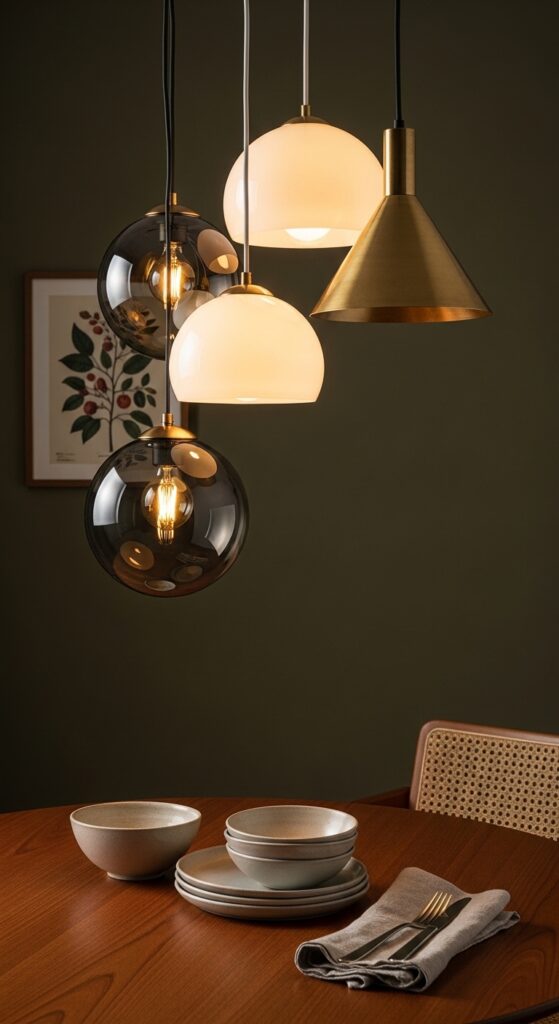
Here’s the catch — getting the heights right requires measuring twice and probably adjusting three times. Electrically, a cluster usually needs a single junction box and a multi-pendant canopy plate, which means wiring work. The visual weight of three pendants can overwhelm a small table, so scale matters.
Three lights tell a story that one never could.
Illuminate the table:
- Smoked Glass Globe Pendant Light — Cast a warm filtered glow above your table with a tinted shade for mid-century moodiness.
- Three-Pendant Ceiling Canopy Plate — Mount a cluster of lights from a single point with a unified base for clean installation.
- Adjustable Brass Pendant Cord Set — Customize your hanging heights with flexible wiring for perfectly staggered light placement.

13. Arched Built-In Niche for Display
Cutting an arched niche into a dining room wall adds an architectural detail that feels both European and retro at once. Use it to display a single sculptural vase, a stack of vintage cookbooks, or a small piece of art. The arch softens all the straight lines typical of mid-century furniture and creates a natural spotlight.
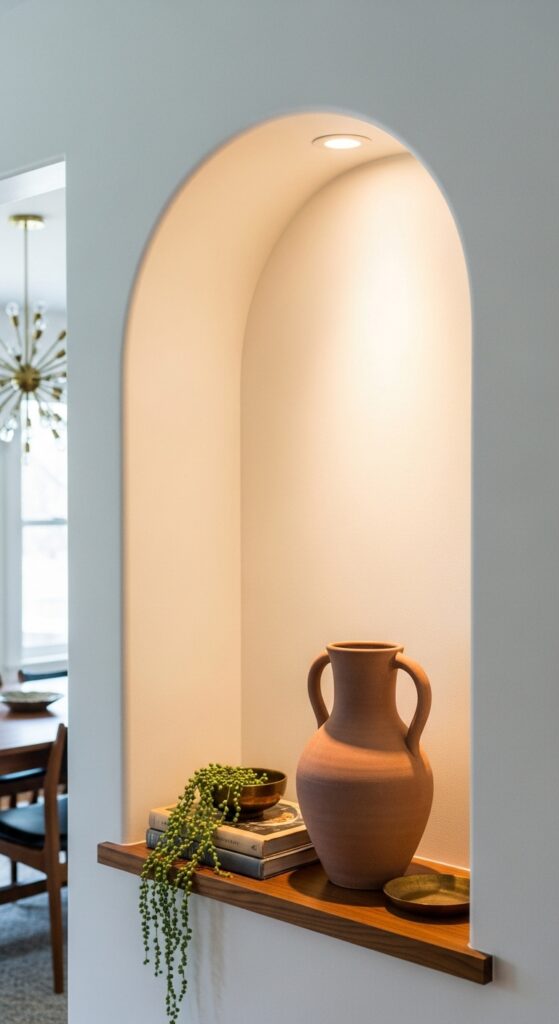
Realistic expectations — building a niche means opening up drywall, possibly rerouting electrical, and finishing the interior surfaces cleanly. It only works on non-load-bearing walls unless you involve a structural engineer. Getting the arch symmetrical takes skill, and DIY attempts often look wobbly.
An arch carved into the wall is a room’s quiet signature.
Shape the detail:
- Plaster Arch Niche Installation Kit — Create a recessed architectural feature in your wall with pre-formed components for a smoother build.
- Matte Ceramic Sculptural Vessel — Fill your niche with a single statement object in an organic form for gallery-level impact.
- Recessed Niche Puck Light Fixture — Light the inside of your alcove with a small hidden fixture for spotlight drama.
14. Woven Cane Dining Chairs for Natural Texture
Cane-backed or cane-seated chairs bring a natural lightness that heavy upholstered chairs can’t. The woven pattern adds texture to every seat, and the material breathes — literally — making them comfortable in warm dining rooms. Mix cane chairs with a dark wood table for that classic contrast mid-century designers loved.
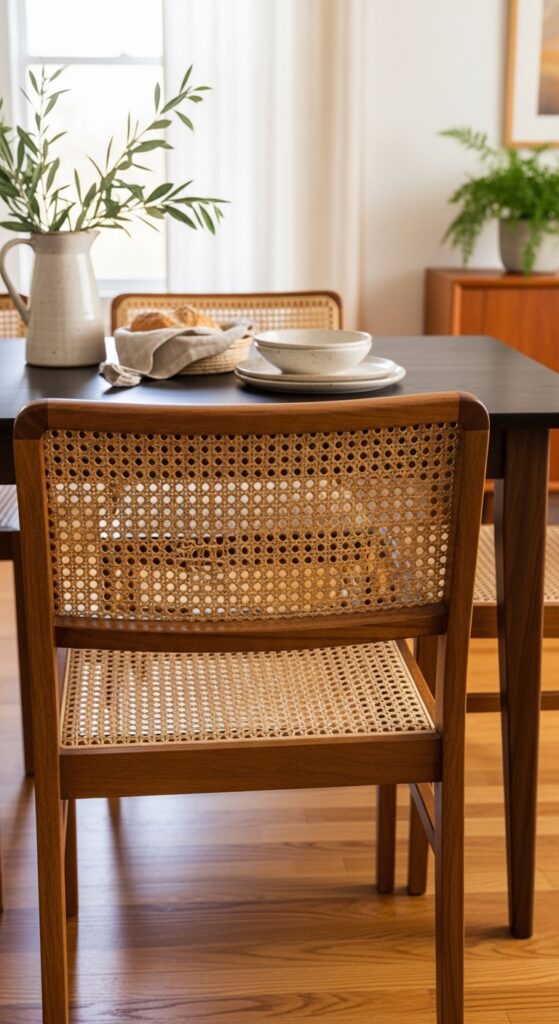
Something to keep in mind — cane deteriorates over time, especially in humid climates or if people lean back hard on the backs. Repairs involve re-weaving, which is a specialized craft that’s not cheap. Cheaper cane chairs use printed cane-look material that peels and yellows. Check for real rattan before you buy.
Natural materials don’t try to impress — they just do.
Weave the look:
- Hand-Woven Cane Back Dining Chair — Add breathable natural texture to your table with traditional craftsmanship for an organic modern feel.
- Clear Matte Rattan Sealant Spray — Protect your woven chairs from moisture damage with a UV-resistant coating for longer life.
- Dark Stained Solid Oak Dining Table — Create tonal contrast beneath your cane chairs with a rich base for warm visual grounding.
15. Retro Bar Cart as a Dining Room Accent
A two-tiered bar cart in brass and glass rolled into the corner of a dining room is instant mid-century personality. Stock the top shelf with a few bottles and glassware, and use the bottom shelf for mixers or a small plant. It turns a dead corner into a functional design moment that guests gravitate toward.
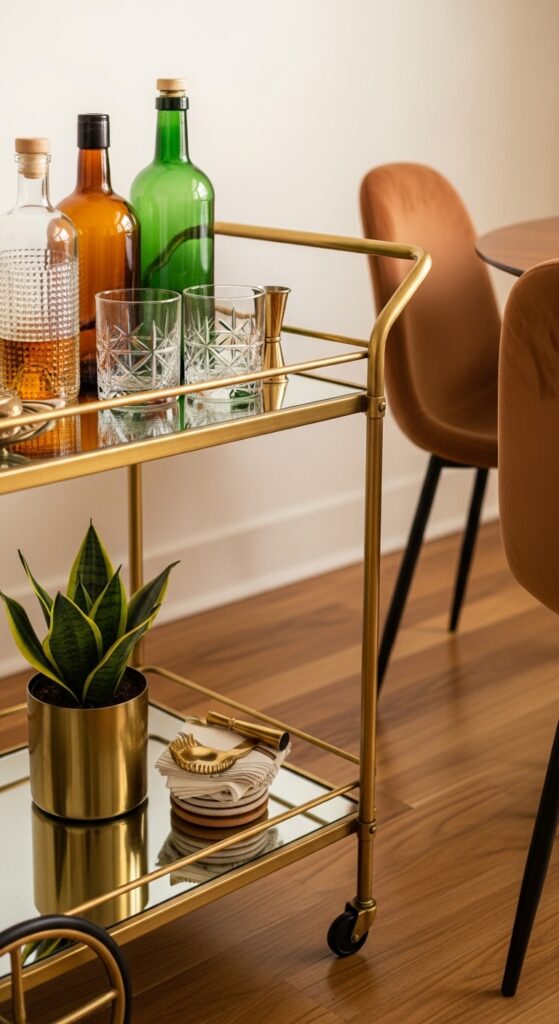
The truth is — bar carts roll, and most dining rooms have hard floors where they drift annoyingly. The glass shelves on cheaper models flex under weight and feel flimsy. If you’re not actually a cocktail person, the cart becomes a dust-collecting prop pretty quickly. Be honest about how you’ll actually use it.
A bar cart is furniture with a personality.
Stock the corner:
- Two-Tier Brass and Glass Bar Cart — Roll a glamorous accent into your dining space with mirrored shelves for vintage entertaining vibes.
- Set of Mid-Century Lowball Tumblers — Serve drinks in style with geometric etched glassware for an authentic retro cocktail moment.
- Small Potted Snake Plant in Brass Pot — Fill the bottom shelf with sculptural greenery in a metallic planter for low-effort life.
16. Terrazzo Dining Table with Brass Legs
Forget putting terrazzo only on floors — a terrazzo tabletop with slim brass legs is a showpiece that anchors a mid-century modern dining room like nothing else. The chips of marble and quartz catch light differently throughout the day, and the brass legs add just enough warmth. It’s a statement without shouting.
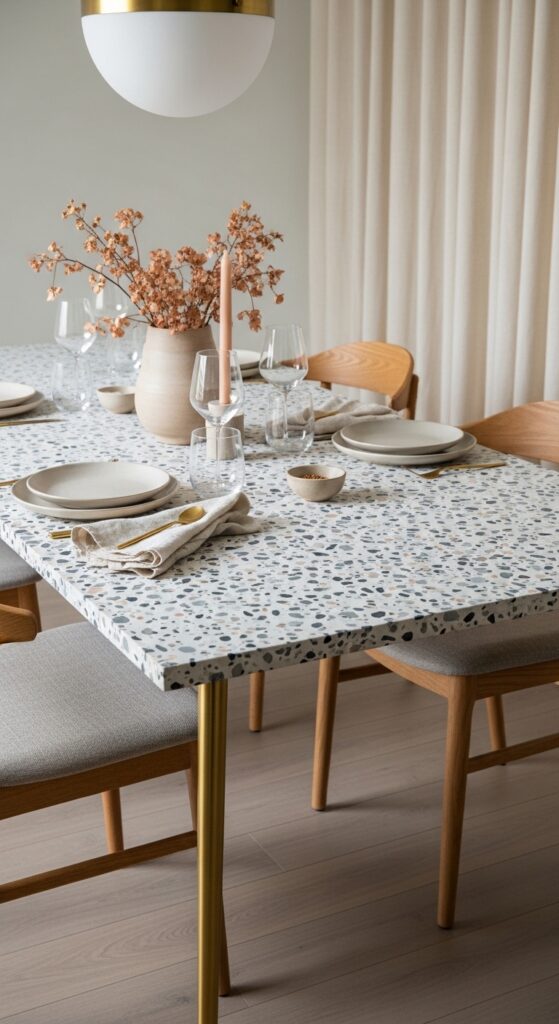
On the practical side — terrazzo tables are heavy, which makes rearranging the room a two-person job minimum. The surface is sealed, but acidic spills like wine or lemon juice can etch the finish over time. These tables also cost significantly more than wood alternatives, so treat it as a long-term investment piece.
The best table doesn’t match the room — the room matches it.
Anchor the room:
- Speckled Terrazzo Top Dining Table — Make your table the centerpiece of every meal with a stone-chip surface for lasting mid-century polish.
- Brass Tapered Table Leg Replacement Set — Upgrade or replace your table’s base with slender metallic legs for a refined vintage silhouette.
- Stone Surface Protective Sealant Spray — Keep your terrazzo top stain-resistant with a clear-coat treatment for worry-free daily dining.
17. Olive Green Velvet Upholstered Chairs
Olive green velvet on dining chairs is one of those color-fabric combos that screams mid-century without trying. The muted green reads as sophisticated rather than trendy, and velvet adds a richness that cotton or leather can’t replicate. These chairs pull together rooms with wood tones, brass accents, and neutral walls.
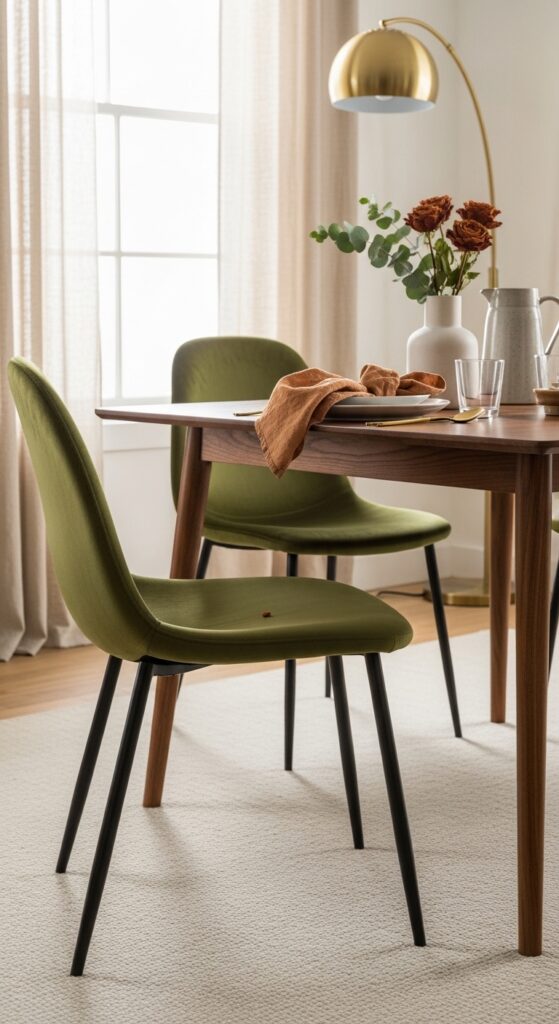
A word of caution — velvet shows every crumb, water ring, and pet hair instantly. It’s not the fabric for a house with toddlers or messy eaters unless you pick a performance velvet with stain resistance. The color also shifts appearance dramatically between natural and artificial light, so check swatches in your actual dining room before committing.
Green velvet doesn’t follow trends — it outlasts them.
Dress your seats:
- Olive Velvet Upholstered Dining Chair — Wrap your seating in rich fabric with a muted green tone for understated mid-century luxury.
- Fabric Protection Invisible Shield Spray — Keep your velvet pristine against spills with a breathable barrier for everyday dining confidence.
- Brass Curtain Rod with Linen Drapes — Frame the dining window with olive-complementary tones in a warm metal finish for cohesive styling.
18. Asymmetrical Gallery Wall Beside the Table
Forget grid layouts — an asymmetrical gallery wall with mismatched frames, sizes, and mediums feels way more authentically mid-century. Mix abstract prints, a small woven textile, a vintage photograph, and maybe a ceramic plate. The key is keeping a loose visual triangle between the largest pieces so it looks intentional, not random.
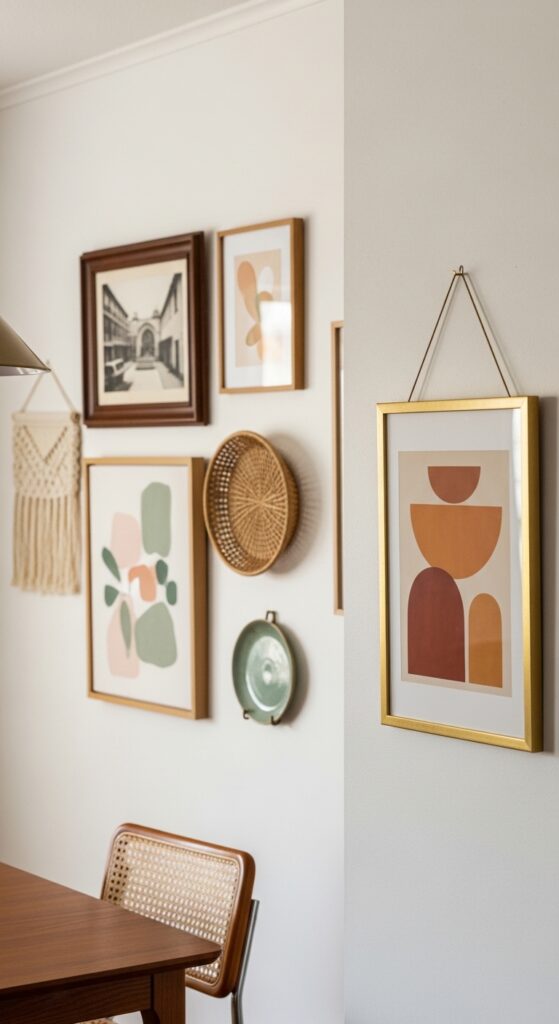
The frustrating part — laying out an asymmetrical gallery on the wall involves more nail holes than you’d expect because spacing always needs adjusting. Paper templates taped up first save walls but add a full extra step. The “effortless” look takes the most effort of all, and pieces you order online often look different than they do on screen.
The most personal rooms aren’t styled — they’re collected.
Curate your wall:
- Assorted Wood and Metal Frame Set — Build your gallery wall with mixed materials in complementary tones for collected-over-time charm.
- Abstract Geometric Art Print Trio — Anchor your arrangement with bold shapes in warm tones for a mid-century-inspired art grouping.
- Removable Picture Hanging Strip Pack — Test your layout without damaging walls using adhesive mounts for commitment-free placement.
19. Smoked Glass Dining Table for Moody Drama
A smoked glass tabletop on a wood or metal base brings an unexpected darkness to the dining room that feels both retro and sophisticated. The tinted surface reflects light softly while hiding fingerprints better than clear glass. It’s a strong choice for dining rooms where the furniture needs to carry the design weight since the walls are plain.
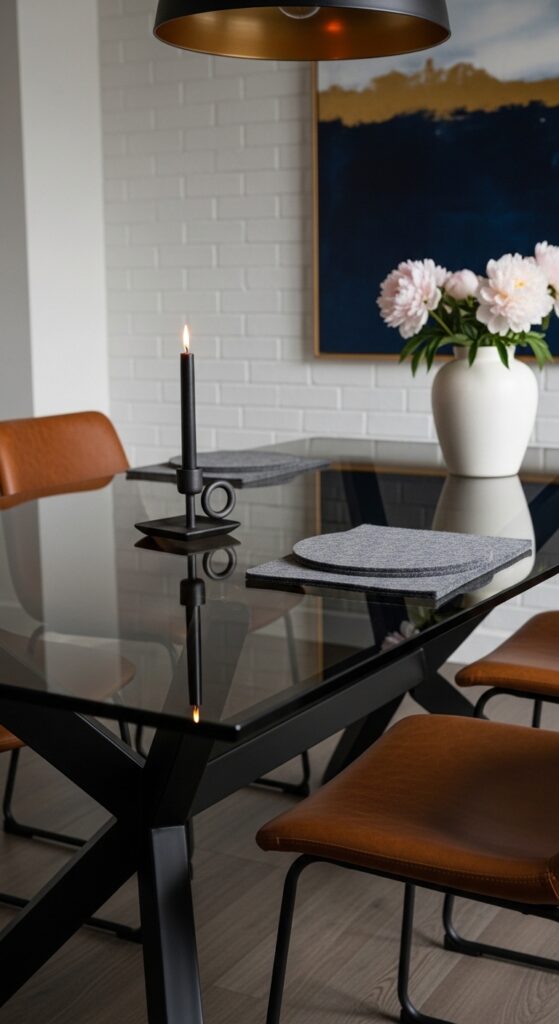
Something worth noting — glass tables amplify every sound, so plates and glasses clinking feels louder than on wood. They’re cold to the touch in winter, which bothers some people more than they’d expect. And despite hiding fingerprints better than clear glass, smoked glass still shows streaks when sunlight hits it at angles.
Dark glass whispers where clear glass shouts.
Set the tone:
- Smoked Tempered Glass Dining Table — Add moody depth to your dining space with a tinted surface for refined mid-century edge.
- Felt-Bottom Linen Placemats in Charcoal — Protect and soften your glass table with sound-absorbing mats for quieter, warmer meals.
- Matte Black Taper Candle Stand Set — Layer dark accents across your table with sculptural holders for dramatic low-light dining.
20. Indoor-Outdoor Dining with Sliding Glass Walls
Mid-century homes were built around the idea that inside and outside should flow together. If your dining room has or could have a large sliding glass door or folding glass wall, opening it during meals makes the room feel twice its size. The light alone changes how every piece of furniture reads.
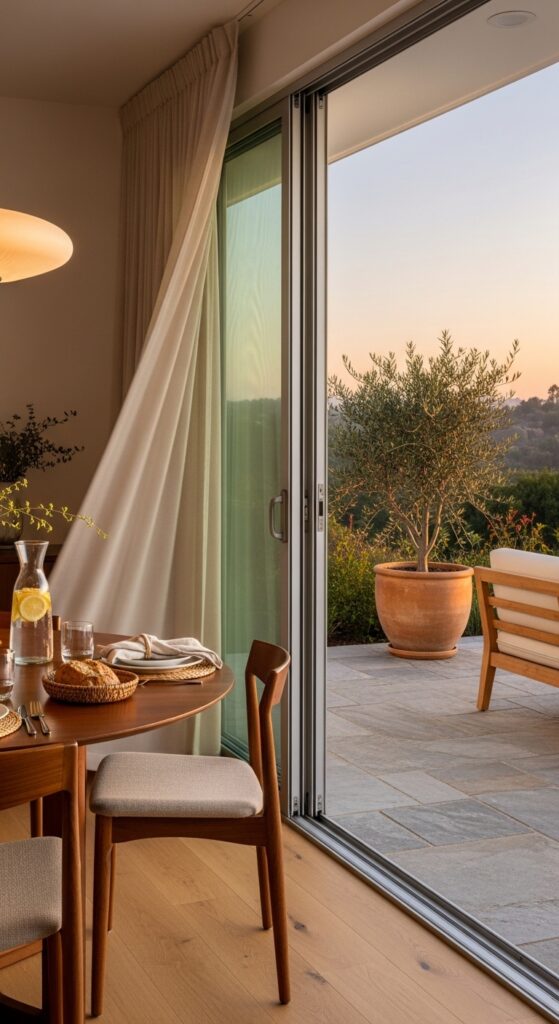
Let’s be practical — installing floor-to-ceiling sliding glass walls is a major renovation with structural implications. Even large sliding doors let in drafts, bugs, and noise depending on your climate and location. Temperature control becomes a real concern when half the wall disappears, especially during summer or winter extremes.
The biggest room in any house is the one that opens to the sky.
Open the room:
- Thermal Break Aluminum Sliding Door Panel — Connect your dining room to the outdoors with a wide glass opening for light-filled meals.
- Retractable Magnetic Screen Door — Keep bugs out while your glass wall is open with an invisible mesh barrier for breezy dining.
- Indoor-Outdoor Woven Jute Area Rug — Ground your transitional dining space with a natural fiber layer that handles both zones.
21. Mixed Material Dining Table with Live Edge
A live edge slab top mounted on a clean geometric metal base bridges organic and industrial — two pillars of mid-century design. The raw edge adds movement and unpredictability to a room full of straight lines. Acacia, maple, or black walnut slabs all bring different grain character, so choose based on your existing color palette.
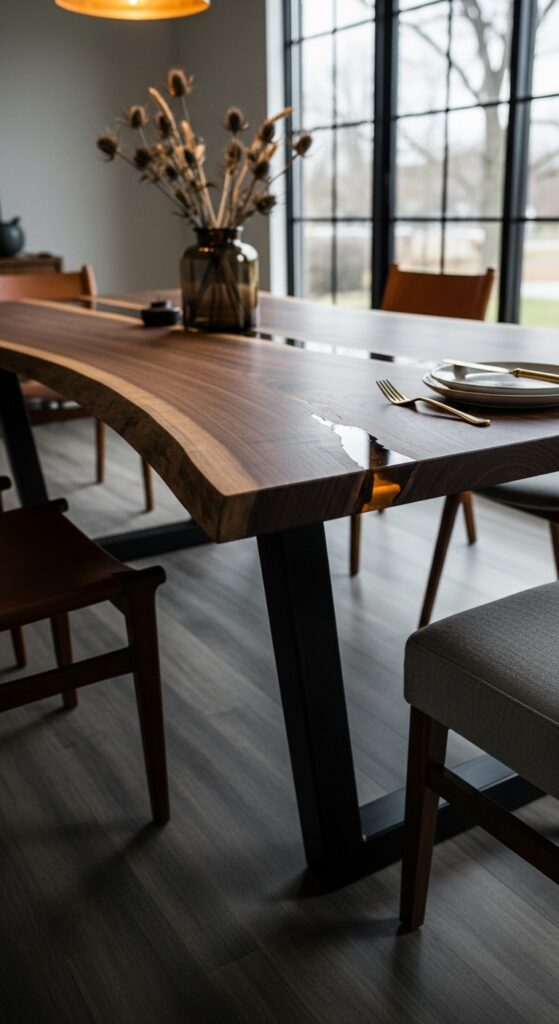
Here’s what nobody tells you — live edge slabs need to be properly kiln-dried or they’ll crack and warp over the first year. The bark edge is fragile and sheds pieces unless it’s been sealed and stabilized. These tables are rarely level without professional shimming, and finding a slab long enough for six seats means specialty lumber yards, not furniture stores.
Nature doesn’t do straight lines — and your dining table doesn’t have to either.
Bring nature to the table:
- Kiln-Dried Live Edge Wood Dining Slab — Anchor your dining room with a one-of-a-kind natural surface for organic mid-century character.
- Matte Black Trapezoid Metal Table Base — Support your slab with a geometric steel frame for the perfect industrial-organic contrast.
- Food-Safe Hardwax Oil Wood Finish — Protect the raw beauty of your live edge with a natural penetrating seal for daily dining use.

InsideMake exists for one reason — to help you love your home more. We bring expert decor insights and room-specific inspiration directly to you.