
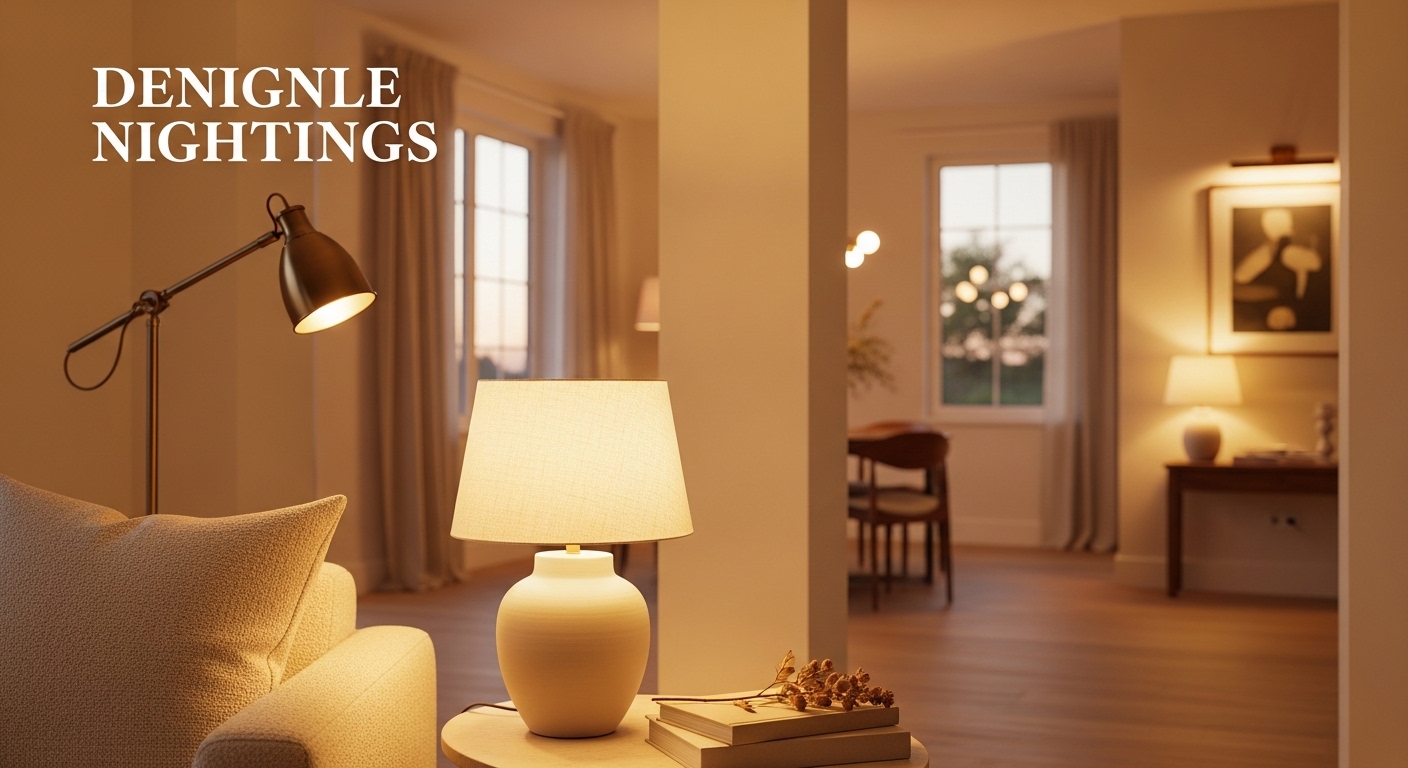

There’s a moment in every home where the light just feels right — warm, layered, flattering — and you can’t quite explain why. Most people never get there by accident. They get there by understanding how light actually works in a space, not just which bulb goes where.
If you’ve ever walked into a room that felt cold, flat, or just “off” despite nice furniture and good paint, the problem was almost certainly the home lighting. Lighting shapes how a room feels more than any other single design decision — it affects mood, apparent size, color accuracy, and even how rested you feel at night.
This guide gives you a practical, room-by-room framework for building a lighting plan that works. You’ll learn the three layers every room needs, which fixtures to choose, how to control light for different moments, and how to avoid the most common mistakes homeowners make when they pick lighting last.
Understand the Three Layers of Light Before Buying a Single Fixture
Every well-lit room uses three distinct layers working together. Skip one and the whole room suffers. Ambient light is the base — it fills the room with general illumination, usually from an overhead fixture or recessed lights. Task lighting focuses brightness where you actually do things: reading, cooking, applying makeup. Accent lighting is purely aesthetic — it highlights artwork, architecture, or texture to add depth and visual interest.
The mistake most homeowners make is relying entirely on one overhead fixture to do all three jobs at once. It can’t. A single ceiling light creates flat, shadowless light that makes a room feel like a waiting room rather than a home. When you plan all three layers before purchasing anything, every fixture decision becomes easier because you know exactly what job each one needs to do.
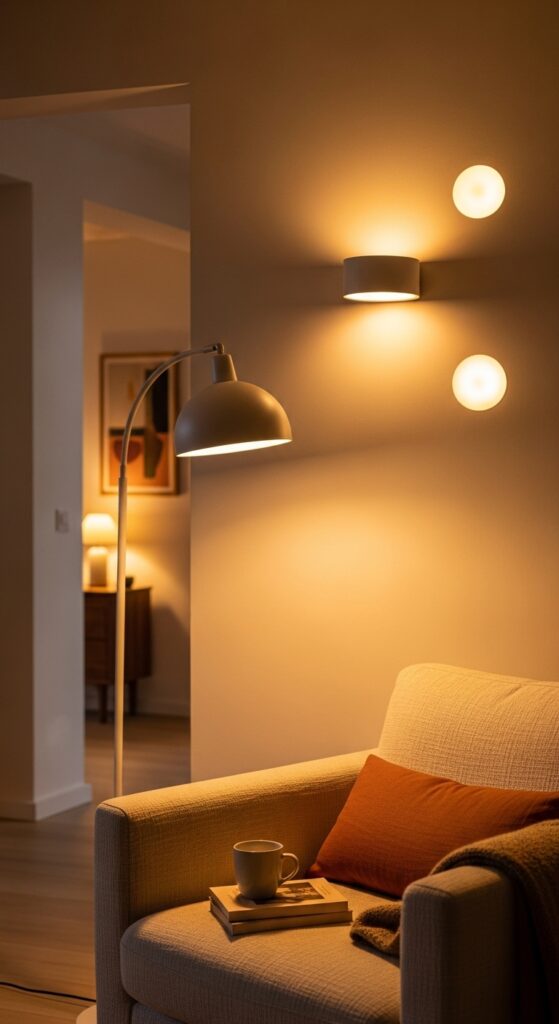
Mini Takeaway: A room with one light source isn’t lit — it’s just illuminated.
Products to consider:
- Adjustable Recessed Ceiling Light for Ambient Layers — Brightens your whole room evenly with directional control for flexible placement
- Plug-In Arc Floor Lamp with Dimmer Switch — Adds warm ambient or accent light without requiring any electrical work
- Rechargeable Accent Spotlight with Magnetic Base — Highlights artwork or shelving with targeted beam for instant visual depth
Choose the Right Color Temperature for Every Room’s Purpose
Color temperature — measured in Kelvins — is one of the most misunderstood aspects of home lighting, and getting it wrong ruins an otherwise good plan. Warm white light (2700K–3000K) makes spaces feel cozy and relaxed, which is why it belongs in bedrooms, living rooms, and dining areas. Cool white (3500K–4100K) improves focus and clarity, making it ideal for home offices and kitchens. Daylight bulbs (5000K–6500K) mimic natural sunlight and work well in bathrooms or utility spaces where color accuracy matters.
The key rule: never mix drastically different color temperatures in the same open-plan space. A 2700K pendant next to a 5000K undercabinet light in an open kitchen creates an unsettling visual mismatch your eye can’t reconcile, even if you can’t name what’s wrong. Pick a temperature family per zone and stay consistent within it.
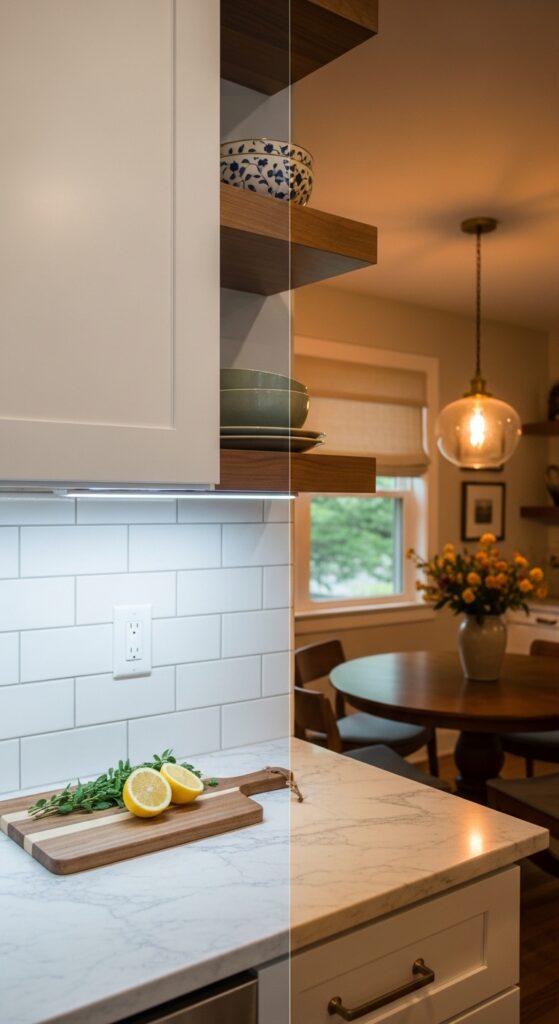
Mini Takeaway: The warmth of a room comes from the light before it comes from the decor.
Products to consider:
- Warm White Dimmable LED Bulb for Living Spaces — Recreates incandescent warmth in your lamps with long-lasting energy-efficient output
- Tunable White Smart Bulb with App Control — Shifts color temperature throughout the day to match your natural rhythm
- Cool White LED Strip Light for Kitchen Counters — Delivers crisp task lighting under cabinets with a clean modern look
Plan Your Kitchen Lighting in Three Distinct Zones
The kitchen is the hardest room to light well because it has to do everything simultaneously: ambient light for general visibility, task light for chopping and cooking, and sometimes accent light for open shelving or a decorative range hood. A single flush-mount ceiling fixture — still the default in most builder-grade homes — handles none of these jobs adequately.
Start with recessed lights on a dimmer for ambient coverage, positioned to avoid casting shadows over countertops. Add undercabinet lighting directly above every prep surface — this is the single highest-impact kitchen lighting upgrade you can make. If you have an island, a pendant or linear suspension fixture at 30–36 inches above the countertop creates a natural focal point while adding task light exactly where you need it.
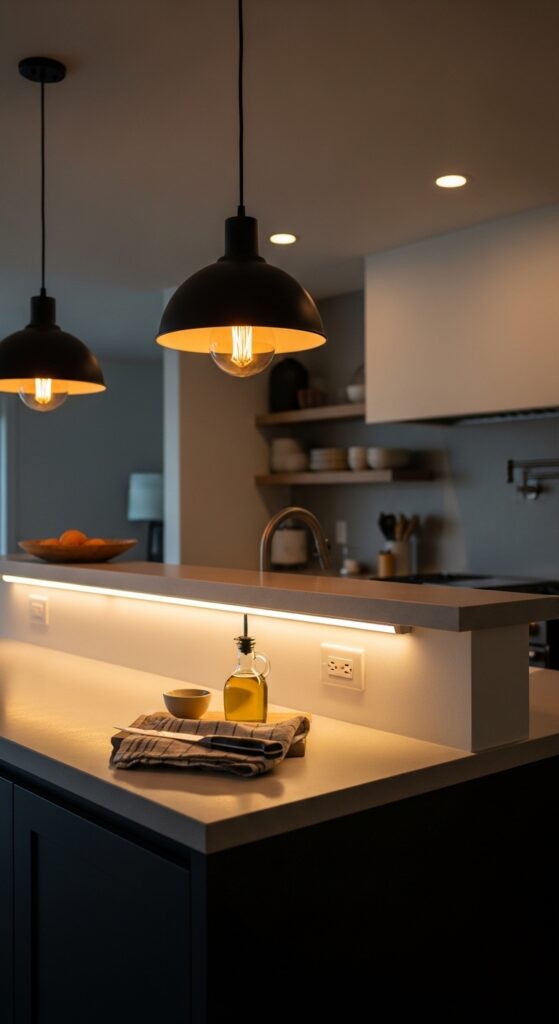
Mini Takeaway: Every kitchen surface where food gets made deserves its own dedicated light source.
Products to consider:
- Hardwired Undercabinet LED Light Bar for Kitchens — Illuminates your prep surfaces with shadow-free brightness and a low-profile design
- Adjustable Pendant Light Fixture for Kitchen Islands — Creates a defined focal point above your island with directional warm light
- Plug-In Puck Light Set for Cabinet Shelving — Adds instant accent lighting inside glass cabinets without cutting a single wire
Layer Bedroom Lighting to Support Both Sleep and Morning Routines
Most bedrooms have one overhead light and one bedside lamp, and most bedrooms feel terrible to be in after dark. The problem is that overhead lighting in the evening is the fastest way to suppress melatonin and make falling asleep harder. A good bedroom lighting plan works in both directions: bright enough to get dressed by in the morning, dim and warm enough to wind down at night.
The formula that works consistently: a ceiling fixture on a dimmer for morning use, two bedside reading lamps with individual switches for evening, and optionally a low-to-the-ground lamp or strip light behind furniture for the softest possible nighttime glow. Bedside lamps should sit at roughly shoulder height when you’re seated in bed — low enough that the bulb isn’t in your direct line of sight when reading.
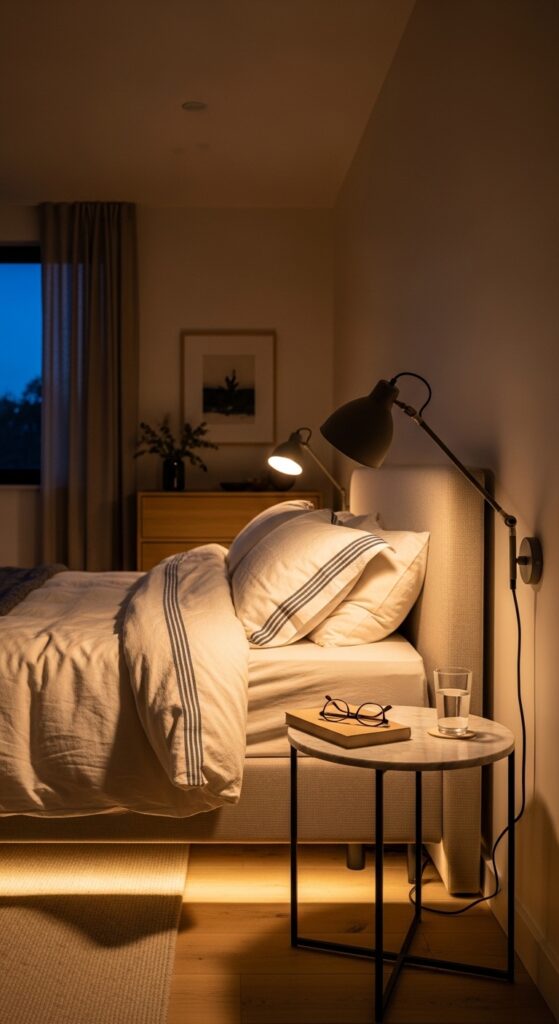
Mini Takeaway: The best bedroom lighting is barely noticeable — until you try sleeping without it.
Products to consider:
- Warm Dimmable Bedside Table Lamp with Linen Shade — Casts gentle light at the perfect reading height without eye-level glare
- Wall-Mounted Swing Arm Reading Light for Beds — Frees up nightstand space while directing focused light exactly where you need it
- Low-Profile LED Night Light with Dusk Sensor — Provides soft floor-level guidance overnight without disrupting sleep cycles
Use Dimmers on Every Circuit You Can Possibly Afford To
If there’s a single rule that separates professionally designed lighting from amateur setups, it’s this: dimmers on everything. A room with four light sources on dimmers gives you infinite flexibility — the same space can host a dinner party, a movie night, a homework session, and a quiet evening all with different lighting configurations. A room without dimmers is stuck at one setting for every scenario.
The practical reality is that dimmers are inexpensive to add during installation and moderately easy to retrofit. The bigger consideration is making sure your LED bulbs are dimmer-compatible — not all are, and incompatible pairings create buzzing, flickering, or a limited dimming range that stops at 40% brightness. Check the bulb packaging for “dimmable” confirmation before buying.
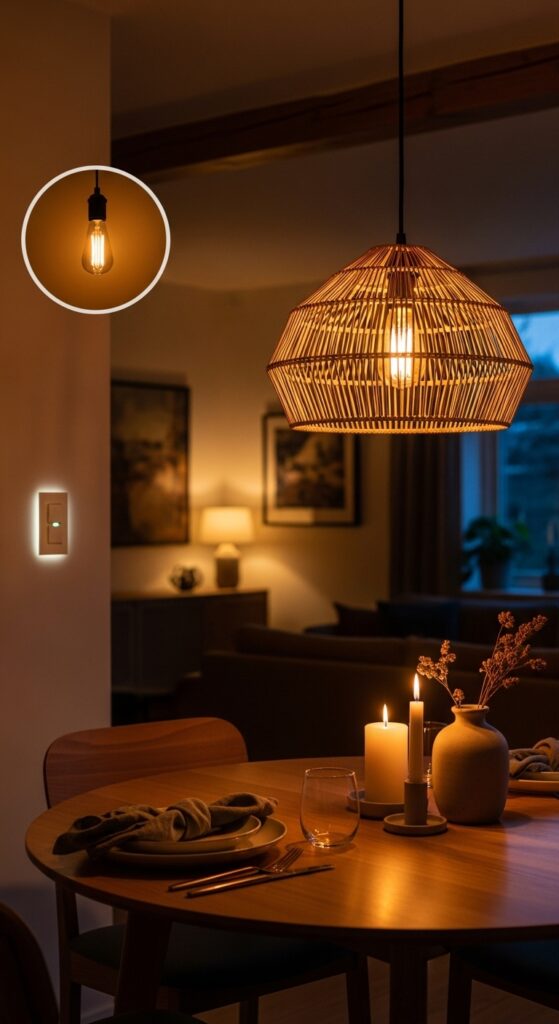
Mini Takeaway: Control over your light is more valuable than any individual fixture you could buy.
Products to consider:
- In-Wall LED Dimmer Switch with Slide Control — Replaces standard switches for smooth, flicker-free dimming across most LED bulbs
- Dimmable Smart Plug Adapter for Floor Lamps — Adds dimming capability to any plug-in lamp without rewiring or replacing switches
- Dimmable Vintage Edison Bulb Set for Warm Rooms — Delivers wide dimming range with a warm glow that flatters every interior palette



Light Artwork and Architecture with Accent Fixtures for Visual Depth
A flat-lit room looks like a hotel corridor. A room with deliberate accent lighting looks like it was designed. The difference is usually just one or two well-placed fixtures highlighting something worth looking at — a gallery wall, a fireplace surround, a bookcase, a textured stone feature wall. Accent lighting draws the eye, creates focal points, and adds the kind of depth that makes a room feel considered rather than assembled.
Picture lights mounted directly above framed artwork are the most classic approach. Recessed adjustable eyeball fixtures angled at a wall achieve the same result with a cleaner ceiling profile. For shelving or bookcases, interior LED strip lighting tucked behind the front lip of each shelf creates a warm glow effect without visible hardware. The rule of thumb: accent light should be roughly three times brighter than the ambient light surrounding it to create genuine visual contrast.
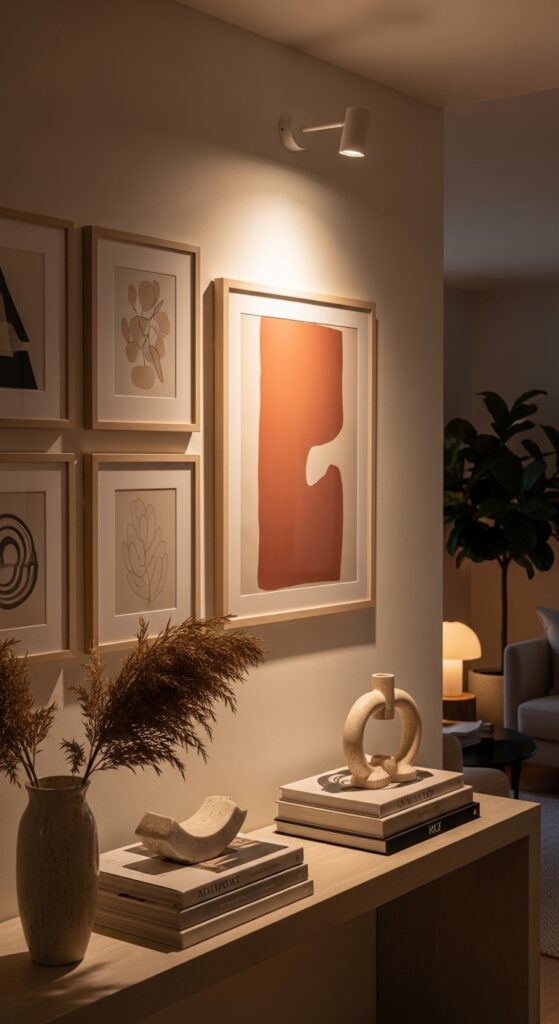
Mini Takeaway: What you choose to light tells guests what this room is actually about.
Products to consider:
- Adjustable LED Picture Light for Framed Artwork — Illuminates your wall art evenly with a slim profile that complements the frame
- Recessed Eyeball Accent Light for Gallery Walls — Directs a focused beam precisely onto artwork without visible hardware at eye level
- Flexible LED Strip Light for Bookcase Shelves — Lines your shelving with warm continuous glow for a built-in, architectural look
Design Your Home Office Lighting to Prevent Fatigue and Glare
Home office lighting is functional first, aesthetic second — and functional means eliminating the two things that cause fatigue fastest: glare on your monitor and uneven contrast between your screen and the surrounding room. Both are solved with the same approach: ambient light bright enough that your screen isn’t the brightest thing in the room, task light positioned to the side rather than behind or above you, and no light source reflecting directly on your screen.
A desk lamp positioned to the left or right of your monitor (depending on hand dominance) provides shadow-free task light without screen glare. A bias light — an LED strip mounted behind your monitor — reduces eye strain by softening the contrast between the bright screen and the dark wall behind it. This is especially useful for long video calls and extended evening work sessions.
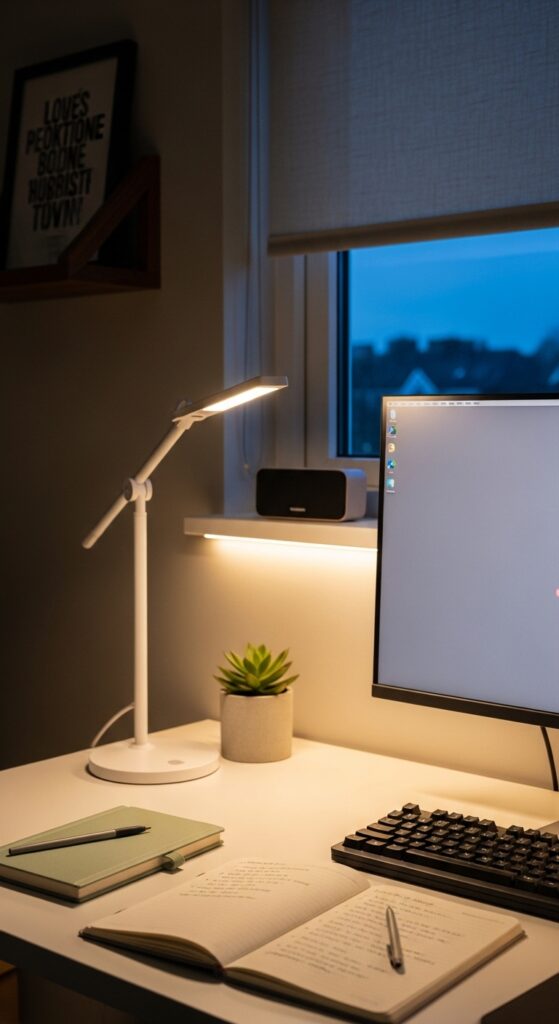
Mini Takeaway: A well-lit office is an ergonomic decision as much as a design one.
Products to consider:
- Adjustable LED Desk Lamp with USB Charging Port — Delivers flicker-free task light at your perfect angle with a built-in dimmer
- Monitor Bias Light Strip with USB Power — Softens screen-to-wall contrast behind your display for comfortable extended screen time
- Daylight LED Overhead Panel Light for Home Offices — Provides even, shadow-free ambient brightness that keeps you alert through long work sessions
Add Outdoor Lighting That Works for Security, Safety, and Atmosphere
Outdoor lighting pulls triple duty in a way no interior room has to manage. It needs to deter intruders, prevent trips on steps and walkways, and still make your home look beautiful from the street and from the patio. Most homes get one of these right and ignore the other two, which is why so many outdoor lighting setups feel either aggressive and commercial or decorative and useless.
Security lighting should be motion-activated and positioned at entry points — front door, garage, side gates — but doesn’t need to be the harsh floodlight variety. Modern motion-sensor fixtures come in styles that blend with architectural trim. Path lighting along walkways handles safety with low-voltage stake lights that keep the scale human rather than airport-runway bright. String lights or lanterns on a covered patio handle atmosphere — they don’t need to be bright, just present and warm.
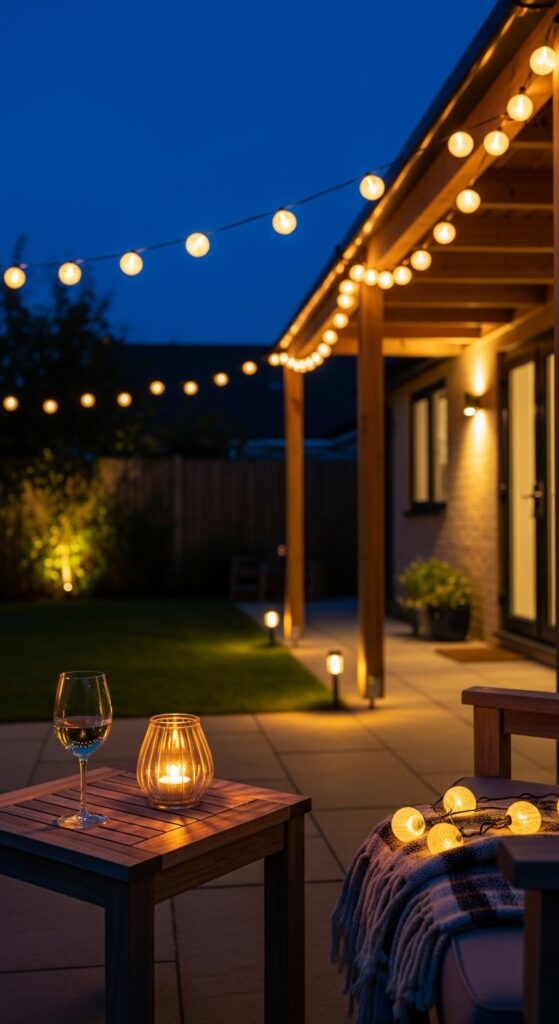
Mini Takeaway: Outdoor lighting done right makes your home feel like it extends past its walls.
Products to consider:
- Motion-Activated Outdoor Security Light with Adjustable Sensitivity — Illuminates entry points automatically with a warm-toned beam that fits residential aesthetics
- Solar-Powered Stainless Steel Path Light Set — Lines your walkway with consistent low-level brightness using zero electricity after installation
- Weatherproof Outdoor String Light for Covered Patios — Creates a warm overhead canopy of light built to withstand outdoor conditions year-round

InsideMake exists for one reason — to help you love your home more. We bring expert decor insights and room-specific inspiration directly to you.