
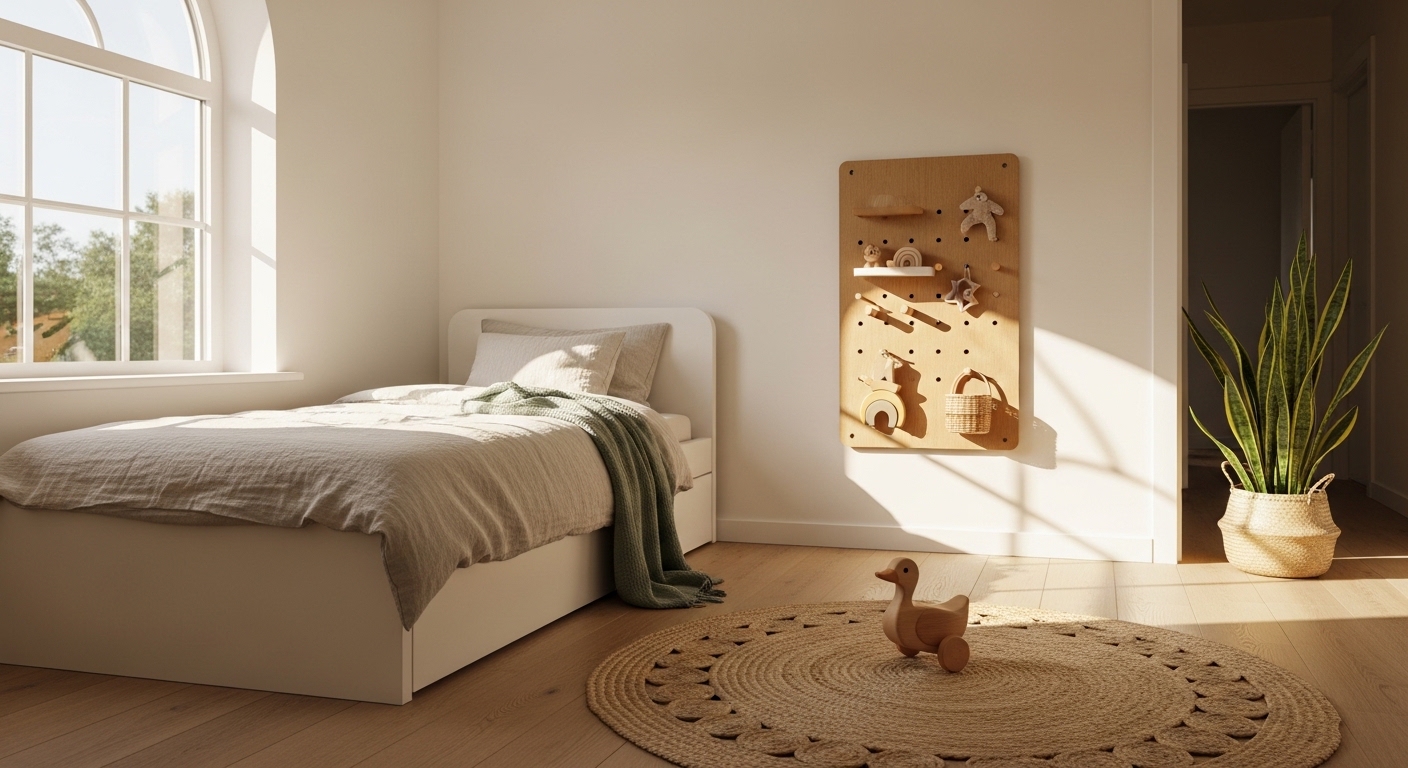

There’s something about walking into a clutter-free kids’ room that makes your whole body relax. No toy avalanche behind the door. No rainbow chaos screaming from every wall. Just calm, clean space where your child can actually think, play, and breathe.
If you’ve been craving that kind of peace but worried a minimalist kids room would feel cold or boring for your little ones, you’re not alone. Most parents think minimal means empty. It doesn’t. It means intentional — every piece earns its spot.
You’re about to scroll through 18 fresh ideas that prove simple spaces can still feel warm, playful, and totally kid-approved. Each one gives you a specific design move you can steal this weekend, no full renovation required.
Let’s get into it.
1. Warm White Walls with a Single Oversized Art Print
A single large-scale art print on crisp white walls creates a focal point that replaces the need for dozens of small decorations. Pick something your child loves — an animal illustration, an abstract shape, or a vintage map — and let it anchor the entire room’s personality.
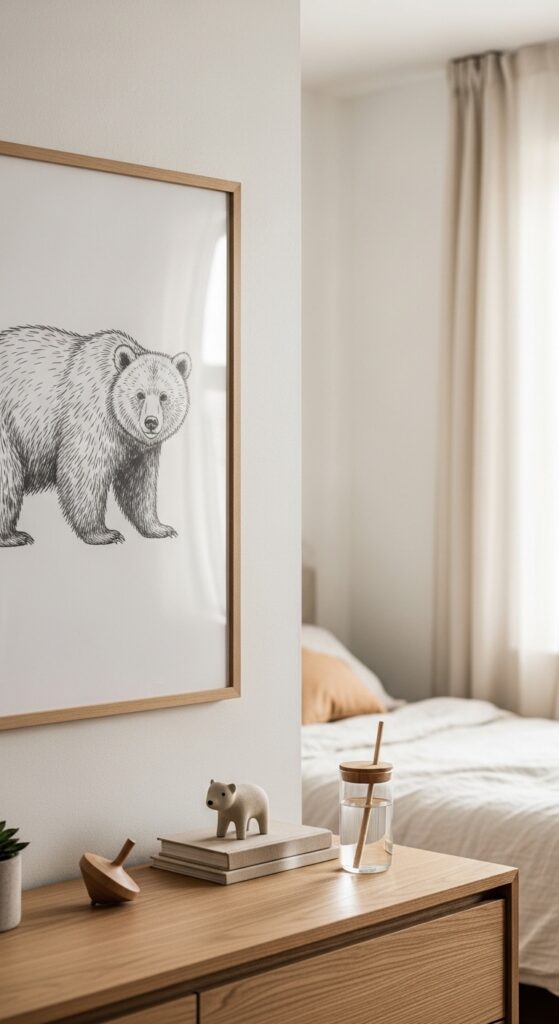
Be realistic though — fingerprints and scuff marks show fast on white walls, especially at kid height. A washable matte paint finish saves you from constant touch-ups and weekend frustration.
One bold piece says more than twenty small ones ever could.
Here are a few pieces that nail this look:
- Oversized Framed Animal Art Print — Anchor your child’s wall with a statement illustration that grows with their taste for years.
- Washable Matte White Wall Paint — Keep your walls fingerprint-proof with a scrubbable finish that stays bright through daily chaos.
- Minimalist Floating Picture Ledge — Display and swap artwork easily with a slim shelf that keeps frames secure without nail holes everywhere.
2. Floor Bed on a Low Wooden Platform
Ditching the bulky bed frame for a low wooden platform instantly opens up the room and gives it a grounded, Montessori-inspired feel. Kids love the independence of climbing in and out on their own, and you’ll love how much bigger the room looks without a towering headboard eating up visual space.
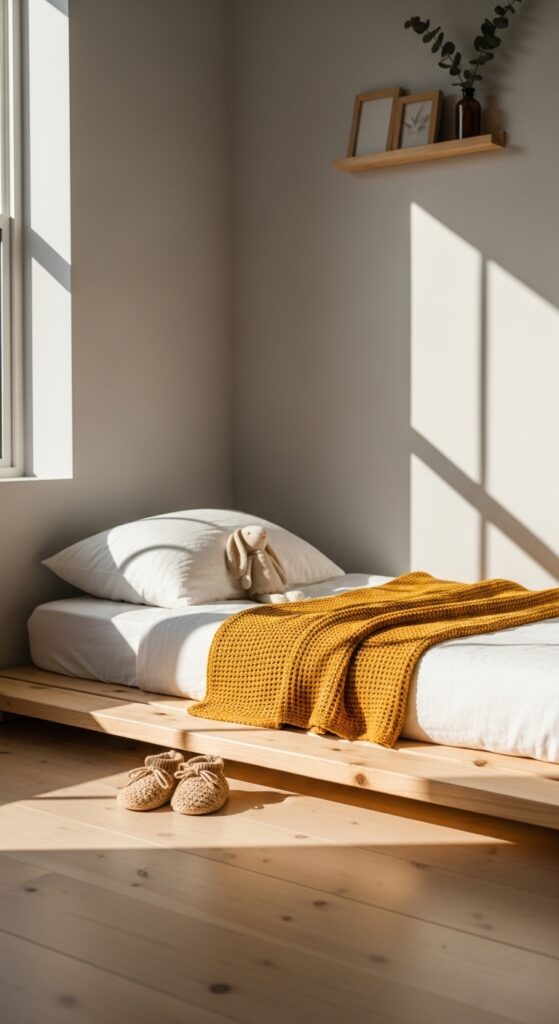
Worth knowing — floor beds work best once your child is past the rolling-off-the-mattress stage, usually around 18 months. And dust bunnies collect faster underneath low platforms, so a quick weekly sweep becomes part of the routine.
A bed close to the ground teaches kids the room belongs to them.
These picks make the floor bed setup easy:
- Natural Pine Low Platform Bed Frame — Give your child’s mattress a clean base that sits just inches off the floor for safe, easy access.
- Organic Cotton Fitted Mattress Sheet — Wrap their sleep space in soft, breathable fabric that holds up to weekly washes without pilling.
- Under-Bed Slim Rolling Storage Bin — Slide seasonal clothes or extra bedding beneath the frame with a flat container that stays hidden from sight.
3. Pegboard Wall for Rotating Toy Display
Forget the overflowing toy chest nobody can dig through. A simple pegboard mounted at your child’s height turns their favorite toys into wall art that rotates with their interests. Hooks, small shelves, and baskets snap in and out, so the display changes as fast as their obsessions do.
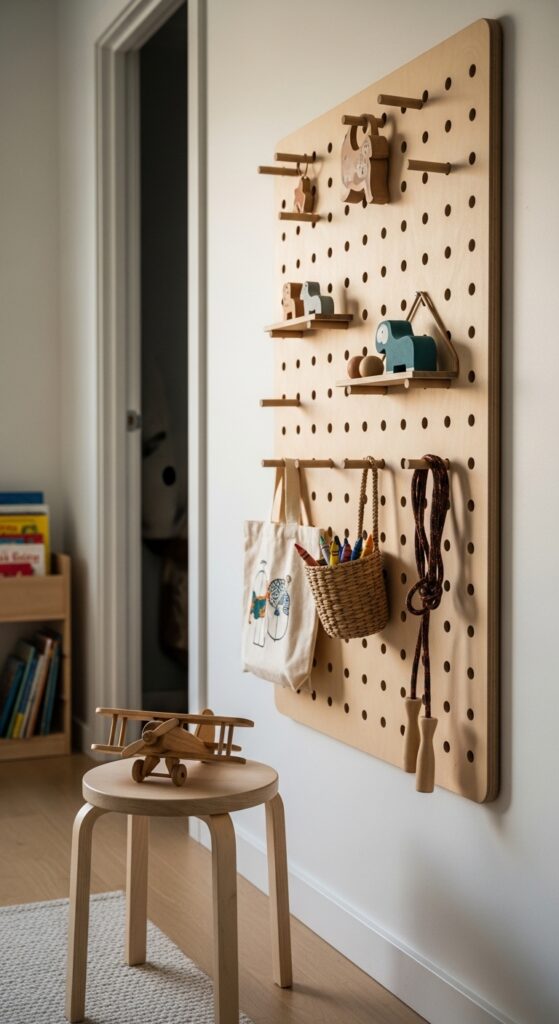
One thing to watch — pegboards need solid wall anchoring, not just drywall screws, especially when kids start hanging heavier items. Check your weight limits before loading it up with that dinosaur collection.
When toys live on the wall, the floor finally gets to breathe.
These make your pegboard wall functional and fun:
- Large Wooden Pegboard Wall Organizer — Mount a full-size board that gives your child a personal gallery for their favorite rotating treasures.
- Assorted Pegboard Hooks and Shelf Kit — Customize the layout weekly with interchangeable hooks and small shelves that click in without tools.
- Lightweight Woven Hanging Storage Basket — Catch small toys and art supplies in a basket that hooks right onto the board and lifts off for cleanup.
4. Neutral Linen Curtains That Pool on the Floor
Swapping out bright character curtains for soft neutral linen panels instantly ages up a kids’ room without making it feel adult. The slight pooling at the floor adds a relaxed, lived-in texture that heavy blackout curtains can’t match. Linen also filters light beautifully — soft glow, not harsh shadows.
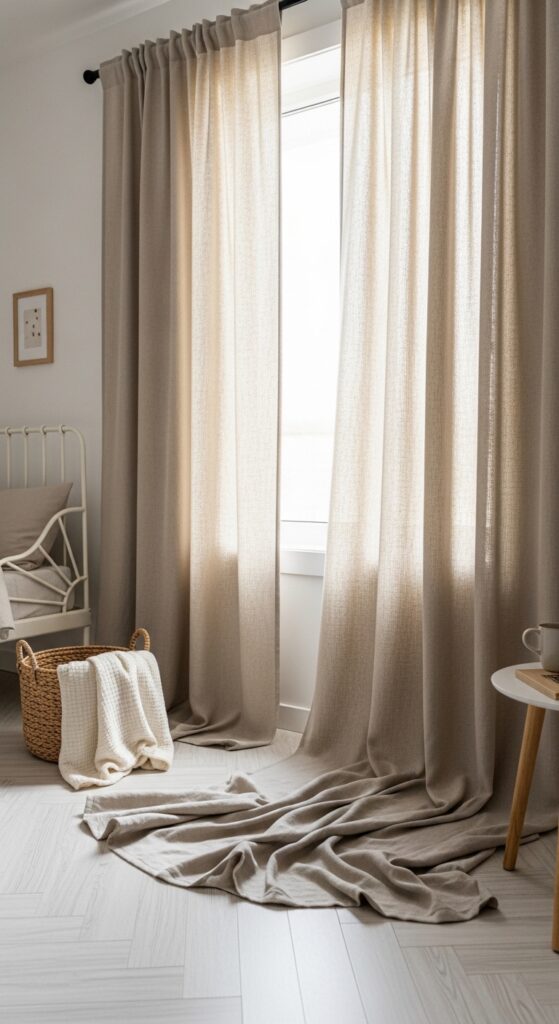
Fair warning — linen wrinkles. That’s part of its charm, but if you’re someone who needs crisp, pressed perfection, this fabric will test your patience. Embrace the rumple or move on to cotton blends.
Soft light through linen turns any room into a story.
Dress your windows with these:
- Natural Oatmeal Linen Curtain Panel — Soften your child’s window with a breezy panel that filters sunlight into a warm, gentle glow.
- Matte Black Slim Curtain Rod Set — Frame your curtains with a sleek rod that disappears against the wall and holds lightweight fabric securely.
- Linen Curtain Tiebacks in Neutral Tone — Pull panels aside during playtime with simple ties that keep the look clean and unfussy.
5. Built-In Reading Nook Under the Window
That awkward space beneath a low window? It’s begging to become a reading corner. A simple bench with a cushion on top and open cubbies below for books creates a dedicated spot that pulls kids away from screens and into stories. No extra furniture needed — the architecture does the work.
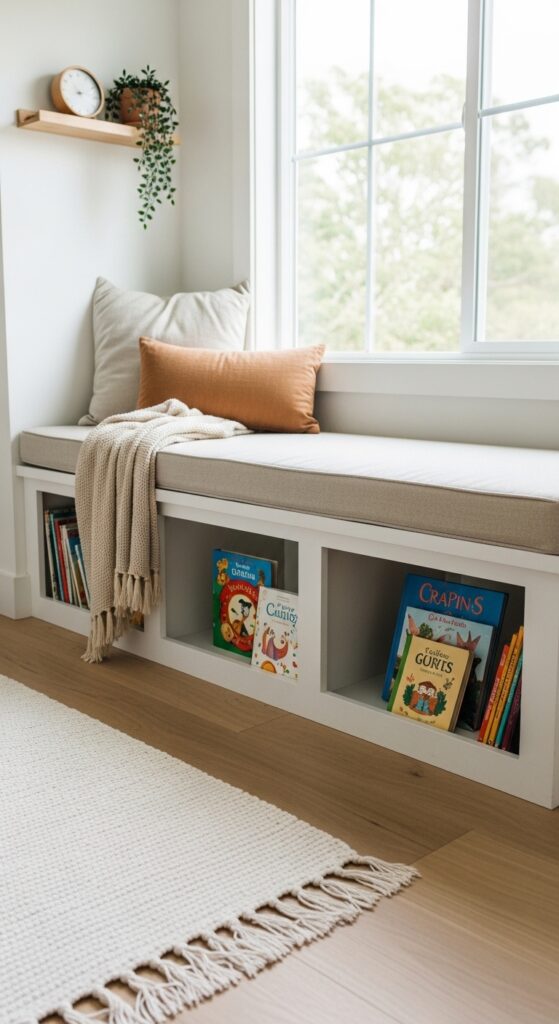
Heads up — custom built-ins aren’t cheap, and renter-friendly alternatives like a low bookshelf with a cushion on top only get you halfway there visually. Measure twice and plan the depth carefully so the seat is actually comfortable, not just cute.
Kids read more when the room gives them a place that feels like theirs.
Build your reading nook with these:
- Custom-Fit Window Bench Seat Cushion — Top your built-in with a plush cushion that makes sitting and reading comfortable for hours of quiet time.
- Open-Front Low Cubby Bookshelf Unit — Store books with covers facing forward so your child can browse and choose their own stories independently.
- Cozy Knit Throw Blanket for Kids — Layer a soft blanket over the bench for chilly reading sessions that feel like a warm hug.
6. Single-Color Toy Storage in Woven Baskets
Here’s the fastest way to make a messy room look pulled together — put every storage basket in the same color and material. Matching woven baskets on open shelves create visual rhythm that tricks your eye into seeing order, even when the baskets are stuffed with random toys inside.
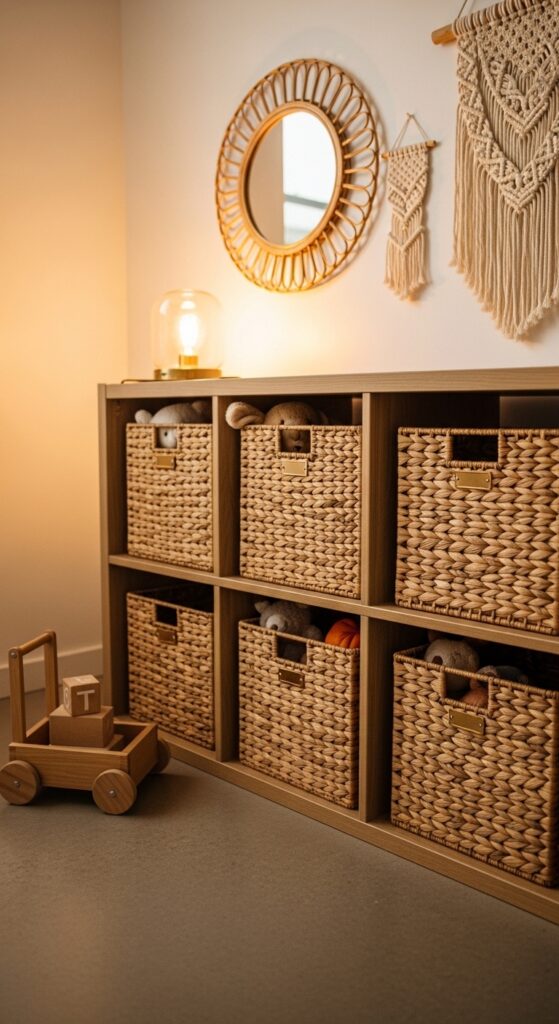
Let’s be honest — woven baskets fray over time, especially when kids yank them off shelves daily. Reinforce the handles with a few stitches early, and accept that these are a replace-every-two-years kind of item, not a forever purchase.
Matching baskets hide chaos and call it style.
Stock your shelves with these:
- Set of Three Woven Seagrass Storage Baskets — Corral toys, blocks, and stuffed animals into matching containers that look tidy even when life isn’t.
- Label Clips for Basket Organization — Snap small tags onto each basket so kids know exactly where trucks, crayons, and dress-up clothes belong.
- Two-Tier Open Wooden Cubby Shelf — Give your baskets a clean home base with a simple shelf that keeps everything at kid-friendly grabbing height.
7. Minimalist Kids Room with a Muted Color Palette
Forget the idea that kids need primary colors on every surface. A muted palette — think sage green, dusty rose, soft clay, or warm oat — creates a minimalist kids room that feels sophisticated and soothing at the same time. Kids actually calm down faster in rooms that aren’t visually screaming at them.
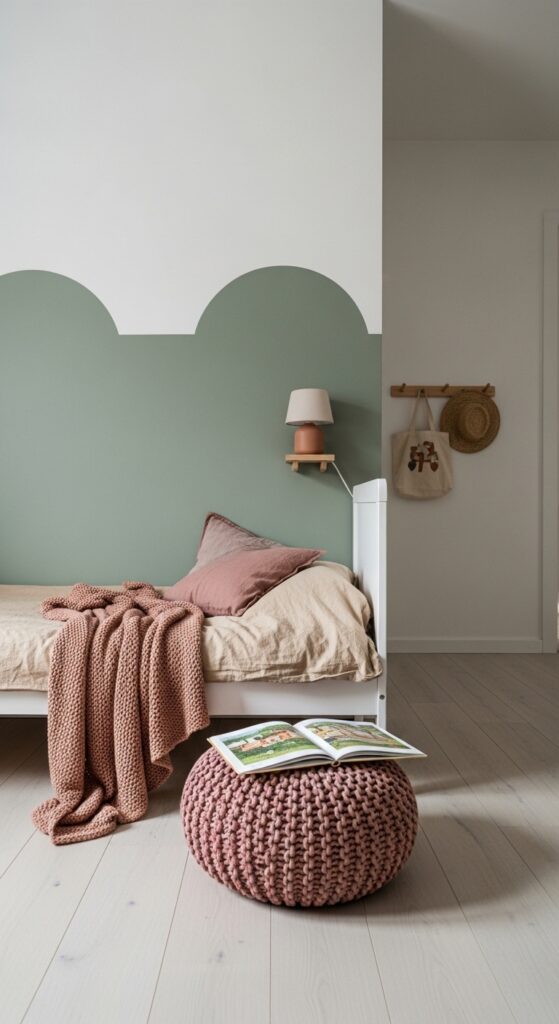
That said — your child might have strong opinions about color. A five-year-old who’s obsessed with bright red won’t love a room full of greige. Compromise by keeping walls and furniture muted but letting their bedding or one accent piece go bold.
Quiet colors don’t bore kids — they let their imaginations get louder.
Bring the muted palette to life with these:
- Dusty Rose Linen Duvet Cover Set — Wrap the bed in a soft, understated color that anchors the room without competing with anything else.
- Sage Green Accent Wall Peel-and-Stick Paint — Add one calming feature wall with zero commitment using a removable paint layer that peels off clean.
- Warm Clay Ceramic Table Lamp Base — Place a textured lamp on the nightstand that adds earthy warmth and a sculptural shape to the corner.
8. Open Clothing Rack Instead of a Bulky Wardrobe
Replacing a full wardrobe with a small open clothing rack forces a capsule approach to kids’ clothes — and that’s the whole point. When your child can see all their options at once, mornings get easier. Plus, a slim wooden or metal rack takes up a fraction of the floor space.
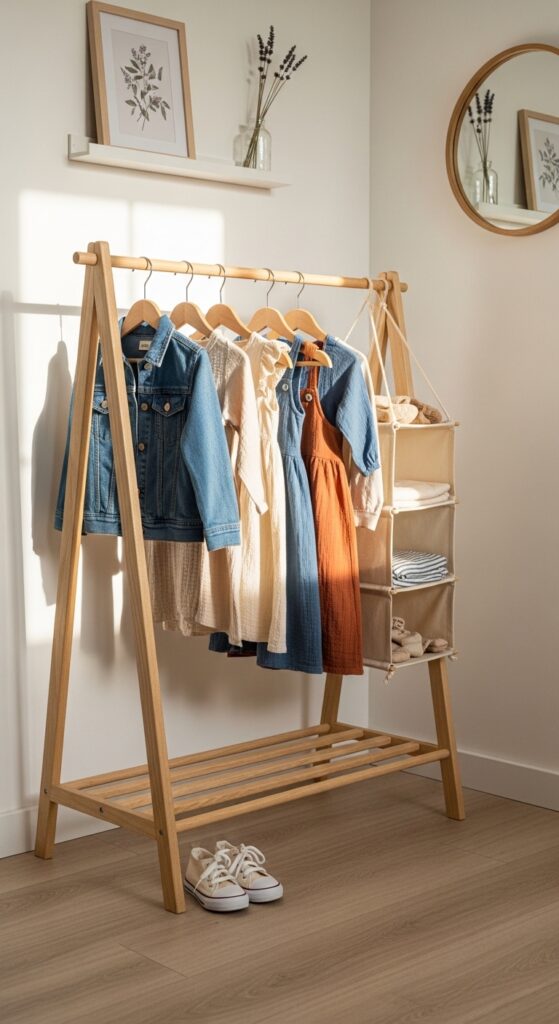
Reality check — open racks mean everything is visible, including the chaos. This only works if you keep the wardrobe small and do a seasonal edit. If you’re someone who stocks up at every sale, this setup will stress you out fast.
Fewer clothes on display means fewer battles before breakfast.
Set up the open wardrobe with these:
- Adjustable Wooden Kids Clothing Rack — Give your child a right-sized rail that lets them pick outfits and hang things back on their own.
- Slim Velvet Non-Slip Kids Hangers Set — Keep small shirts and dresses from sliding off with thin hangers that save space and look neat.
- Canvas Hanging Shelf Closet Organizer — Add vertical storage to the rack with a foldable shelf unit for folded jeans, pajamas, and accessories.
9. Handmade Wooden Toy Collection Displayed as Decor
When you swap plastic bins of mass-produced toys for a curated shelf of handmade wooden pieces, the toys themselves become the room’s decoration. A wooden rainbow stacker, a set of animal figures, or a simple pull toy on a shelf adds warmth and texture that no poster could match.
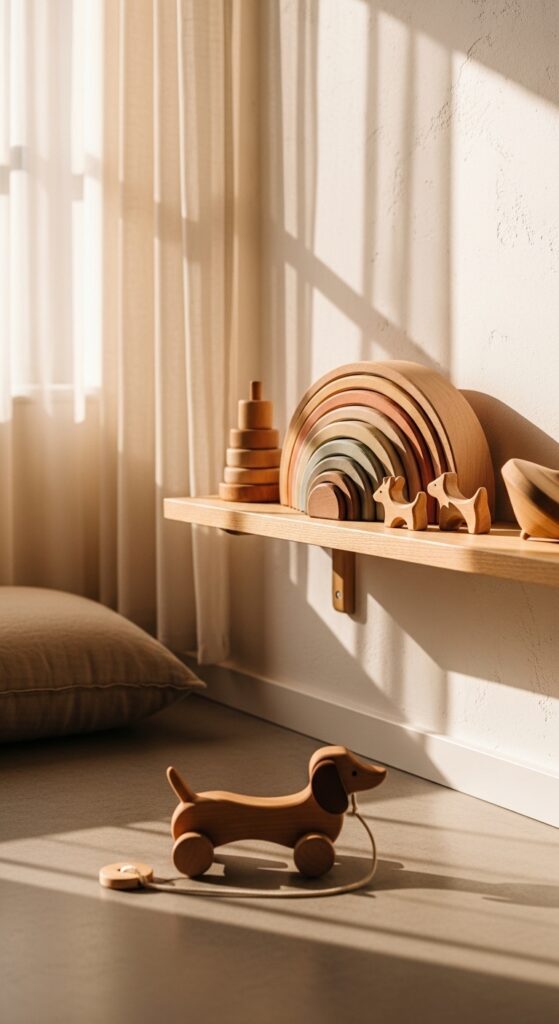
Keep in mind — handmade wooden toys cost significantly more than their plastic equivalents, and young kids aren’t exactly gentle. Budget for a few key statement pieces rather than replacing an entire toy collection overnight. Quality here means buying fewer things, not all the things.
The best toys double as art when you give them room to breathe.
Start your wooden collection with these:
- Hand-Carved Wooden Animal Figure Set — Line up a small safari on the shelf with figures that look beautiful and invite open-ended, screen-free play.
- Large Wooden Rainbow Stacking Toy — Display a sculptural stacker that works as both a building toy and a stunning focal piece on any surface.
- Simple Wooden Pull-Along Toy on Wheels — Roll a classic toy across the floor that charms every visitor and keeps its beauty for years.
10. Scandinavian-Style White Desk with Hairpin Legs
A slim white desk on hairpin legs gives your child a dedicated workspace that doesn’t swallow the room. The airy metal legs keep the visual weight low, and the clean surface encourages focus — no built-in distractions, no busy design elements. It works for drawing at age four and homework at age twelve.
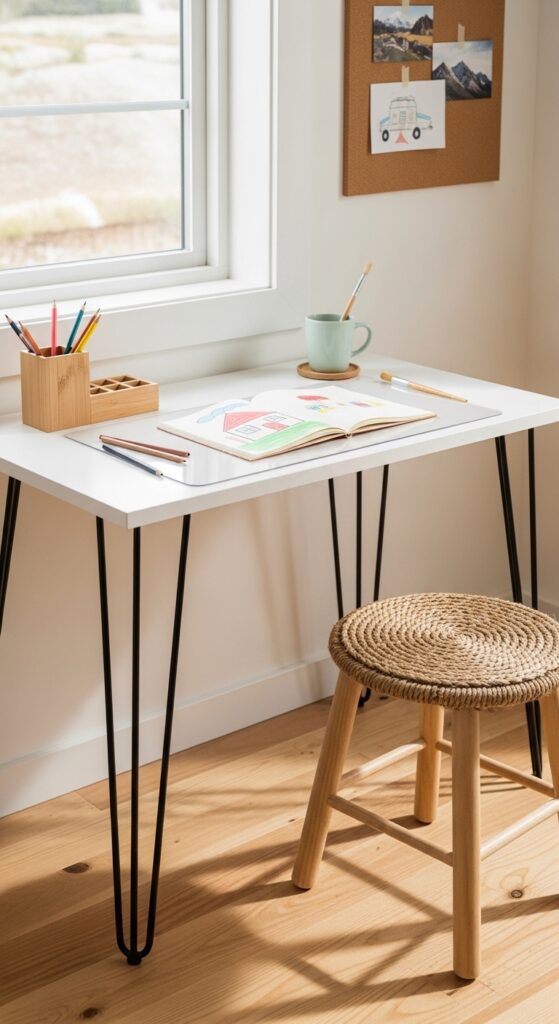
Practically speaking — hairpin legs wobble on uneven floors. Use adjustable feet or a small felt pad under the short leg. And white desktops show every marker stain and pencil scratch, so a clear desk mat or silicone placemat underneath is basically mandatory.
A clean desk is a blank page waiting for their next big idea.
Set up the perfect workspace with these:
- White Laminate Desk with Metal Hairpin Legs — Give your child a sleek, light workspace that stays bright and wipes clean after every craft session.
- Clear Acrylic Desk Mat Protector — Shield the white surface from markers, paint, and glue with an invisible layer that peels off for easy washing.
- Minimal Wooden Desk Organizer Caddy — Keep pencils, scissors, and crayons upright and sorted in a compact holder that fits neatly on the corner.
11. Ceiling-Mounted Canopy for a Cozy Sleep Zone
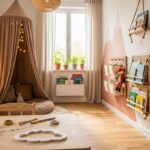
A simple fabric canopy draped from a single ceiling hook over the bed creates an instant cozy cocoon without adding any furniture. It defines the sleep area, makes the bed feel like a special retreat, and adds soft texture to an otherwise pared-back room. Sheer cotton or muslin works best — light enough to flow, heavy enough to drape properly.
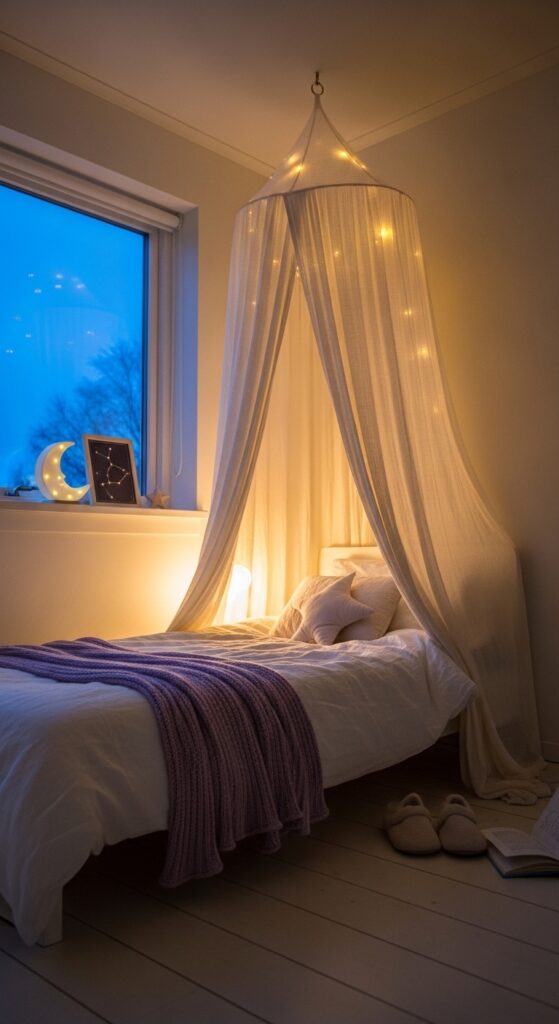
Just know — ceiling canopies need a secure hook rated for the fabric weight, and you’ll want to wash the canopy monthly because it collects dust like nobody’s business. Also, skip this for kids under three due to entanglement safety guidelines.
A canopy turns bedtime into an adventure instead of an argument.
Create the canopy bed with these:
- Sheer Cotton Bed Canopy with Ceiling Hook — Drape a lightweight curtain over your child’s bed to build a dreamy nest they’ll actually want to sleep in.
- Decorative Ceiling Hook with Anchor Kit — Secure your canopy with a sturdy hook that holds firm and blends right into a white ceiling.
- Battery-Powered Warm Fairy Light Strand — Wind a tiny string of lights through the canopy fabric for a soft glow that replaces the need for a nightlight.
12. Wall-Mounted Bookshelves at Kid Height
Mounting slim bookshelves low on the wall — think 18 to 24 inches from the floor — puts stories literally at your child’s fingertips. Front-facing spice-rack-style shelves work perfectly because kids choose books by their covers, not their spines. It also frees up floor space that a standing bookcase would claim.
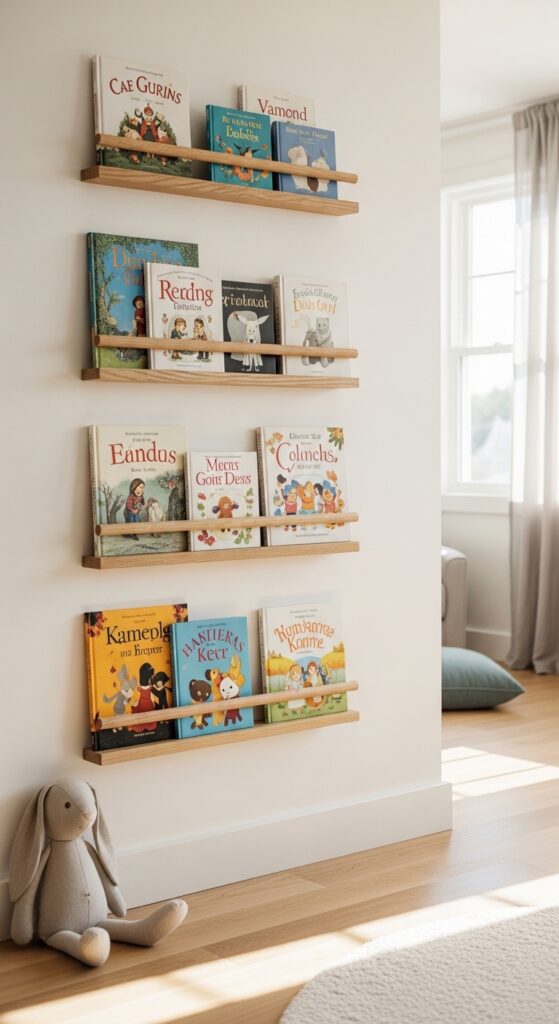
The tricky part — wall-mounted shelves at kid height become pull-up bars for toddlers. Anchor every single shelf into studs, not just drywall. And limit each shelf to five or six books so they don’t become a cluttered visual wall of noise.
Books they can reach are books they’ll actually read.
Mount your kid-height library with these:
- Front-Facing Wooden Wall Book Ledge — Display covers forward on a slim shelf that lets your child browse titles the way they’d explore a bookstore.
- Heavy-Duty Wall Shelf Mounting Kit — Anchor each ledge into studs securely with hardware rated for the weight of a full row of picture books.
- Rotating Monthly Book Bin for Kids — Keep a small floor bin nearby for this month’s favorites while the rest stay stored and out of visual range.
13. Monochrome Gallery Wall with Kids’ Own Artwork
Forget buying prints — frame your child’s own drawings and paintings in matching black or white frames for a gallery wall that’s personal, free, and endlessly refreshable. The monochrome frames create cohesion no matter how wild the artwork inside gets. Swap pieces seasonally so the wall grows with your kid.
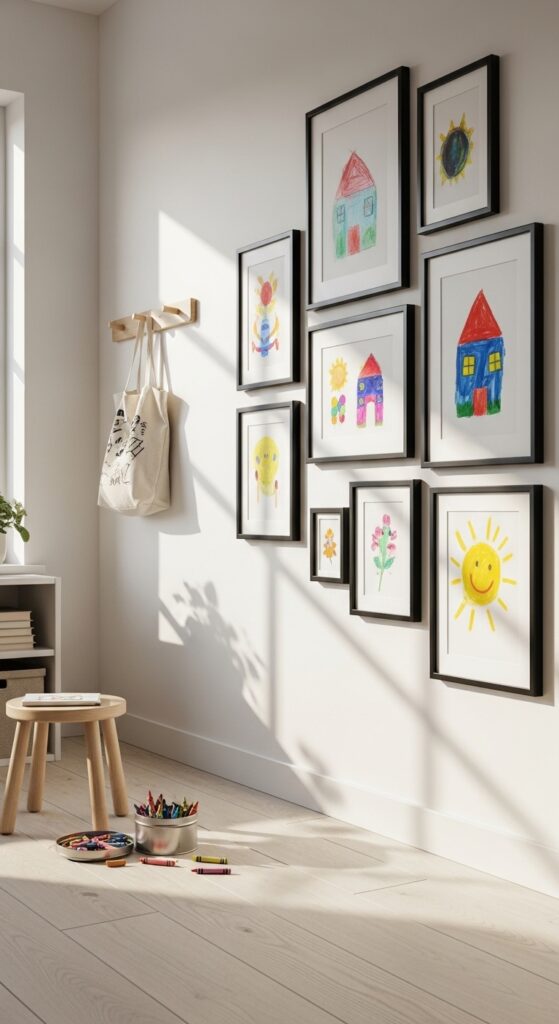
Be aware — getting the spacing right on a gallery wall is harder than Instagram makes it look. Use paper templates taped to the wall first before drilling any holes. And pick frames with easy-open backs so swapping art doesn’t require a screwdriver every time.
Their art deserves a real wall, not just a fridge magnet.
Build your gallery wall with these:
- Set of Six Matching Black Picture Frames — Create instant gallery cohesion with uniform frames that make even crayon scribbles look curated and intentional.
- Removable Adhesive Picture Hanging Strips — Skip the drill and hang frames with damage-free strips that hold firm and peel off clean at lease end.
- Kids Art Display Wire with Mini Clips — String a wire between two hooks and clip rotating artwork for a playful, no-frame-needed alternative display.
14. Minimalist Toy Rotation System with Hidden Bins
The toy rotation method is the secret weapon of every minimalist kids room that actually stays minimal. Keep five to seven toys out at a time, store the rest in labeled bins inside a closet, and swap every two weeks. Kids play deeper with fewer options, and the room stays clean with almost no effort.
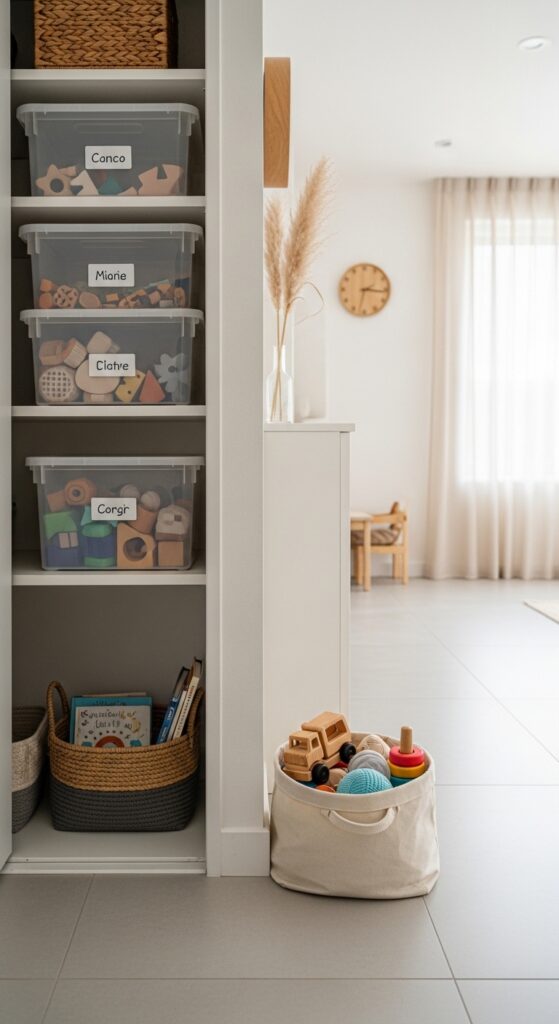
The catch — toy rotation requires upfront organization that most parents start strong and abandon by month two. Make it sustainable by keeping bins in an easy-to-reach spot and setting a phone reminder to swap. If the system is annoying, you won’t do it.
Fewer toys out means deeper play and faster cleanup.
Run your rotation system with these:
- Stackable Clear Lidded Storage Bins Set — Sort toys into labeled containers that stack neatly inside a closet and make biweekly swaps a five-minute task.
- Waterproof Peel-and-Stick Label Maker Tape — Tag each bin with a category so anyone in the house can manage the rotation without a decoder ring.
- Small Open-Top Fabric Bin for Active Toys — Place current toys in a soft bin on the floor that’s easy for kids to access and dump back at cleanup time.
15. Natural Jute Rug as the Only Floor Texture
One large jute rug in the center of the room replaces the need for play mats, foam tiles, and carpet remnants. It defines the play area, adds warmth underfoot, and brings a natural texture that pairs with literally any wall color. The neutral tone disappears visually, letting the room’s other elements stand out.
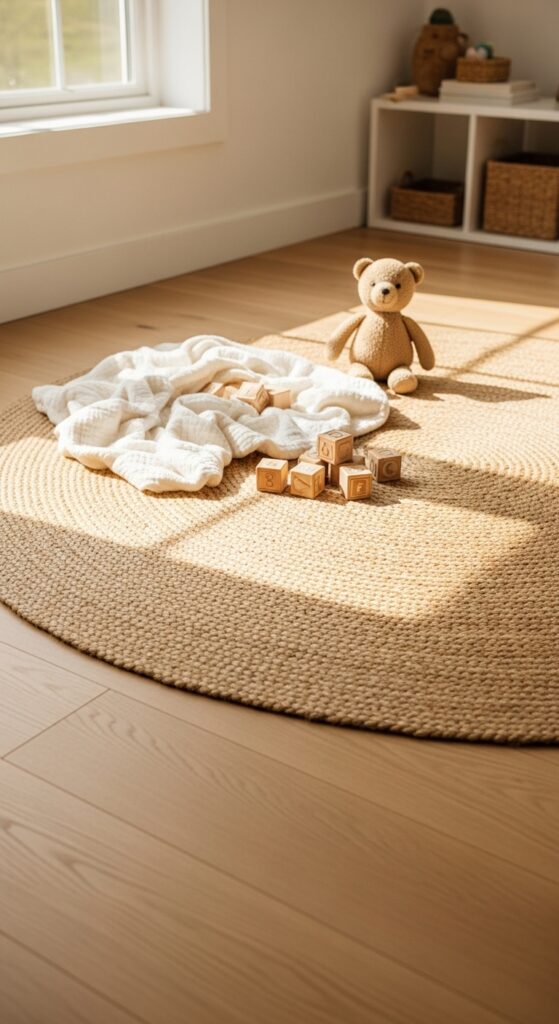
Straight talk — jute is scratchy on bare skin, and younger kids who spend a lot of time on the floor might not love it. Layer a soft cotton blanket on top for sit-down play. Also, jute doesn’t handle spills well — blot immediately or you’re looking at a permanent stain.
One rug, one texture, one calm room — that’s the formula.
Ground the room with these:
- Large Natural Jute Area Rug Round — Define the play zone with a single textured rug that adds warmth without adding visual noise to the floor.
- Non-Slip Rug Pad for Hard Floors — Keep the rug from sliding during playtime with a grippy underlayer that protects both the rug and the floor underneath.
- Soft Cotton Play Blanket for Floor Time — Lay a washable blanket over the jute for comfortable sitting and tummy time that’s gentle on little knees.
16. Floating Nightstand Shelf to Save Floor Space
A tiny floating shelf beside the bed replaces a full nightstand and gives the room a weightless, airy look. Mount it just above mattress height — enough space for a small lamp, a water cup, and one bedtime book. Nothing more. The wall does the work, and the floor stays completely clear underneath.
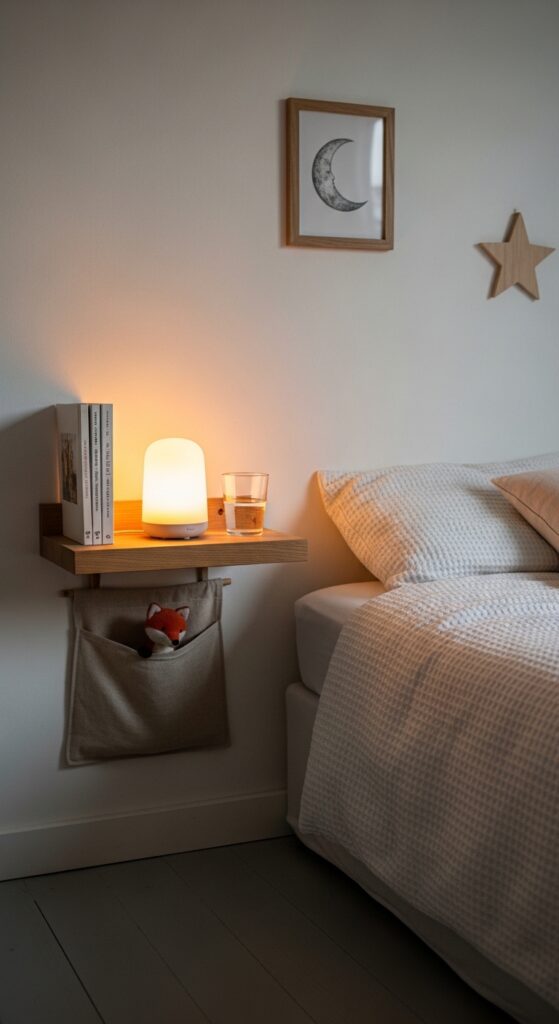
Here’s the thing — floating shelves have weight limits, and kids tend to lean on them or pile things up beyond what was planned. Choose a shelf rated for at least 15 pounds and skip anything with a glass top. Simplicity here means durability matters more than style.
The less furniture that touches the floor, the bigger the room feels.
Mount your floating nightstand with these:
- Small Oak Floating Wall Shelf with Lip — Place a slim shelf beside the bed with a raised edge that keeps the water cup from sliding off at night.
- Rechargeable Mini LED Touch Lamp — Light up bedtime reading with a cord-free lamp that your child can tap on and off without reaching for a switch.
- Wall-Mounted Small Fabric Pocket Organizer — Tuck a bedside pouch below the shelf for glasses, a bookmark, or a small stuffed animal companion.
17. Soft Felt Letter Board for Daily Messages
A felt letter board mounted in a minimalist kids room adds personality that changes daily without adding visual clutter. Spell out the morning routine, a motivational quote, or just “pizza night!” — and let your child rearrange the letters themselves. It’s decor that doubles as literacy practice.
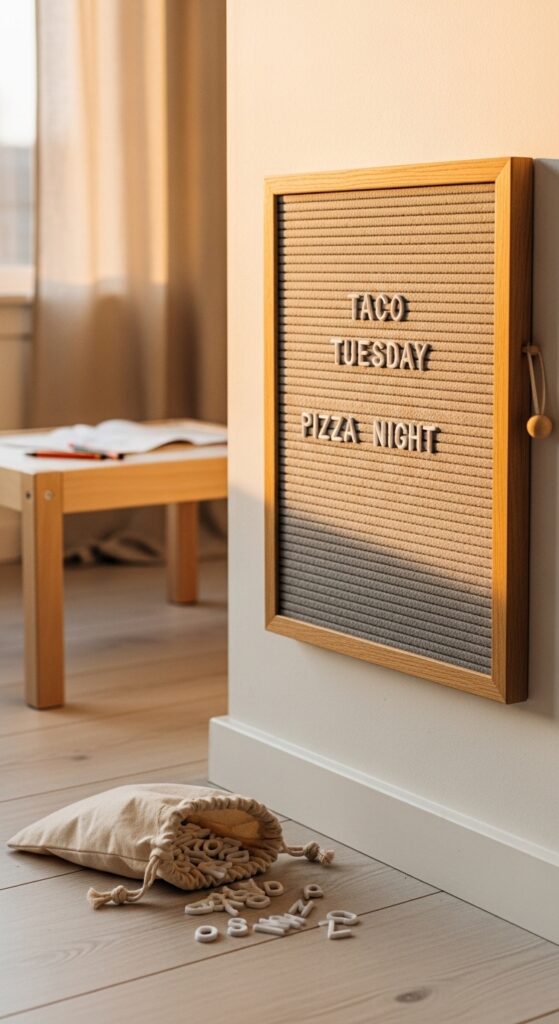
Small note — the tiny plastic letters end up everywhere. Toddlers will eat them, guaranteed. Save this idea for age four and up, and keep a dedicated pouch for spare letters right next to the board. You’ll lose a few vowels no matter what.
A letter board makes the room talk back — and kids love that.
Add daily messages with these:
- Gray Felt Letter Board with Oak Frame — Hang a classic board that blends into the wall and gives your family a fun, rotating communication spot.
- Complete Letter Set with Numbers and Symbols — Stock extra characters so you never run out of E’s when spelling out this week’s schedule or silly phrase.
- Small Drawstring Pouch for Letter Storage — Keep spare letters contained in a bag that hangs behind the board and prevents the scattered-letter-hunt at cleanup.
18. Nature Corner with a Single Potted Plant and Stones
Bring one living thing into the room — a small potted plant on a low shelf, surrounded by a few collected stones or shells — and suddenly the space feels grounded and real. Kids who care for a plant learn responsibility without even noticing. It adds life to a minimal room without adding stuff.
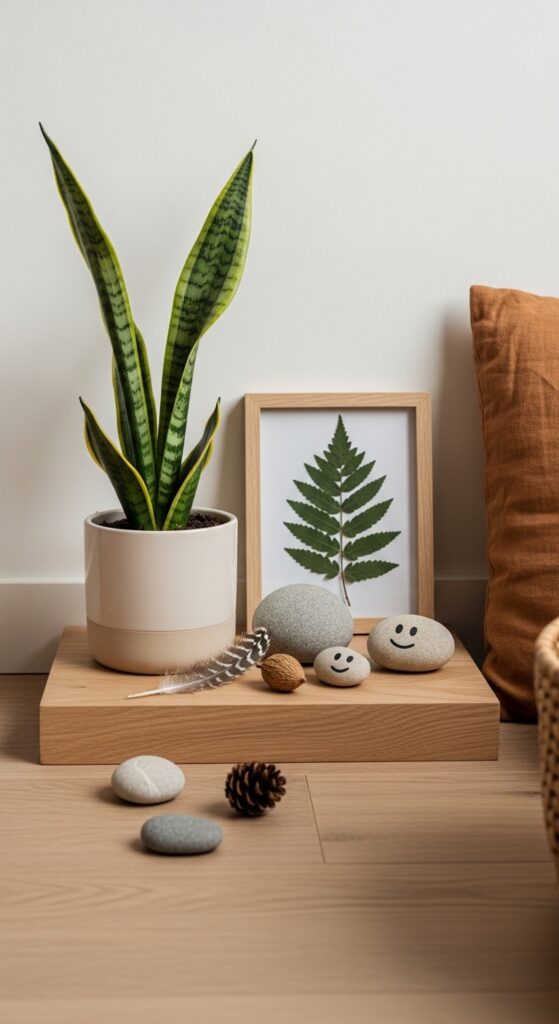
Quick reality check — not all plants survive a kids’ room. Pick something nearly indestructible like a pothos, snake plant, or spider plant. Keep it out of direct-throw range, and accept that the soil will end up on the floor at least once. That’s part of the experience.
One small plant teaches kids that simple things need care too.
Start your nature corner with these:
- Small Snake Plant in Neutral Ceramic Pot — Set a hardy, low-light plant on the shelf that purifies air and survives even the most forgetful little caretaker.
- Polished River Stone Collection Set — Scatter a handful of smooth stones around the plant for a tactile, nature-inspired display kids love to touch and arrange.
- Low Wooden Display Shelf for Nature Finds — Give collected treasures — feathers, pinecones, cool rocks — a dedicated home that keeps the nature corner tidy and intentional.

InsideMake exists for one reason — to help you love your home more. We bring expert decor insights and room-specific inspiration directly to you.