
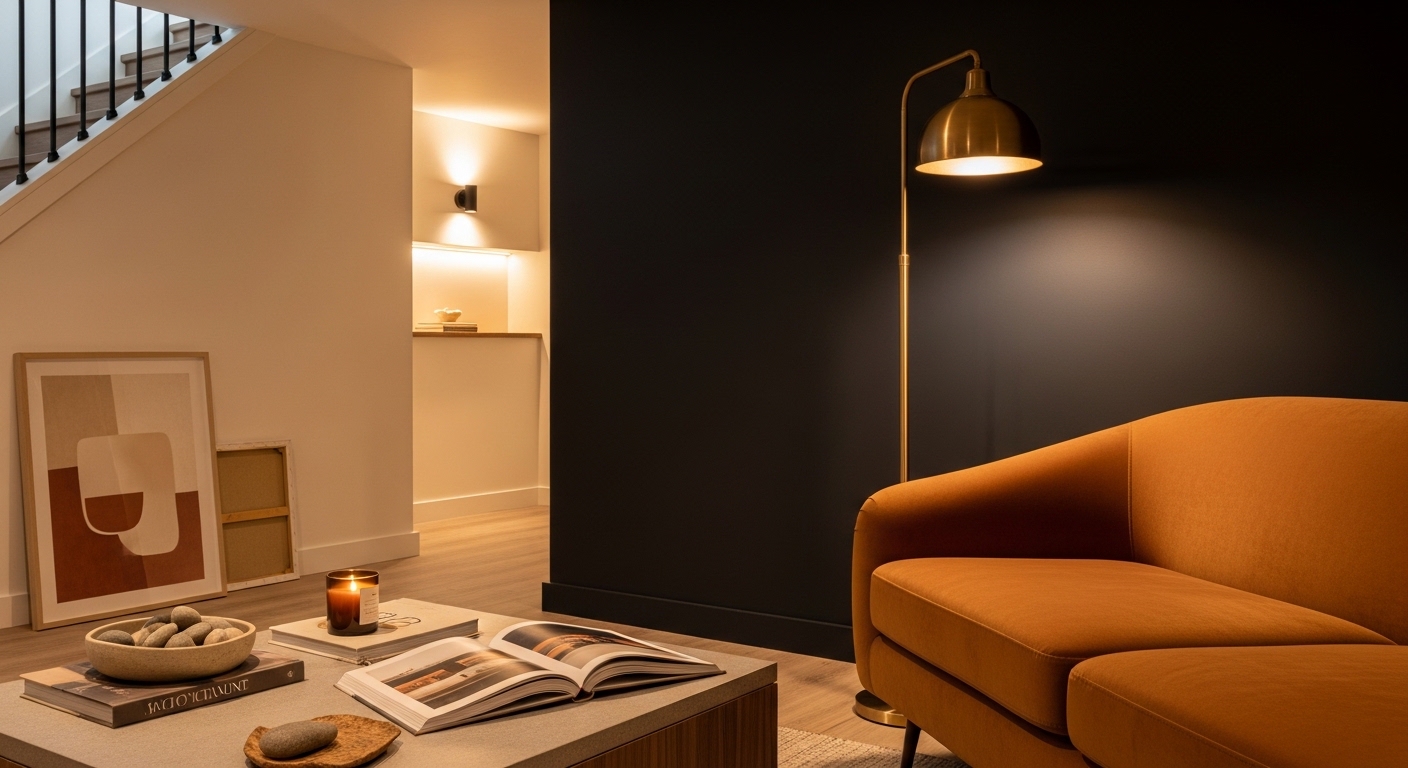

There’s something deeply satisfying about walking into a basement that actually feels like a real room — not a forgotten storage space with concrete walls and a single bare bulb. Most basements sit cold and unfinished for years, not because homeowners lack ambition, but because they don’t know where to start. Paint changes everything, and it changes it faster than almost any other upgrade you can make down there.
You’ve probably stared at those bare walls wondering if it’s even worth bothering. It is. The right basement decor approach can turn a dim, forgotten space into a home theater, a cozy lounge, a kids’ playroom, or a serious home gym — and it all starts with what you put on those walls. These 12 ideas cover a range of styles, budgets, and skill levels so you can find exactly what fits your space. Let’s get into it.
1. Charcoal Accent Wall — The Dramatic Focal Point That Anchors Any Basement Room
Deep charcoal on a single basement wall does something nothing else quite matches — it makes the space feel intentional. Pick the wall behind your entertainment setup or the one facing the staircase, and paint it a rich, near-black charcoal while keeping the remaining three walls a warm light gray or soft white. The contrast reads as sophisticated without requiring any decorating skill to pull off. Pair it with warm Edison bulbs and the whole room shifts.
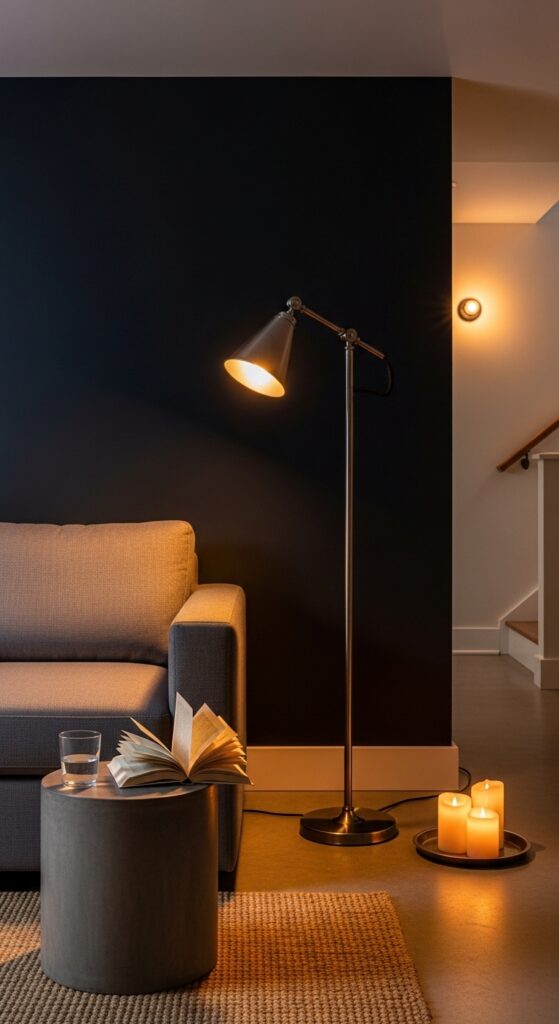
Mini Takeaway: One dark wall does more for a basement than a whole room of mediocre paint.
Products to consider for this look:
- Deep Charcoal Concrete-Bonding Interior Wall Paint — seals your basement walls with rich color while blocking moisture from bleeding through.
- Warm Edison Filament String Light Set — fills a charcoal-walled room with the amber glow needed to balance dark tones.
- Low-Sheen Finish Accent Wall Roller Kit — delivers smooth, streak-free coverage on textured basement walls in fewer passes.
2. Warm White Painted Concrete — The Bright, Clean Look That Makes Small Basements Feel Bigger
Raw concrete reads as cold and industrial even when a basement is perfectly clean. A coat of warm white — not stark bright white, but a cream-leaning white like linen or Swiss coffee — flips that completely. The surface still shows texture and character from the concrete underneath, which gives it authenticity rather than looking like drywall. It bounces every bit of light in the room and makes ceiling height feel taller than it actually is.
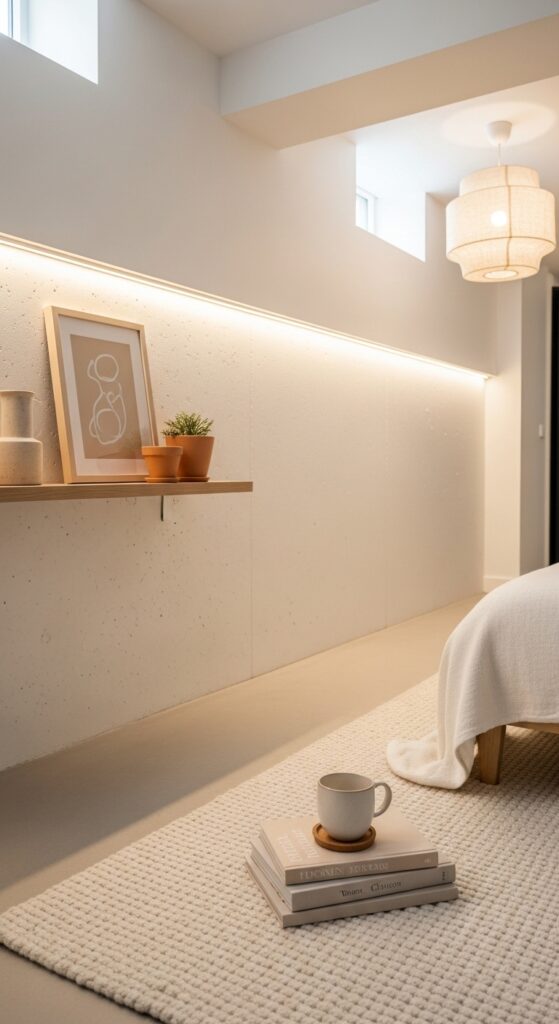
Mini Takeaway: Warm white on concrete is the simplest way to make a basement feel like a real living space.
Products that work well here:
- Masonry Primer Sealer for Interior Walls — bonds to raw concrete and prevents moisture from pushing paint off the surface.
- Warm Linen Interior Latex Wall Paint — covers in two coats and resists the humidity fluctuations common in below-grade spaces.
- Microfiber Paint Roller Cover Set — creates a smoother finish on textured concrete than standard roller covers.
3. Painted Brick Wall in Matte Black — Industrial Style That Looks Like It Belongs in a Loft
If your basement has exposed brick, painting it matte black is one of the most stylish decisions you can make. It’s a look you see in high-end restaurant interiors and urban loft apartments, and it works just as well below grade in a home. The texture of the brick stays fully visible under the flat black finish, giving you depth and tactile interest that no smooth painted wall can replicate. Leave the mortar lines slightly unpainted or deliberately paint through them — both approaches look great.
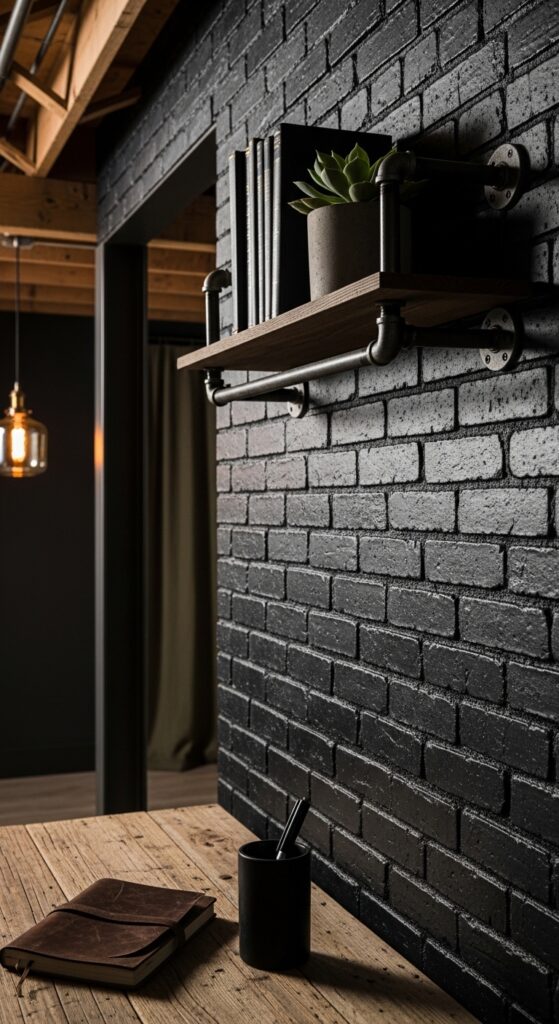
Mini Takeaway: Painted black brick is the kind of design choice that makes visitors ask who your decorator is.
Products for this project:
- Flat Black Masonry Paint for Brick Surfaces — designed to penetrate brick pores for lasting adhesion without cracking or flaking.
- Natural Bristle Masonry Paintbrush Set — works mortar joints and irregular brick faces that rollers consistently miss.
- Brick and Mortar Cleaner Spray — removes efflorescence and dust before painting so the finish bonds correctly.
4. Sage Green Basement Walls — The Earthy, Calming Color That Makes Basements Feel Like Retreats
Sage green has taken over living rooms and kitchens above grade, and it works just as well — arguably better — in a basement. The muted, gray-green tone sits quietly on the walls without demanding attention, which makes it ideal for basement home offices, reading nooks, and meditation or yoga spaces. It feels connected to nature in a space that has no windows, which is a psychological trick that genuinely works. Pair it with natural wood furniture and linen textiles for maximum effect.
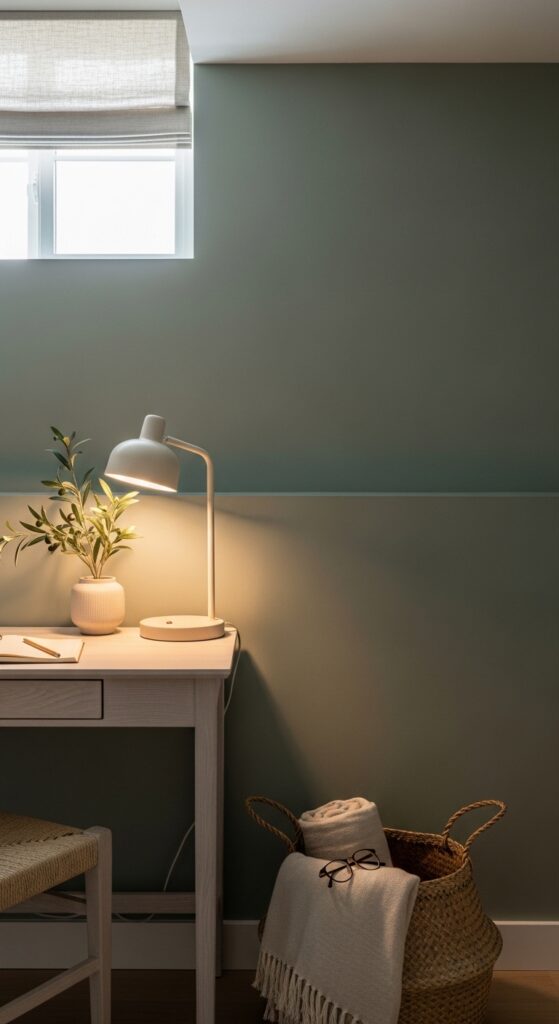
Mini Takeaway: Sage green turns a basement into the calmest room in the house.
Products that complement sage walls:
- Muted Sage Green Interior Paint with Primer — delivers the dusty, organic tone that separates sophisticated sage from basic green.
- Natural Linen Textured Throw Pillow Covers — tie in warm neutrals that anchor sage walls without competing for attention.
- Solid White Oak Floating Wall Shelf Set — adds warm wood tones that pair naturally with green-toned basement walls.
5. Two-Tone Painted Basement Walls — The Split-Color Technique That Adds Instant Architectural Detail
Two-tone painting means choosing a dividing line — usually 36 to 48 inches up from the floor — and painting the lower half one color and the upper half another. It’s a designer trick that fakes architectural detail in rooms that don’t have wainscoting, chair rails, or crown molding. In a basement, it works especially well because it gives the space visual structure and draws the eye around the room. A common combination: deep navy below, warm off-white above.
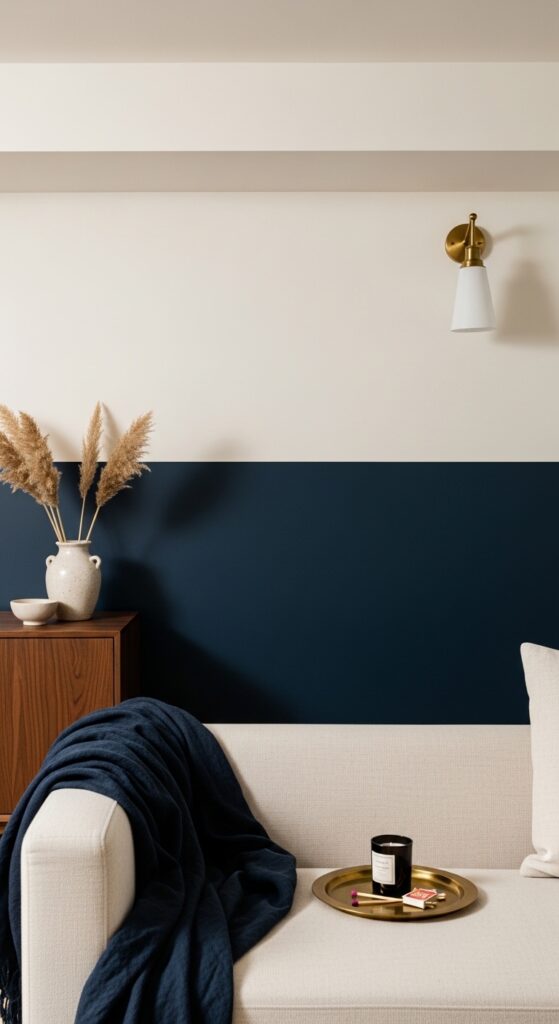
Mini Takeaway: When walls have no architectural character, two-tone paint is the shortcut that creates it.
Tools and products to get this right:
- Premium Flat-Edge Painter’s Tape for Clean Lines — holds crisp color separation without bleeding on textured concrete surfaces.
- Deep Navy Moisture-Resistant Interior Wall Paint — holds its saturation in the high-humidity conditions typical of below-grade rooms.
- Adjustable Chalk Line Tool for Wall Marking — snaps a perfectly level dividing line across the entire wall before taping begins.
6. Concrete Stain in Warm Terracotta — The Rust-Toned Finish That Brings Southwest Desert Warmth Underground
Concrete stain is different from paint — it penetrates the surface rather than sitting on top of it, which means the texture and variation of the concrete stays fully visible. Terracotta tones — warm rust, burnt orange, adobe red — look incredible on stained concrete walls because the natural color variation in the concrete creates an organic, aged finish you couldn’t replicate with paint. It’s the kind of wall that looks like it was designed by an architect rather than a DIY homeowner.
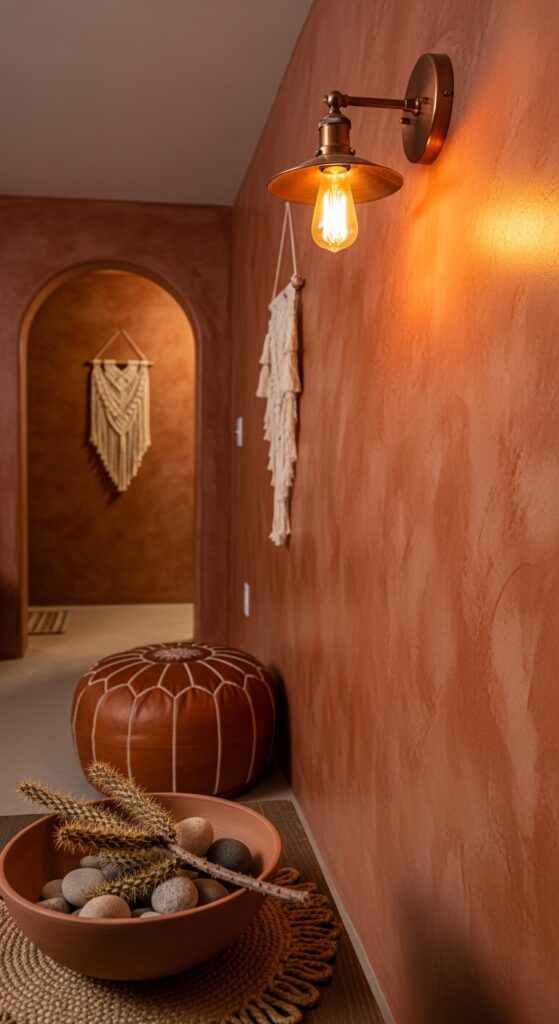
Mini Takeaway: Concrete stain gives basement walls a finish that looks expensive because it actually works with the material.
Products for terracotta staining:
- Water-Based Terracotta Concrete Wall Stain — produces warm rust tones with natural variation that mimics aged plaster walls.
- Concrete Surface Etching Solution — opens the pores of dense concrete so stain penetrates evenly without blotchy patches.
- Matte Concrete Sealer for Interior Walls — locks in the stain color and adds a subtle sheen that makes walls easier to wipe clean.
7. Painted Geometric Pattern in Neutral Tones — The DIY Wall Art That Turns a Flat Surface Into a Statement
You don’t need wallpaper or shiplap to add pattern to a basement wall. Geometric patterns — hexagons, diamonds, chevrons, or simple triangles — painted directly on the wall using painter’s tape and two or three coordinating neutrals create a custom mural effect. The secret is keeping the colors within the same tonal family. Three shades of the same gray, for example, create sophistication. Three unrelated colors create a circus.
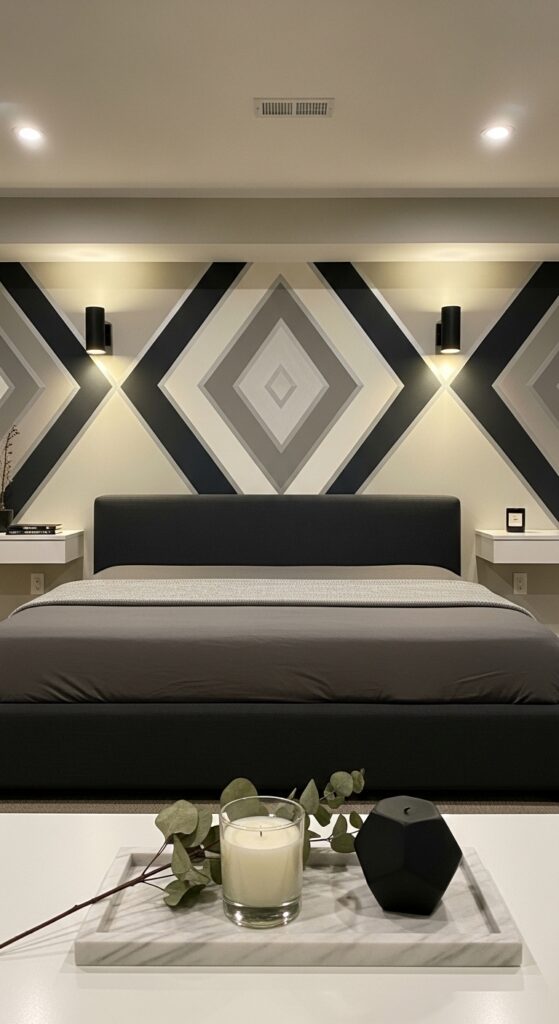
Mini Takeaway: Geometric painting turns patience and painter’s tape into something that looks like professional installation.
Products for geometric wall painting:
- Angled Detail Paintbrush Set for Geometric Edges — handles corners and tight tape borders that rollers can’t reach cleanly.
- Multi-Pack Frog Tape Painter’s Tape Rolls — prevents paint from bleeding under edges, which is non-negotiable for clean geometric lines.
- Coordinating Neutral Interior Paint Sample Set — lets you test three tonal variations on the actual wall before committing to full gallons.
8. Navy Blue Basement Home Office Walls — The Focused, Professional Color That Boosts Deep Work Sessions
Navy blue and productivity are genuinely connected. Multiple studies in color psychology show that blue hues improve focus and reduce distraction, which is exactly what you need in a basement home office. Painting all four walls in a rich navy, especially in a space with no windows, creates an immersive cocoon that blocks the visual chaos of the rest of the house. Add good task lighting — LED desk lamps and focused ceiling cans — and the room becomes serious without feeling oppressive.
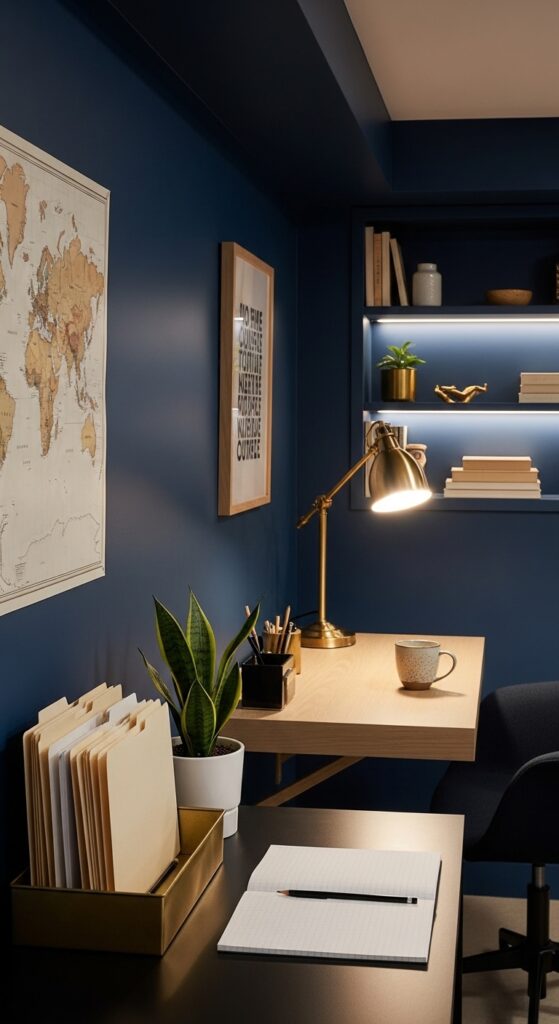
Mini Takeaway: Navy walls in a basement office create the kind of focused environment most people only find in libraries.
Products for a navy home office setup:
- Deep Anchor Navy Interior Paint with Built-In Primer — covers in two coats and holds true color without graying out under artificial lighting.
- Adjustable Arm LED Desk Lamp with Color Temperature — balances cool task light against the warm tone navy walls absorb.
- Brushed Brass Wall-Mount Floating Desk Shelf — adds functional storage that visually pops against dark navy walls.


9. Whitewashed Stone Basement Walls — The Rustic Technique That Softens Raw Masonry Without Covering It
Whitewashing is a diluted paint technique — one part paint, one part water — brushed onto stone or concrete in sweeping strokes that leave the natural texture fully visible beneath a thin veil of white. On basement stone walls, it removes the dungeon-like darkness while keeping every crack, mineral deposit, and surface variation intact. The result reads as old European farmhouse or New England cottage depending on what you put in the room around it.
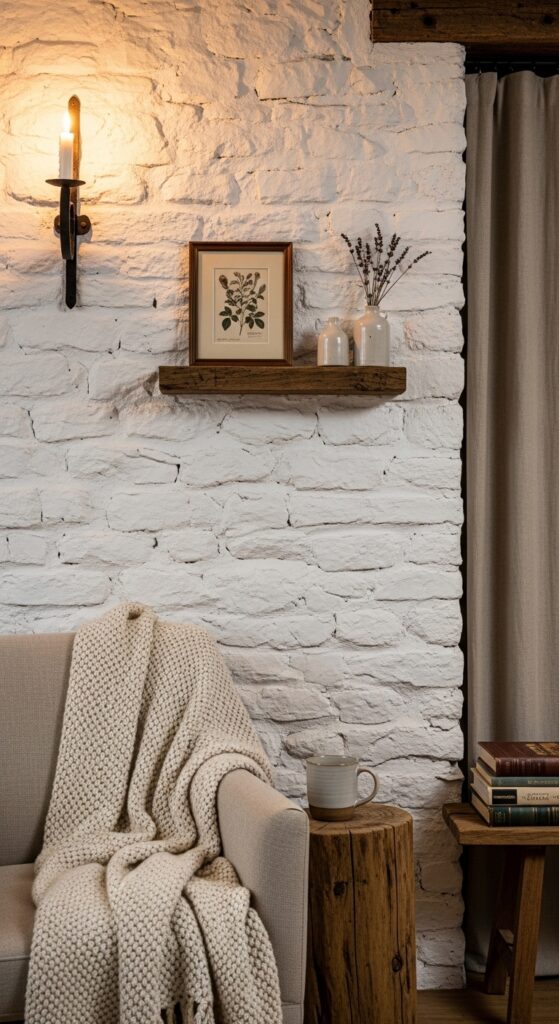
Mini Takeaway: Whitewash is the rare technique where imperfect application produces a better-looking result.
Products for whitewashing stone:
- White Limewash Interior Paint for Stone Surfaces — formulated specifically for masonry with the right viscosity for authentic whitewash application.
- Wide Natural Bristle Wall Brush Set — applies diluted whitewash in the broad, sweeping strokes that create the signature uneven finish.
- Clear Matte Masonry Sealer Spray — protects the finished whitewash layer from basement humidity without adding any sheen.
10. Moody Olive Green Basement Walls — The Rich, Complex Color That Makes Every Room It’s In Feel Curated
Olive green sits in a fascinating middle ground between green, brown, and gold. It’s warm enough to feel cozy in a windowless basement, complex enough to look intentional rather than accidental, and versatile enough to pair with dark wood, black metal, cream linen, and terracotta. It’s the color interior designers reach for when a client says they want a room that feels “like it has history.” Painting a basement in deep olive instantly gives the space a lived-in, layered character.
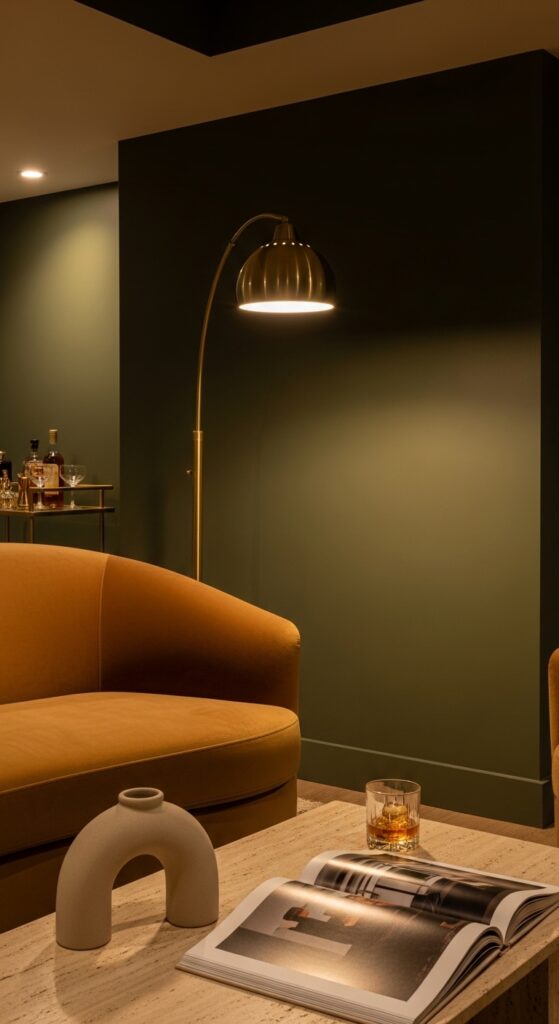
Mini Takeaway: Olive green makes a basement feel like it was decorated by someone who reads actual design books.
Products for this look:
- Deep Olive Matte Interior Wall Paint with Zero VOC — delivers the rich, complex finish without off-gassing in a low-ventilation basement space.
- Warm Amber Edison Bulb String Lights — enhance olive’s warm undertones and add ambient light that overhead fixtures alone can’t achieve.
- Dark Walnut Floating Media Console Unit — grounds an olive-walled room with warm wood tones that complement the green-brown palette.
11. Painted Exposed Ductwork in Matte Black — The Industrial Trick That Turns Ugly Infrastructure Into a Design Feature
Most basement ceilings have exposed ductwork, pipes, and beams that homeowners try to hide. Stop hiding them. Paint everything — ducts, pipes, joists, electrical conduit — flat matte black, then paint the ceiling the same color. It creates a seamless industrial ceiling that looks deliberate and cool. The eye stops registering individual components and starts reading the whole overhead plane as a single design decision. This works in industrial loft style basements and surprisingly well in modern farmhouse aesthetics too.
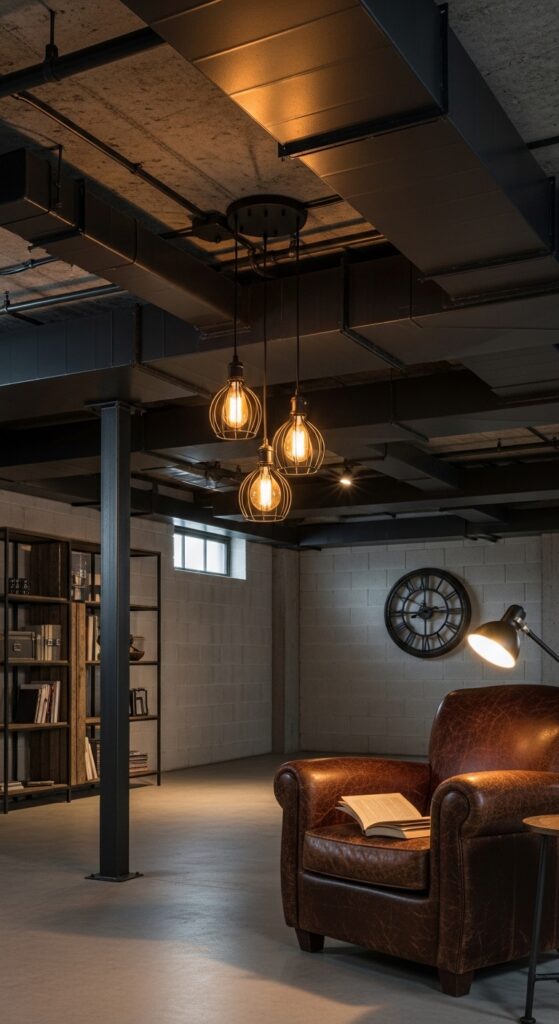
Mini Takeaway: Painting everything black above your head is the fastest way to make exposed basement infrastructure look like a choice.
Products for the black industrial ceiling:
- Flat Matte Black Multi-Surface Spray Paint — reaches ductwork joints and pipe curves that a roller brush physically cannot contact.
- High-Heat Rated Black Paint for Metal Ducts — maintains adhesion on heating ducts that expand and contract with temperature changes.
- Telescoping Paint Roller Pole Extension — reaches overhead ceiling joists and duct surfaces without requiring a ladder on every pass.
12. Ombre Gradient Basement Feature Wall — The Blended Color Technique That Looks Like a Commissioned Mural
An ombre wall blends one color from dark to light — or two complementary colors — from the bottom of the wall to the ceiling. It’s a technique that sounds intimidating but is genuinely achievable with two or three paint colors and a dry roller blending method. The darkest shade anchors the lower portion of the wall, transitions through a midtone, and fades to the lightest tint near the ceiling. It’s especially striking on a wide, uninterrupted wall — like the one behind a sectional sofa or a basement bar.
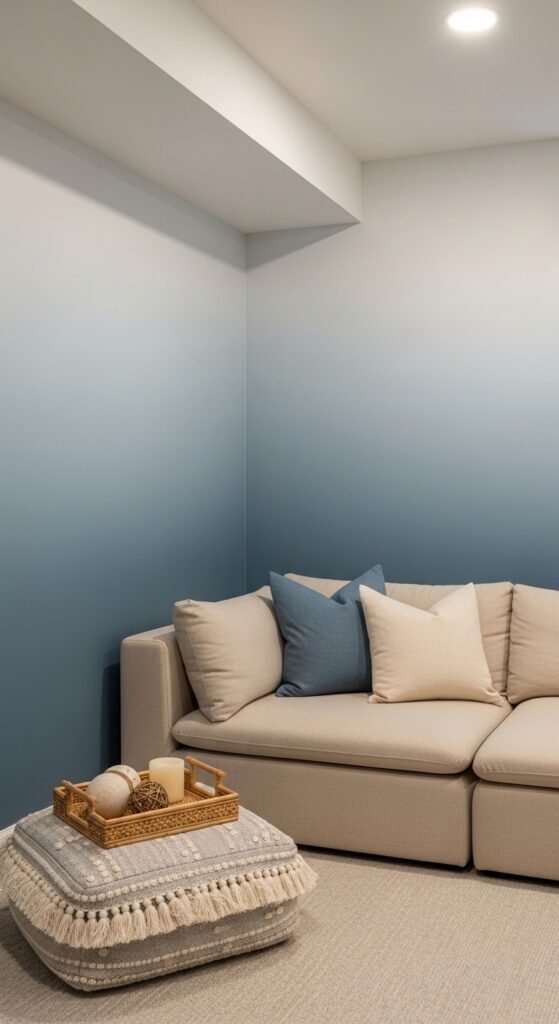
Mini Takeaway: An ombre wall done well makes guests wonder if you hired someone — done badly, it still looks better than plain concrete.
Products for an ombre feature wall:
- Ombre Interior Paint Kit with Three Coordinating Shades — takes the color-matching guesswork out of selecting tones that blend without muddying.
- Wide-Nap Blending Roller Cover Set — feathers the transition zone between paint colors while wet for seamless gradients.
- Paint Tray Liner and Grid Set — keeps three paint colors organized and accessible during the rapid blending phase.

InsideMake exists for one reason — to help you love your home more. We bring expert decor insights and room-specific inspiration directly to you.