
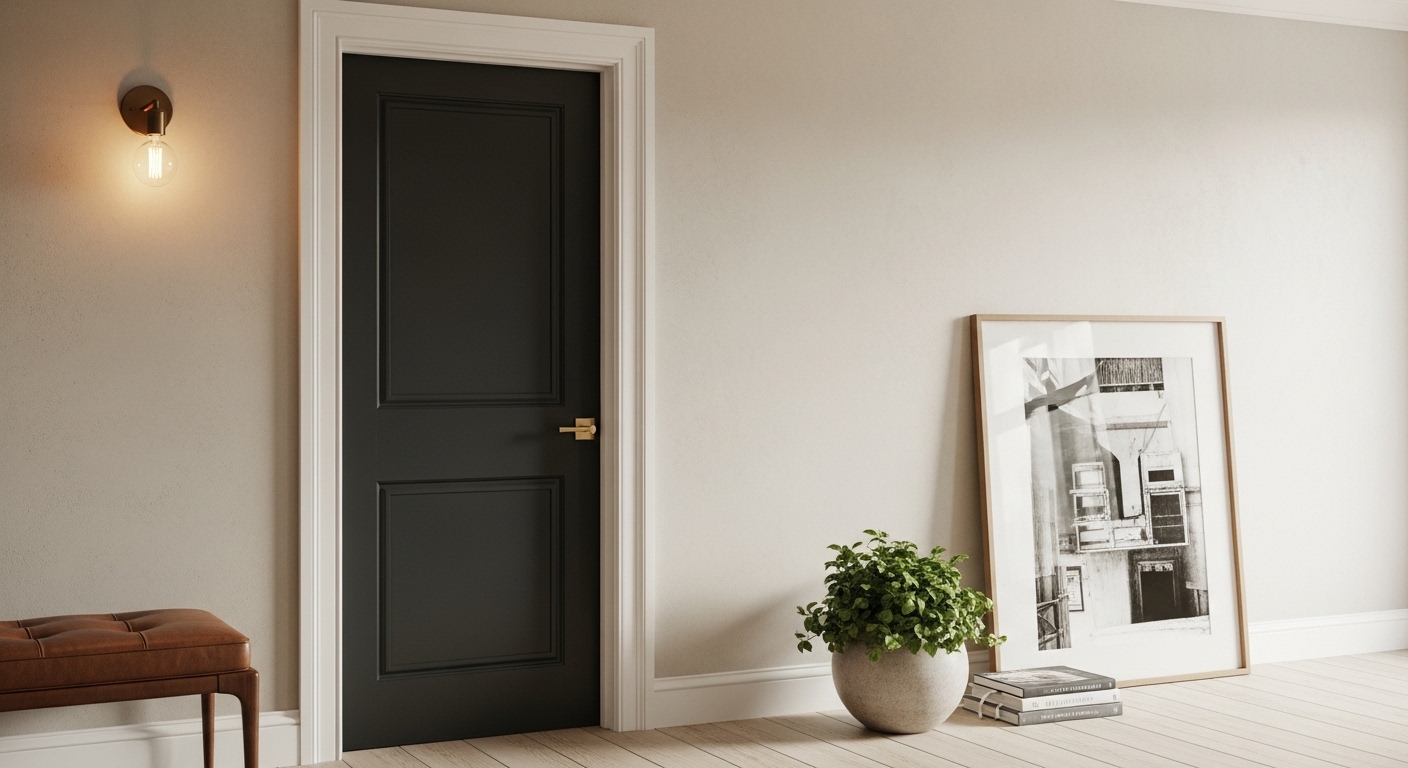

There’s something about a basement door that gets overlooked every single time. You spend weeks picking the perfect sofa, agonizing over paint swatches, and hunting down the right rug — then you slap a hollow-core slab door on your basement stairwell and call it done. It’s the most visible piece of hardware in your main living space, and most people treat it like an afterthought.
You want a home that feels intentional all the way through, not just in the rooms people photograph. Your basement decor starts the moment someone spots that door from your living room, hallway, or kitchen. That first impression sets the tone for everything below.
This article gives you 16 genuinely distinct indoor basement door ideas spanning every style, budget, and space type. Whether your stairwell opens into a finished lounge, a home gym, or a laundry room, you’ll find an idea here that fits your home and your personality.
1. Solid Wood Barn Door with Black Steel Hardware
A sliding barn door is the single fastest way to make a basement entrance look deliberately designed. The chunky wooden slabs paired with matte black rails draw the eye in a way that feels curated, not accidental. I’d go with knotty pine or reclaimed oak — both have enough grain character to stand on their own without stain.
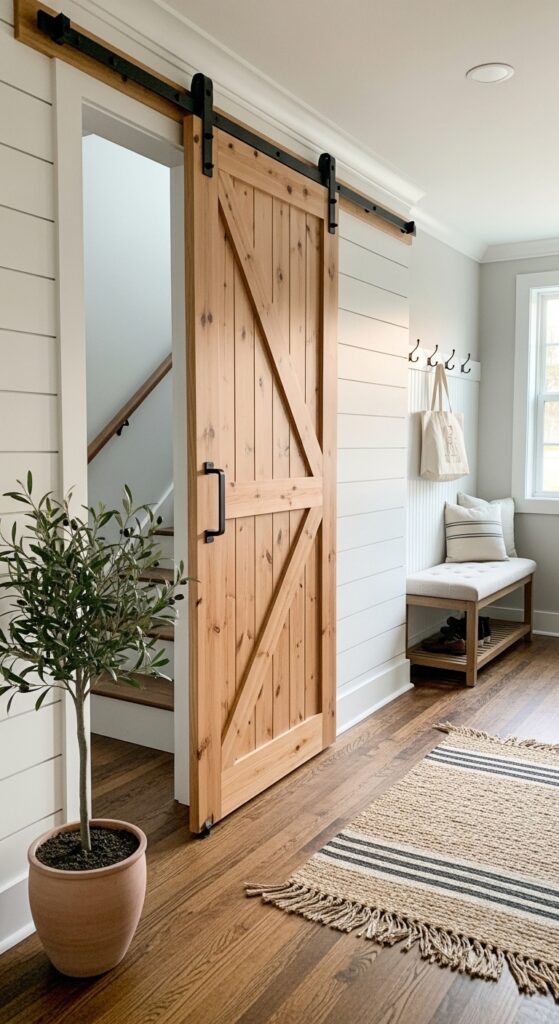
Mini Takeaway: The right barn door doesn’t just cover an opening — it becomes the room’s defining detail.
Here are a few products worth considering for this setup:
- Rustic Knotty Pine Sliding Barn Door Panel — Covers your basement opening with warm wood tones for a cozy, lived-in feel
- Matte Black Heavy-Duty Barn Door Hardware Kit — Supports your door smoothly with a low-profile rail system built for daily use
- Adjustable Soft-Close Floor Guide for Barn Doors — Keeps your door tracking quietly without scuffing your hardwood or tile
2. Frosted Glass Panel Door for Light-Starved Hallways
If your basement stairwell sits in a dark corner of your home, a solid door is working against you. Swap it for a frosted glass panel door and you instantly borrow natural light from whichever room it opens into. The obscured glass still gives you privacy — nobody sees straight down the stairs — but the hallway stops feeling like a cave.
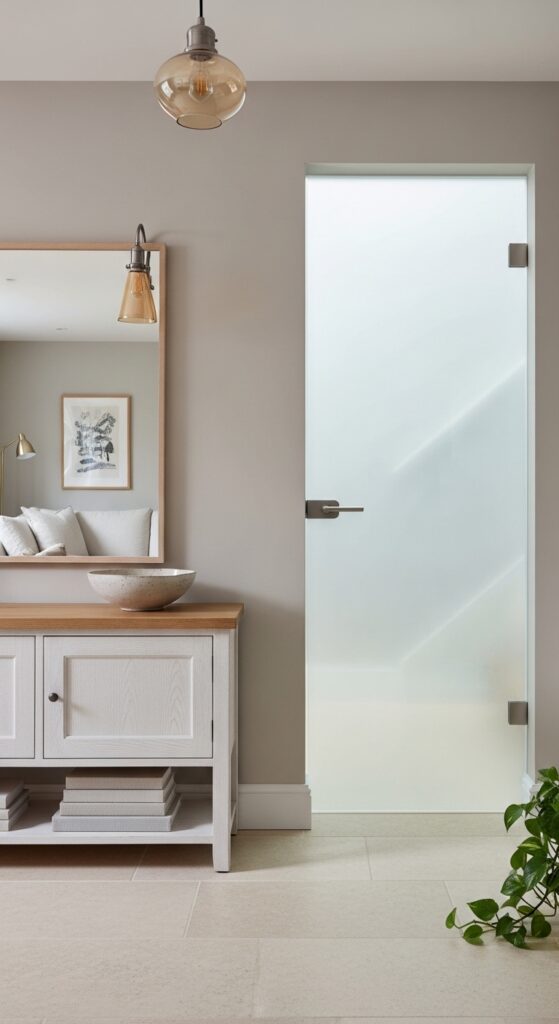
Mini Takeaway: Sometimes borrowing light from one room to brighten another is the smartest design move you’ll make.
A few product picks to pull this look together:
- Interior Frosted Glass Panel Prehung Door Unit — Brightens your hallway by filtering soft light through its etched surface without sacrificing privacy
- Chrome Lever Handle Set for Glass Panel Doors — Completes your door’s modern look with a sleek, comfortable grip for daily use
- Foam Compression Door Sweep for Interior Frames — Seals the gap at the base of your door to reduce cold drafts coming up from below
3. Shiplap-Wrapped Door Frame with Painted Accent Door
You don’t always need to replace the door — sometimes the frame is the real opportunity. Wrapping your existing basement door frame in horizontal shiplap boards and painting the door itself a bold contrasting color creates a vignette that looks professionally styled. A deep navy door against white shiplap casing is especially striking in an open-plan living area.
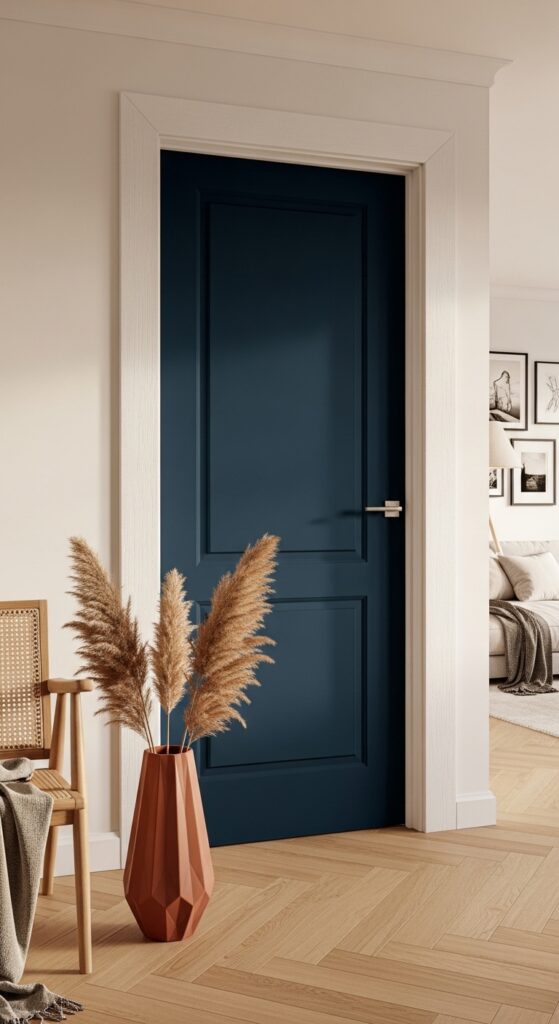
Mini Takeaway: A painted accent door framed in shiplap turns a utility opening into the room’s quiet showstopper.
Products that make this project easier:
- Pre-Primed MDF Shiplap Wall Planks for Trim Work — Wraps your door frame with clean, paint-ready boards that require minimal sanding before finishing
- Interior Chalk-Finish Door Paint in Deep Hues — Gives your basement door a rich, matte color that hides minor imperfections beautifully
- Corner Bead Trim Molding for Shiplap Edges — Finishes your frame corners cleanly so the transition between shiplap and wall reads sharp and intentional
4. Dutch Door Split Design for Basement Playrooms
A Dutch door — one that splits horizontally so the top half opens independently of the bottom — is brilliant for basements converted into kids’ playrooms. You can keep the bottom half closed while the top stays open for ventilation and visibility. It’s practical and it looks charming in ways a standard door simply can’t match.
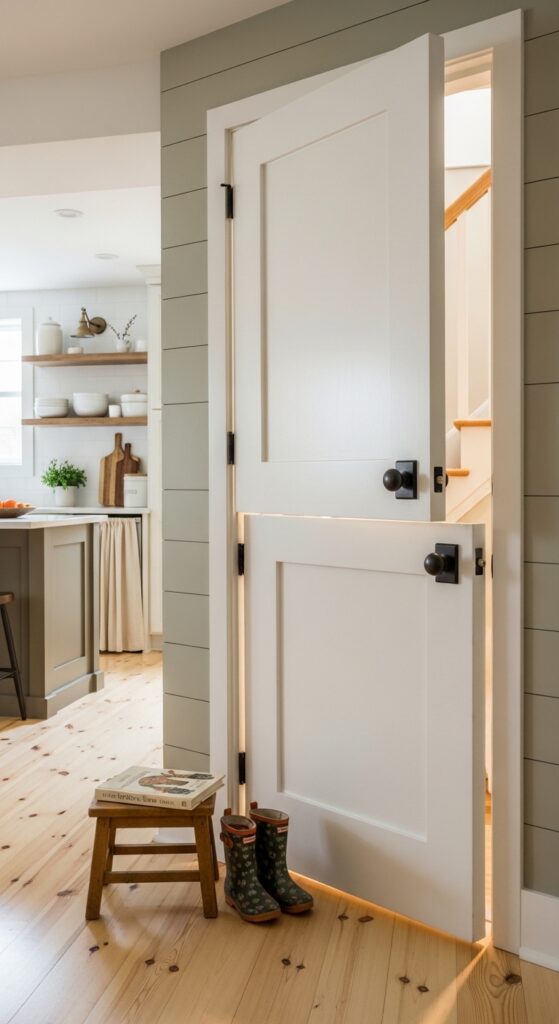
Mini Takeaway: A Dutch door is where function and personality meet — it does a job while making everyone smile.
Three products worth looking at:
- Interior Solid Core Dutch Door with Pine Construction — Divides your basement opening into two independently operable halves for flexible everyday use
- Vintage Brass Barrel Bolt Latch for Dutch Doors — Locks your upper and lower panels together with a satisfying click when you need them as one unit
- Oil-Rubbed Bronze Strap Hinge Set for Heavy Doors — Mounts your door halves securely while adding an antique hardware detail that ties into farmhouse finishes
5. Mirrored Door Panel for Narrow Entry Corridors
Tight hallway leading to your basement stairs? A full-panel mirror door is one of the cleverest spatial tricks in interior design. It reflects the corridor back on itself, visually doubling the perceived width of the space. The reflection also bounces whatever natural light exists in the hallway, reducing that closed-in feeling entirely.
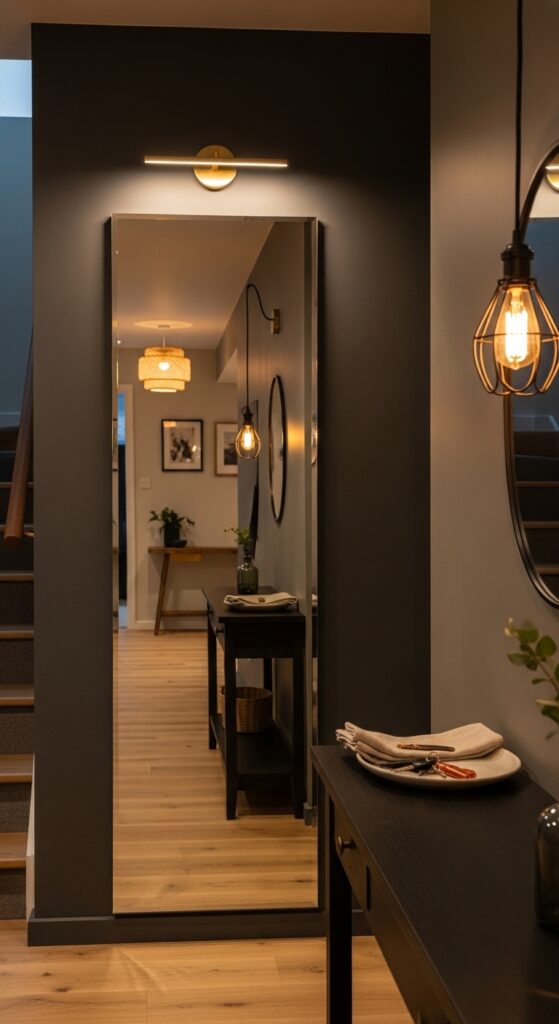
Mini Takeaway: Reflection is the cheapest square footage you’ll ever add to a cramped hallway.
Products to consider here:
- Full-Length Beveled Mirror Interior Door Panel — Opens up your narrow hallway visually by bouncing light and reflection across the entire corridor
- Heavy-Duty Ball-Bearing Door Hinges for Mirror Doors — Supports the added weight of your mirrored panel without sagging or squeaking over time
- Self-Adhesive Anti-Shatter Mirror Safety Film — Protects your mirror door surface so accidental impacts don’t scatter glass across your entryway
6. Chalkboard-Painted Door for Functional Family Spaces
Paint your basement door with chalkboard paint and it becomes a message board, grocery list, kids’ art canvas, or weekly schedule — all while functioning as a door. It’s a particularly smart choice when the basement is a shared family space where communication happens in passing. I’ve seen this done in matte black and also in deep forest green, and both versions look intentional rather than kitschy.
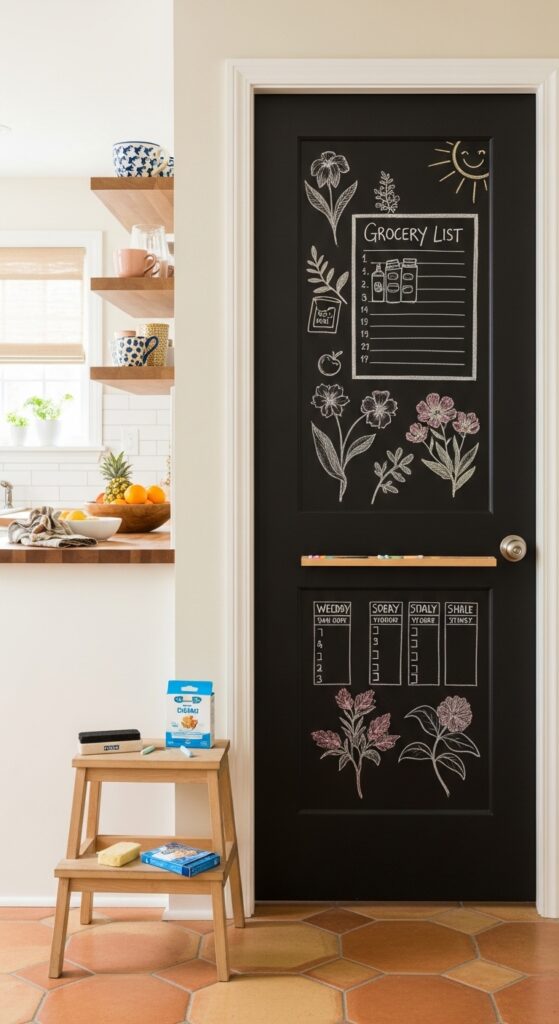
Mini Takeaway: A chalkboard door earns its place by working twice as hard as any other surface in the room.
Here are three helpful product picks:
- Ultra-Matte Black Chalkboard Paint for Interior Doors — Converts your basement door surface into a writable, erasable canvas that improves with every use
- Dustless Chalk Sticks in Assorted Colors — Writes smoothly on your chalkboard door without the mess that traditional chalk leaves on nearby floors
- Slim Magnetic Chalk Tray Rail for Door Mounting — Attaches to the bottom edge of your door to hold chalk and erasers without taking up floor space
7. Craftsman-Style Five-Panel Door with Stained Wood Finish
The five-panel craftsman door is one of those timeless designs that works in almost every home built after 1920. The raised panels add dimension and craftsmanship that flat slabs completely lack. Stain it in a warm walnut or medium oak tone instead of painting it, and you immediately introduce warmth and texture that coordinates with wood floors, trim, and furniture.
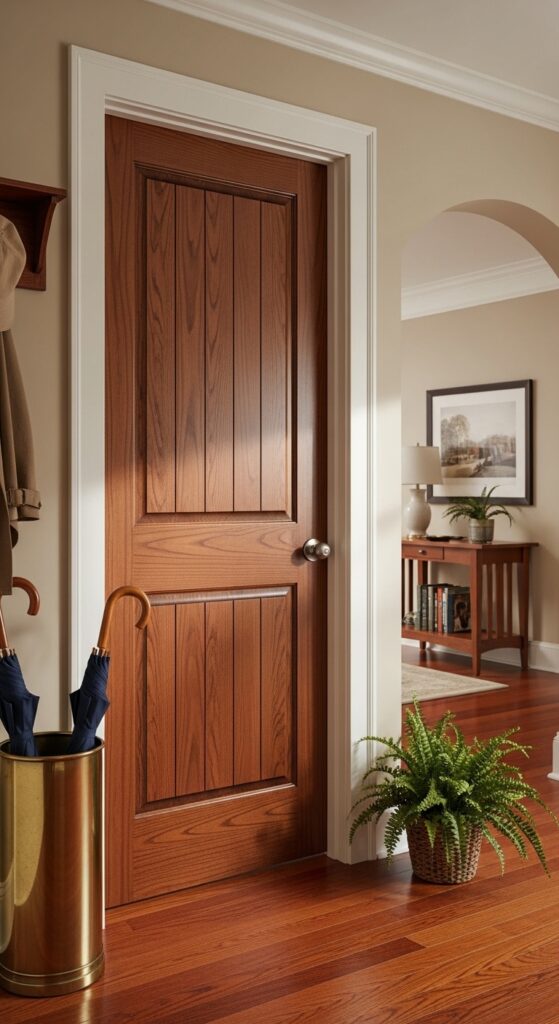
Mini Takeaway: Craftsmanship in a door isn’t just aesthetic — it’s the difference between something that lasts and something you’ll replace.
Three product ideas for this look:
- Solid Pine Five-Panel Craftsman Interior Door Slab — Brings architectural detail to your basement opening with traditional raised panel construction built to last decades
- Oil-Based Penetrating Wood Stain in Warm Walnut — Enriches your door’s natural grain with deep amber tones that coordinate beautifully with wood floors and trim
- Brushed Nickel Egg-and-Dart Door Knob Set — Completes your craftsman door with period-appropriate hardware that feels solid and satisfying to use
8. Hidden Bookcase Door for a Finished Basement Lounge
Few things in interior design are as quietly spectacular as a door that disappears into a wall of bookshelves. A hidden bookcase door — also called a jib door or concealed door — makes your basement entrance invisible when closed. It’s the ultimate choice for a finished basement lounge or home library where you want the space to feel like a destination, not a utility area.
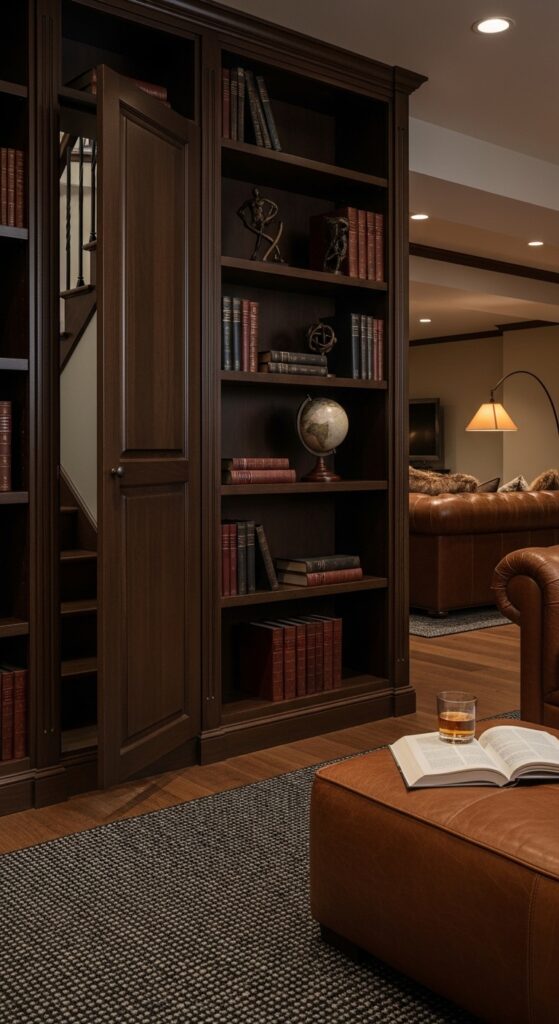
Mini Takeaway: A door that vanishes into a wall of books is proof that your home has genuine design ambition.
Products to help execute this idea:
- Heavy-Duty Concealed Pivot Hinge System for Bookcase Doors — Allows your hidden door to swing open smoothly while supporting the full weight of loaded shelves
- Flush Pull Handle Pocket Hardware for Hidden Doors — Creates an invisible grip point in your bookcase door that doesn’t break the illusion of a continuous shelf wall
- Adjustable Bookcase Shelf Pin Kit with Locking Clips — Holds your shelves securely in place on the door panel even when it swings open repeatedly
9. Glass-and-Steel Industrial Frame Door
The steel-framed glass door — the kind you typically see in lofts and converted warehouse apartments — has made a serious move into residential interiors. A slim black steel frame surrounding clear or textured glass panes gives your basement entrance a strong architectural presence. It reads as intentional and high-end without requiring expensive renovation.
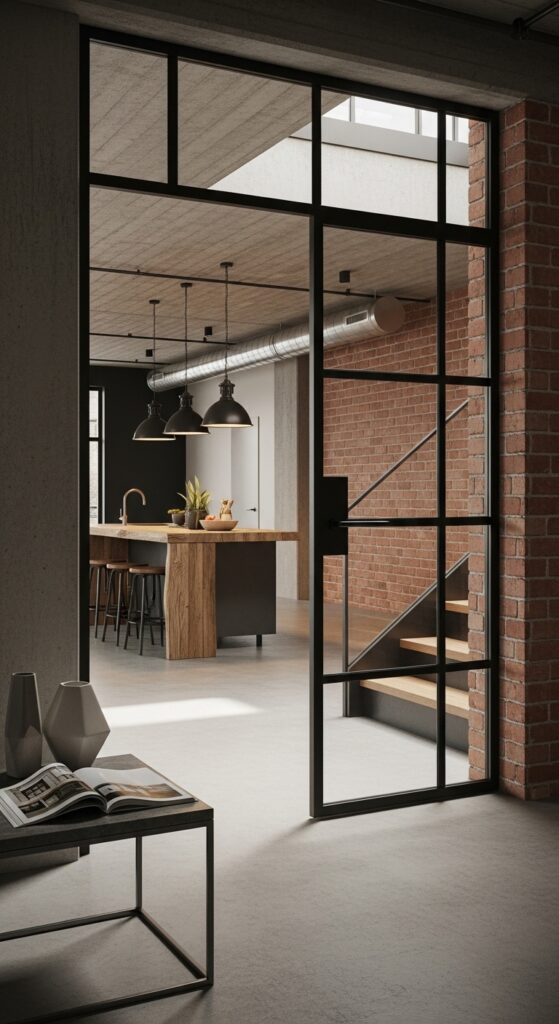
Mini Takeaway: Steel and glass in a door frame is what happens when architecture stops apologizing for itself.
Three product picks for this application:
- Black Steel Frame Interior Glass Panel Door System — Frames your basement opening with industrial-grade steel for a look that’s bold without being heavy
- Textured Reeded Glass Panels for Steel Door Frames — Adds privacy to your glass door by obscuring visibility while still allowing generous light transmission
- Minimalist Bar Pull Handle in Matte Black Finish — Gives your steel door a grip that matches the frame’s industrial character without adding visual clutter
10. Pocket Door Installation for Ultra-Tight Hallways
When there’s genuinely no room for a door to swing — not into the hallway, not into the stairwell — a pocket door is the answer. It slides directly into the wall cavity and disappears completely when open. The installation is involved, but the payoff in a cramped space is enormous. Your hallway immediately feels clear and functional in a way that a hinged door will never allow.
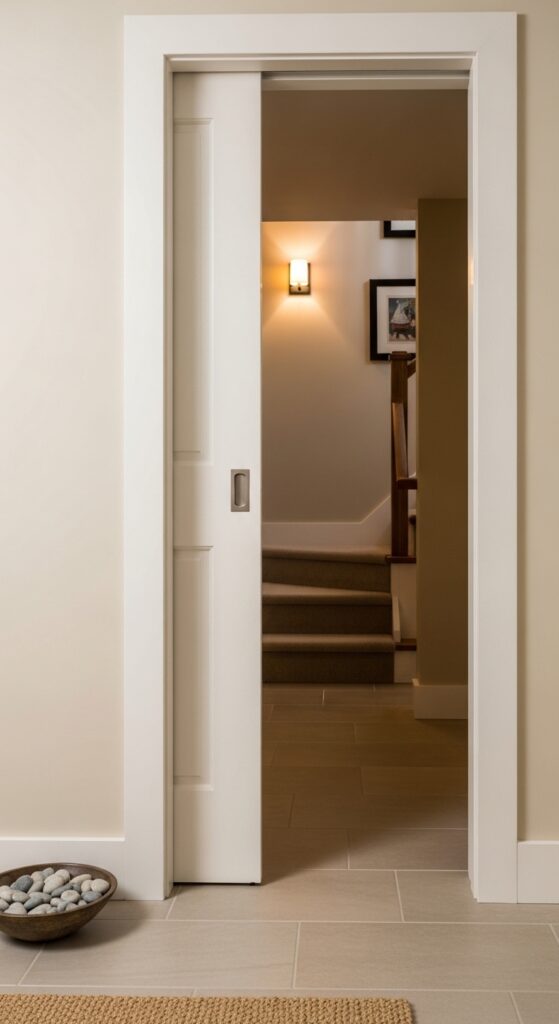
Mini Takeaway: In a truly tight hallway, a pocket door isn’t just a preference — it’s the only door that actually respects the space.
Helpful products for this project:
- Heavy-Duty Steel Pocket Door Frame Kit for 2×4 Walls — Creates the interior cavity your sliding door needs without requiring structural modification to your existing framing
- Soft-Close Pocket Door Hardware with Rubber Edge Seal — Slides your door shut quietly and seals the gap along the edge to reduce both noise and drafts from below
- Recessed Pocket Door Pull with Flush Finger Grip — Pulls your door open cleanly without protruding hardware that catches on walls or clothing in narrow hallways
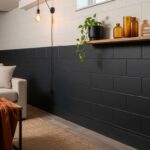


11. Louvered Shutter Door for Basement Laundry Rooms
Louvered doors — the ones with angled horizontal slats — are underused in basements and I genuinely don’t understand why. For a basement that houses a washer and dryer, the built-in ventilation of louvered slats prevents moisture and heat from building up behind a closed door. The slatted look also has a clean, beachy-casual quality that feels fresh rather than dated when paired with white or light gray trim.
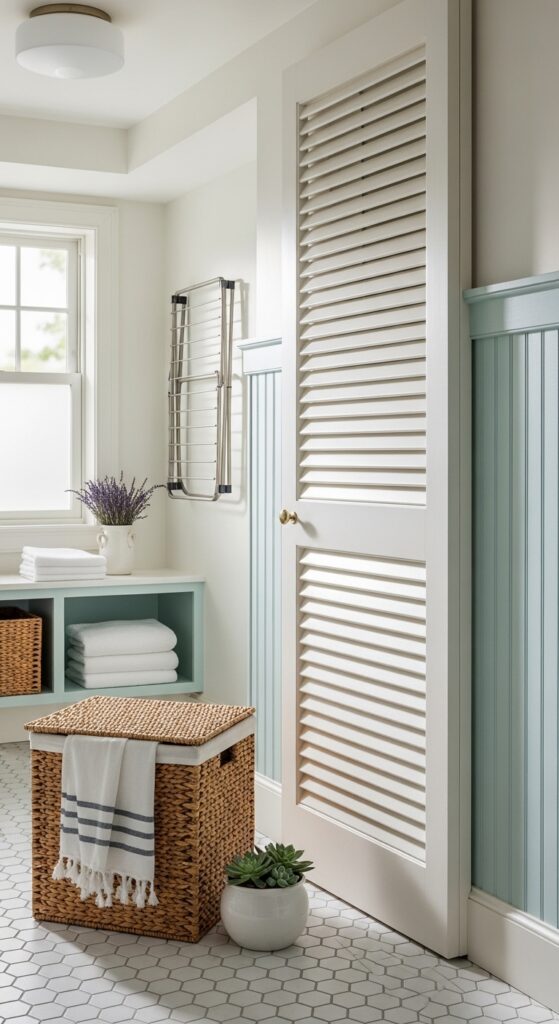
Mini Takeaway: A louvered door is one of the rare design choices where the practical advantage and the aesthetic appeal are exactly the same thing.
Three products to consider:
- Solid Pine Louvered Interior Door with Angled Slats — Ventilates your basement laundry or mechanical room naturally while adding a clean, casual texture to the opening
- White Semi-Gloss Trim Paint for Louvered Door Slats — Gives each slat a crisp, moisture-resistant finish that wipes clean and holds up against laundry room humidity
- Spring-Loaded Magnetic Door Catch for Louvered Doors — Holds your light louvered door in the closed position without a traditional latch, keeping the look clean and hardware-minimal
12. Wallpapered Door Panel for a Bold Design Statement
Wallpapering the face of your basement door is a decorating move that almost nobody tries and almost everyone should consider. A panel of bold botanical print, geometric pattern, or textured grasscloth applied directly to the door surface turns it into art. It coordinates with accent walls, pull-attention away from a less-than-ideal door location, and signals a confidence in design that plain painted doors simply don’t.
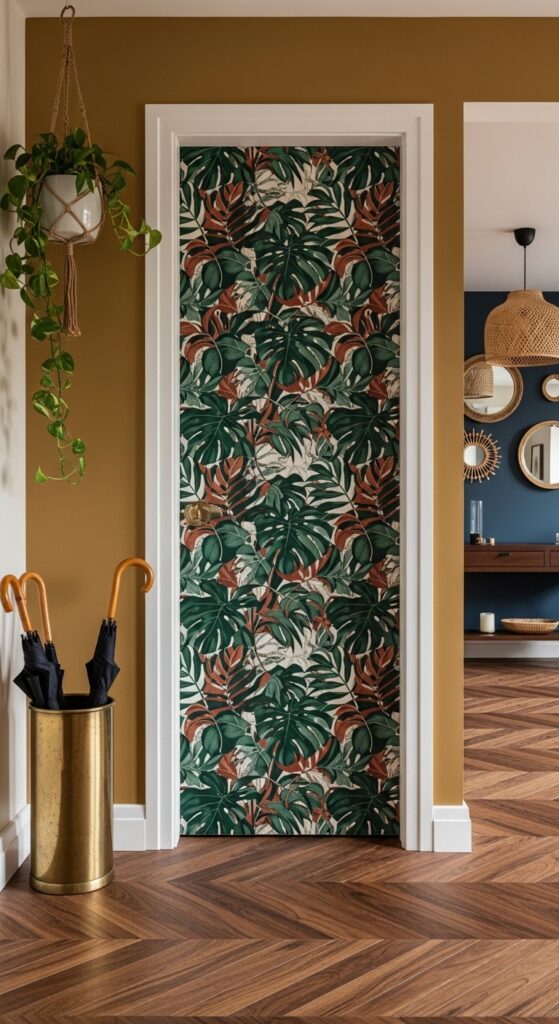
Mini Takeaway: The right wallpaper on a door doesn’t just cover a surface — it makes the surface the point.
Products that work well for this technique:
- Peel-and-Stick Botanical Print Wallpaper for Flat Surfaces — Applies to your door face without adhesive mess and removes cleanly when you’re ready for a new look
- Seam Repair Adhesive for Wallpaper Edge Lifting — Keeps your wallpaper edges flat and bonded even on high-use doors that flex slightly with each opening
- Acrylic Topcoat Sealer for Wallpapered Surfaces — Protects your door wallpaper from scuffs, humidity, and edge peeling with a thin, nearly invisible protective layer
13. Arched-Top Door for Craftsman or Mediterranean Homes
An arched door frame on a basement entrance is a commitment — but it’s the kind of commitment that pays off beautifully in the right home. If your house has any Mediterranean, Spanish Colonial, or Arts and Crafts influence, a rounded arched top on the basement door frame picks up the architectural language already present in your archways, windows, or ceiling details. It makes the basement feel like a natural extension of the home’s design story.
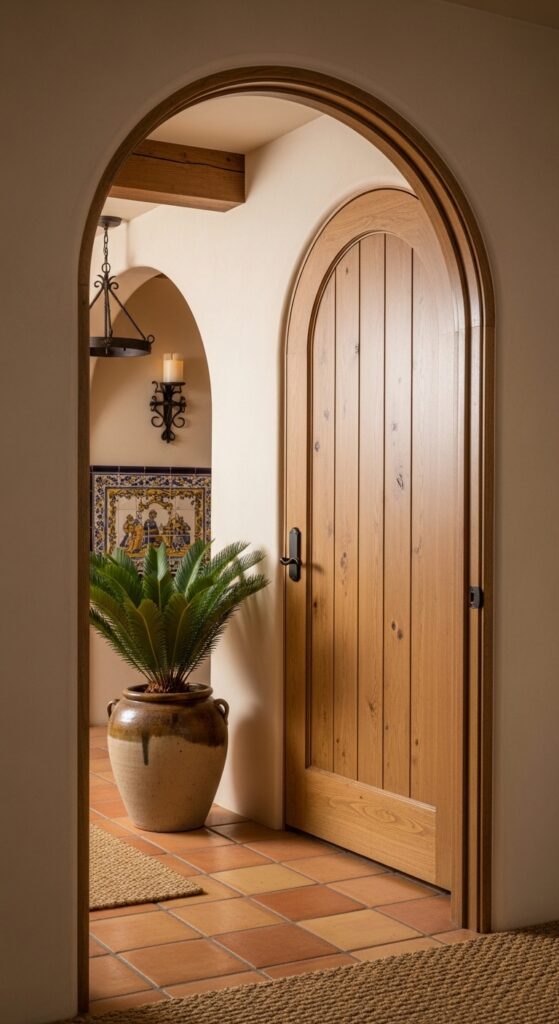
Mini Takeaway: An arched door doesn’t just fill an opening — it gives the hallway a moment of architecture.
Three product ideas for this style:
- Pre-Hung Arched Top Interior Door with Solid Core — Fills your basement opening with a graceful curved silhouette that elevates the entire hallway’s character
- Flexible Archway Door Casing Molding Kit — Frames your arched opening with smooth, bendable trim that follows the curve without gaps or kinks
- Antique Bronze Passage Handleset for Arched Doors — Completes your curved door with hardware that feels historically grounded and substantial in hand
14. Two-Tone Painted Door with Contrasting Frame Color
This one takes five minutes to understand and about a weekend to execute — and the result genuinely looks like something a designer charged for. Paint the door itself one color and the door frame a contrasting or complementary tone. Deep charcoal door with a warm white frame. Dusty sage door with a cream-painted frame. The contrast creates definition that makes the entire doorway feel architecturally intentional.
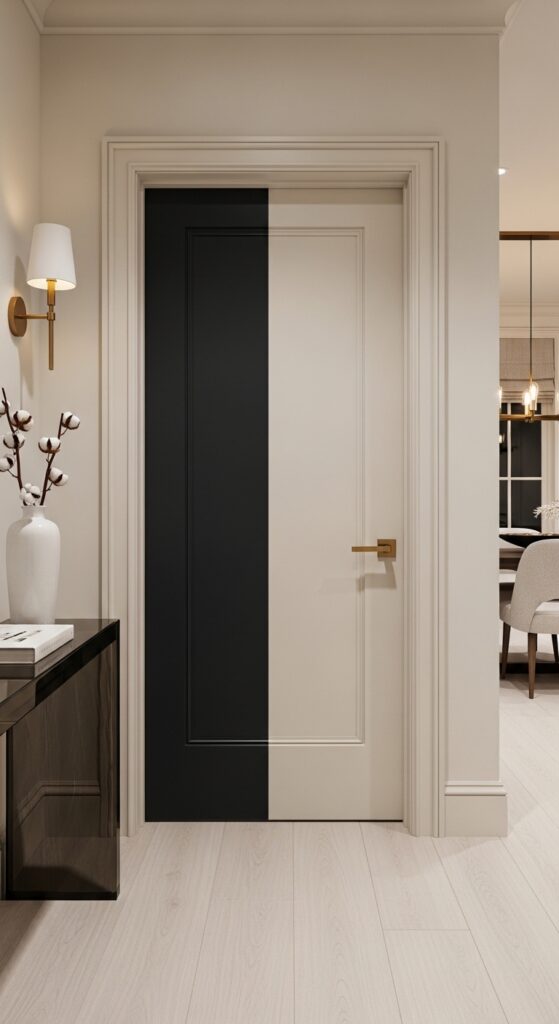
Mini Takeaway: Two colors on a door frame is the closest thing to free interior design advice that actually works.
Products to make this project clean and professional:
- Premium Interior Eggshell Paint in Designer-Curated Neutrals — Gives your door a smooth, low-sheen finish that photographs beautifully and resists scuffing in hallways
- Curved Edge Painter’s Tape for Crisp Color Lines — Creates the sharp border between your door color and frame color that makes the two-tone technique look polished
- Foam Mini Roller Set for Door Panel Painting — Applies your door paint without brush marks or roller texture, leaving a glass-smooth finish on flat door surfaces
15. Vintage-Style Screen Door as an Interior Accent Layer
Hanging a vintage-style wooden screen door in front of your existing basement door creates a layered, cottage-eclectic look that’s genuinely hard to replicate any other way. The screen door stays permanently open as a decorative element — latched back against the wall or hung as a display piece — while the solid door behind it handles actual closure. It reads as intentional and collected rather than purely functional.
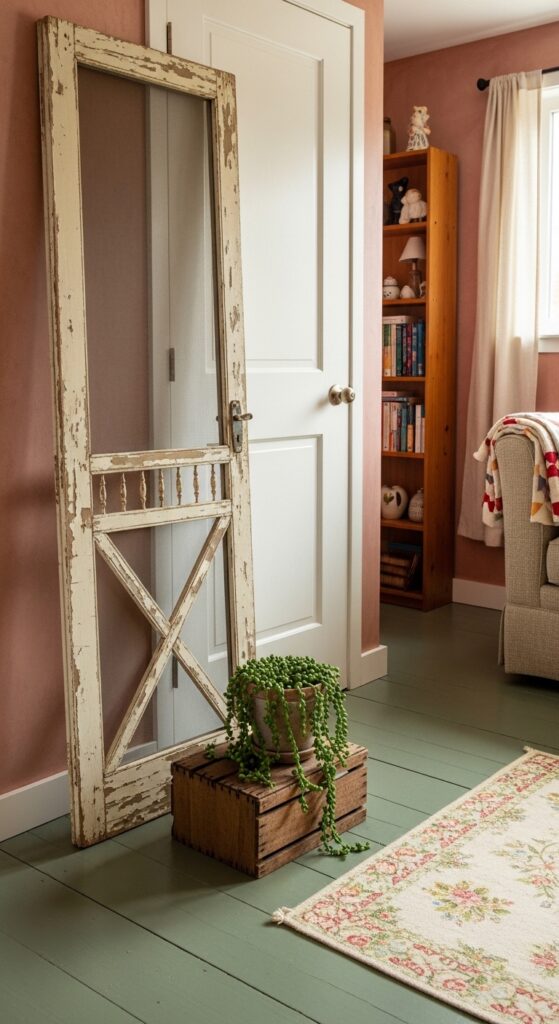
Mini Takeaway: Sometimes the most interesting layer in a room is the one that doesn’t do anything except look exactly right.
Products worth finding for this idea:
- Solid Wood Vintage Screen Door with Cross-Buck Detail — Adds an authentic layered entry element in front of your basement door for a cottage-collected look that’s impossible to fake
- Hook-and-Eye Latch Set for Screen Door Wall Anchoring — Holds your decorative screen door open against the wall cleanly without visible hardware disrupting the vintage aesthetic
- Milk Paint in Faded Heritage Tones for Wood Doors — Gives your screen door a chalky, weathered finish that looks like it’s been in the family for three generations
16. Wainscoting-Wrapped Door and Frame Surround
Extending wainscoting panels from the adjacent wall directly onto the door face and frame creates a continuous architectural detail that makes the basement entrance feel like a designed feature rather than a hole in the wall. When the panels, chair rail, and base molding flow unbroken across the wall and onto the door itself, the eye reads the whole composition as one intentional statement. It’s an especially good move in dining rooms, formal hallways, and traditional living rooms where the basement door interrupts a paneled wall run.
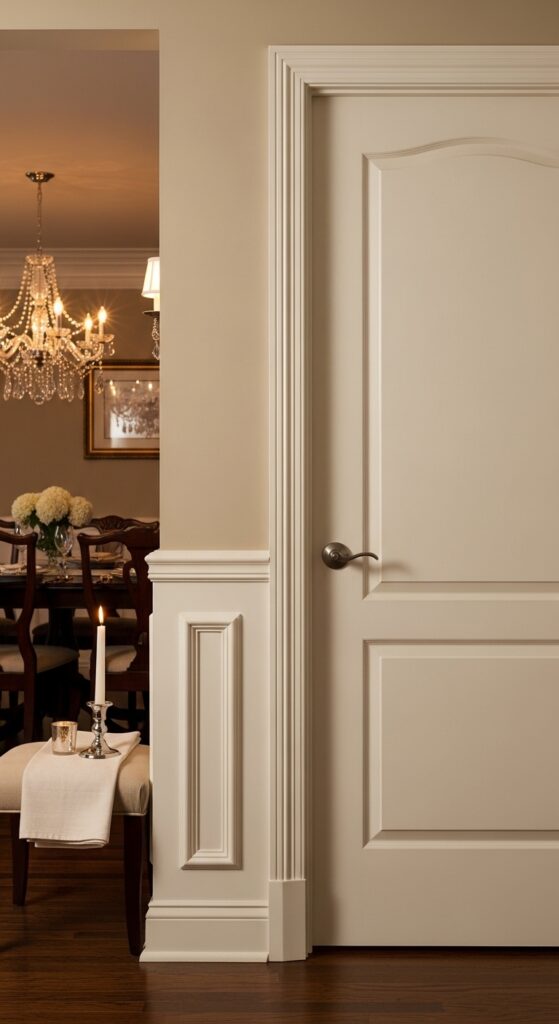
Mini Takeaway: When your basement door disappears into the wainscoting, the room gains an inch of elegance it never had before.
Three products to bring this look together:
- MDF Applied Molding Panel Kit for Wainscoting Walls — Creates the recessed panel detail on your door and adjacent walls with pre-cut pieces that assemble without custom milling
- Chair Rail Molding with Ogee Profile for Traditional Interiors — Runs the horizontal dividing line across your wall and door face at the same height for a seamless, continuous look
- High-Hide Interior Primer for MDF Panel Surfaces — Seals your applied molding so the topcoat paint lays smooth and uniform across both wall panels and door face

InsideMake exists for one reason — to help you love your home more. We bring expert decor insights and room-specific inspiration directly to you.